
• Youth Sports Injury Prevention

    Youth Sports Injury Prevention

    Help Your Young Athlete Stay Healthy, Strong, and Confident

    St. Louis’ parents and young athletes! Ever found yourself watching your child on the field or court, a little voice in your head asking, Is that normal, or should I actually be worried?

    Maybe it’s that nagging knee pain after soccer practice, a shoulder that doesn’t feel right after pitching, or even just a general sense that their movements look a bit off. If any of this sounds familiar, take a deep breath. You’re not overreacting. In fact, that proactive gut feeling is exactly what your young athlete needs.

    Youth sports are amazing, building character, teamwork, and lifelong habits. But the truth is that sports injuries in kids are happening more often than ever, and a surprising number of them are totally preventable. That old-school advice like “they’ll grow out of it” or “just rest, and it’ll magically disappear” often leads to a longer road back and recurring problems.

    At STL Physical Therapy, we see young athletes from all over St. Louis. Our mission is to help them move better, stay healthy, and play their sport with complete confidence. For us, injury prevention isn’t just about keeping them off the sidelines. It’s about giving your child the strongest possible foundation so they can truly love and excel in their sport for years and years to come.

    Why Do Our Young Athletes Get Hurt? It’s More Complex Than You Think

    Kids aren’t just miniature adults. Their bodies are a whirlwind of growth and change, which brings its own unique set of challenges and vulnerabilities.

    Growth Spurts: The Awkward Stage and Beyond

    Think about it: during those rapid growth spurts, bones often shoot up faster than muscles and tendons can keep pace. This creates temporary imbalances in how flexible they are, how strong they feel, and even their coordination.

    That’s why you might notice your child suddenly seeming a bit more clumsy or tight overnight. It’s totally normal for a growing body, but it also dials up their risk for injury if these changes aren’t properly supported.

    We often see growth-related issues pop up, like:

    • Knee pain, think Osgood-Schlatter disease, a common one for active kids
    • Annoying heel pain
    • Tightness in the hamstrings or hip flexors
    • A temporary dip in coordination that can affect their game.

    Without the right guidance, these seemingly small issues can quickly snowball into bigger, more painful problems.

    Early Sports Specialization: Too Much of a Good Thing?

    It’s common these days for young athletes to pick one sport and play it year-round. While all that dedicated practice can really sharpen their skills, it also means they’re putting repetitive stress on the same muscles and joints, day in and day out.

    Over time, this relentless repetition significantly increases the risk of overuse injuries, such as:

    • Persistent tendon irritation
    • Stress injuries, which can be sneaky and painful.
    • Shoulder or elbow pain, especially in sports like baseball, softball, or tennis that involve a lot of throwing or overhead movements.

    The truth is, a variety of movements and using different muscle groups matters so much more than most people realize for a growing body.

    Training Load and Recovery: The Hidden Culprit

    Many kids are simply doing too much, too soon, without enough time to recover. Between school teams, club sports, and sometimes even private coaching, some young athletes are training at levels that would challenge even professional adults.

    When recovery isn’t made a priority, the body never gets a chance to truly adapt, repair, and get stronger. That’s when pain starts to creep in, signaling that something’s not quite right.

    What Does Real Youth Sports Injury Prevention Look Like?

    Forget the old idea that injury prevention is just a quick stretch before practice. A truly effective program goes much deeper, looking at your child’s unique movement patterns, their stage of development, and the specific demands of their sport.

    It All Starts with a Movement Assessment

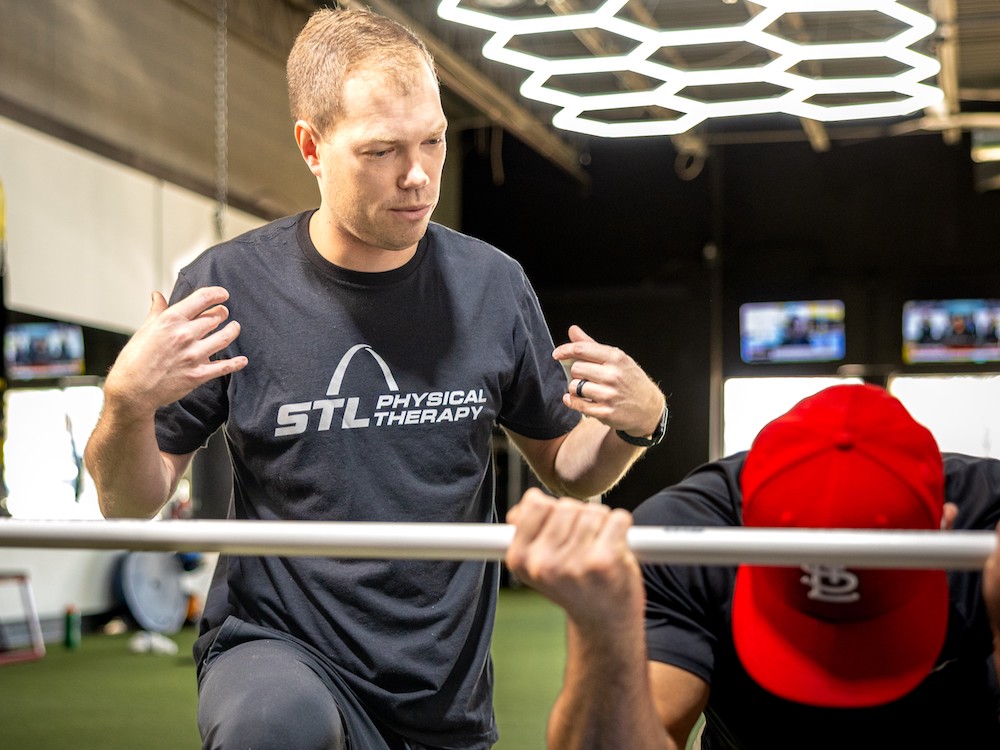
    At STL Physical Therapy, our first step is always to get a clear picture of how your child moves. We’ll gently assess things like:

    • Their overall mobility and flexibility
    • Their strength and how balanced their muscles are.
    • Their coordination and control
    • And importantly, their sport-specific movement patterns, how they run, jump, throw, or swing

    This detailed assessment gives us a clear roadmap, showing us exactly where they might be at risk and what areas we need to focus on.

    Building Strength, the Smart Way

    Strength is absolutely one of the most critical elements in preventing injuries.

    Now, this doesn’t mean we’re pushing kids to do anything beyond their capabilities. Quite the opposite! It means teaching them the correct movement patterns from the ground up and gradually building strength in a super safe and controlled environment.

    We focus on key areas like:

    • A strong, stable core
    • Powerful hip and glute muscles
    • Excellent single-leg balance and control, which is vital for almost every sport.
    • And crucial shoulder stability for those overhead athletes

    When these foundational systems are strong, your child’s body can handle the demands of their sport much, much more effectively.

    Improving Movement Quality: The Art of Motion

    Sometimes, the real issue isn’t a lack of strength, but simply how the body moves. Poor landing mechanics, inefficient running techniques, or limited range of motion can all significantly increase injury risk.

    We become movement coaches, guiding athletes on how to:

    • Jump and land safely and softly.
    • Change direction with explosive control.
    • Generate power fluidly without compensating with other body parts.

    These seemingly small adjustments in how they move can make an enormous difference over the course of a season and a young athlete’s career.

    Recovery and Load Management: The Unsung Heroes

    Injury prevention also involves understanding when to push their limits and when to wisely pull back.

    We work with families to understand:

    • How much training is truly appropriate for their age and sport.
    • The subtle signs of fatigue or overtraining that parents often miss.
    • When it’s smart to modify activity or take a break

    This vital piece helps prevent burnout, keeps them fresh, and ensures athletes continue to progress safely and sustainably.

    Is Strength Training Safe for My Child? Let’s Talk About It

    This is probably one of the most common questions we hear from parents, and it’s a great one.

    The short answer? Absolutely, yes. When done correctly, under expert guidance, strength training is not just safe for young athletes; it is incredibly beneficial and often essential.

    One of the biggest concerns parents have is whether strength training can damage growth plates or stunt growth. The good news is that properly supervised, age-appropriate strength training does not harm growth plates. In fact, it helps support healthy development and builds stronger muscles, tendons, ligaments, and bones as young athletes grow.

    It is also important to understand that the physical demands of sport are often much higher than what a young athlete experiences in a controlled training environment. Sprinting, cutting, jumping, and contact all place significant stress on the body. Strength training, when done properly, prepares the body to handle those demands more safely and efficiently.

    Research consistently shows that supervised, age-appropriate strength training:

    • Reduces the risk of injury
    • Improves athletic performance
    • Supports healthy growth and long-term development

    The key is proper guidance.

    At STL Physical Therapy, our strength programs are always tailored to each athlete’s age and stage of development, with a strong focus on technique and control. We design every program specifically for the individual, helping them build resilience and confidence both on the field and in the weight room.

    We always prioritize the quality of movement over how much weight they are lifting or how intense the workout is.

    Choosing the Right Physical Therapist for Your Child: What to Look For

    When it comes to your child’s health and athletic future, not all physical therapy is created equal. This is especially true when we’re talking about young, growing athletes.

    If you’re thinking about physical therapy for your child, here are a few critical things to seek out:

    • Real Experience Working with Young Athletes: Kids need a physical therapist who genuinely understands the nuances of growth, development, and the specific demands of youth sports.
    • A Prevention-First Mindset: Many clinics focus primarily on treating injuries after they happen. A truly great program will also emphasize preventing those injuries from occurring in the first place.
    • An Individualized Approach: Every single athlete is unique. Their program should be tailored specifically to them, not a generic, one-size-fits-all plan.
    • Clear, Open Communication: You, as a parent, should always feel fully informed and confident about the treatment plan. And most importantly, your child should feel completely supported, understood, and motivated throughout the process.

    How STL Physical Therapy Helps Your Young Athlete

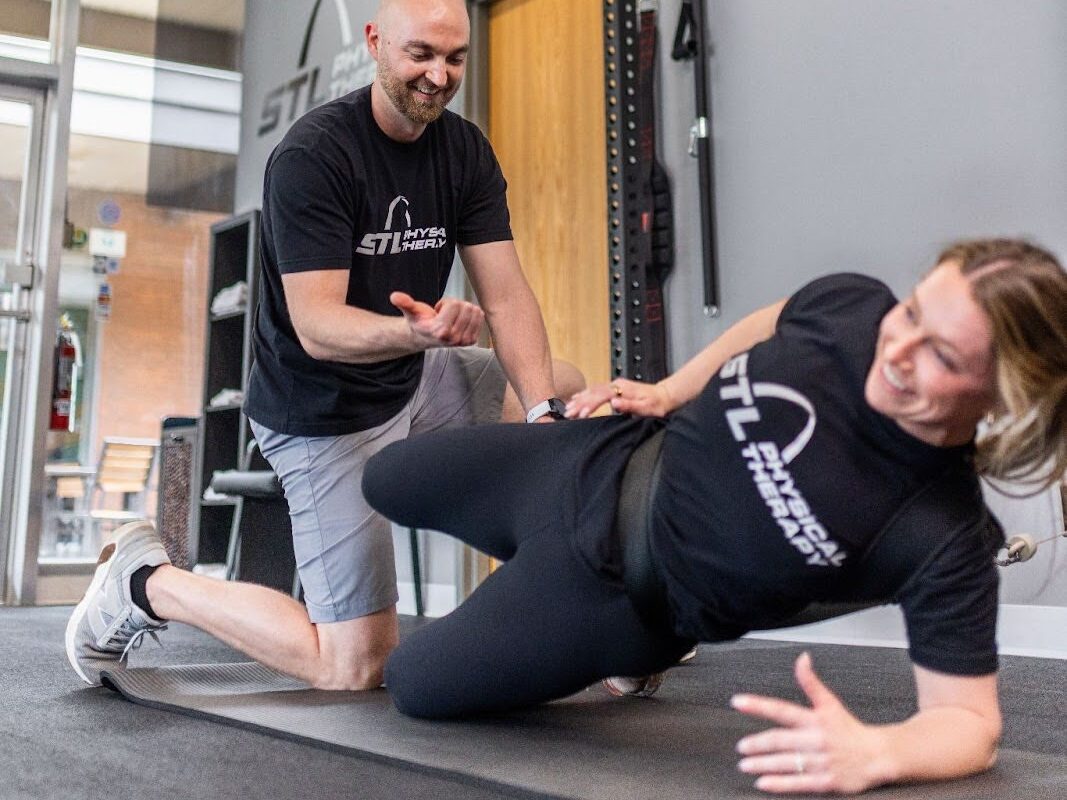
    At STL Physical Therapy, we pride ourselves on taking a wonderfully proactive and deeply personalized approach to youth athlete physical therapy here in St. Louis.

    Our goal is beautifully simple: to help your child move better, feel better, and stay passionately in the game they love.

    Personalized Individual Evaluations

    Every athlete who walks through our doors starts with a super detailed evaluation. This crucial first step helps us spot any potential risk factors early on and allows us to craft a precise, personalized plan that perfectly fits their unique needs.

    If your child is already struggling with pain, we’ll also expertly guide them through a safe and structured return to their sport. You can dive deeper into that process on our dedicated Return to Sport page.

    Custom-Built Programs, Not Cookie-Cutter Plans

    We meticulously design programs based on:

    • Their exact age and current stage of development
    • Their specific sport and position
    • Their current training schedule and intensity
    • And, of course, all the insights we gain from their movement and strength assessments.

    This ensures that all the hard work they put in with us truly translates into improved performance and greater safety on the field or court.

    Coaching That Builds Deep Confidence

    We do so much more than just hand out exercises. We teach.

    Athletes learn to truly understand how their body works, how to move with maximum efficiency, and how to take real ownership of their own health and athletic journey. This empowers them and builds lasting confidence, not just in their sport, but in all aspects of their lives.

    A Team That Lives and Breathes Athletics

    Our amazing team boasts extensive experience working with athletes across all levels, from enthusiastic youth players right up to collegiate and professional stars.

    If you’d like to get to know us better and see how our collective experience directly benefits the young athletes we work with every single day, please visit our Meet the Team page.

    When Should You Think About Physical Therapy for Your Child?

    You absolutely do not need to wait until a serious injury has already happened. Early intervention can make a meaningful difference in how your child feels, moves, and performs.

    It might be the perfect time to explore youth sports injury prevention or physical therapy if your child:

    • Starts complaining about recurring pain that just will not go away
    • Has recently gone through a growth spurt and now feels stiff or a bit uncoordinated
    • Is playing one sport year-round with little variation
    • Wants to improve performance but do it in a safe and structured way
    • Is recovering from an injury and needs expert guidance to return confidently

    It is also important for parents in Missouri to know that this is a direct access state. That means you do not need a referral script to get started with physical therapy.

    If your child is dealing with aches, pain, or movement concerns, you can simply give our team a call and schedule an evaluation right away. Getting answers early can help prevent small issues from turning into bigger setbacks.

    Parents Have Questions; Here Are Some Common Ones We Hear

    1. Is it normal for my child to have pain during sports? Some mild soreness can be normal, especially when they ramp up their activity. However, any ongoing pain or sharp, specific pain is not something to ignore. Pain is often your body’s earliest warning sign that something needs attention.
    2. Can physical therapy really prevent injuries? A resounding yes! A thoughtfully designed physical therapy program can dramatically improve strength, refine movement quality, and instill excellent recovery habits, all of which work together to significantly reduce the risk of future injuries.
    3. How often should my child train or practice? This really depends on their age, their specific sport, and their level of play. A good general guideline is to ensure they get at least one to two dedicated rest days per week. Also, try to avoid extreme year-round specialization without giving their bodies proper breaks throughout the year.
    4. What’s the right age for kids to start strength training? Kids can safely begin structured strength training as early as 7 or 8 years old, provided it is properly supervised and coached. A good rule of thumb is that kids are ready when they are mature enough to safely follow instructions and handle the weight room environment. The unwavering focus should always be on mastering perfect technique and control, rather than pushing heavy resistance.

    Help Your Athlete Stay Strong, Healthy, and in the Game They Love

    Your child’s long-term health, happiness, and confidence are just as important as their performance on the field.

    By taking a proactive, smart approach to youth sports injury prevention, you can help them confidently avoid frustrating setbacks, build incredible resilience, and truly enjoy the game they’re so passionate about for many seasons to come.

    At STL Physical Therapy, we are genuinely here to support both you and your remarkable young athlete every single step of this exciting journey.

    If you’re ready to empower your child to move better, feel fantastic, and stay healthy, we invite you to schedule a youth athlete evaluation with our caring and expert team today.

    You can easily explore more about all our services or book an evaluation directly through our website. We can’t wait to meet you!
  • Don’t Let Pickleball Injuries Bench You: Your Guide to Staying on the St. Louis Courts

    Don’t Let Pickleball Injuries Bench You: Your Guide to Staying on the St. Louis Courts

    Pickleball. It’s everywhere. From buzzing local parks to competitive leagues and casual games with friends, this sport has absolutely exploded in St. Louis. And honestly, what’s not to love? It’s social, it’s fast-paced, and pretty much anyone can pick up a paddle and have a blast.

    But here’s the thing many players don’t see coming.

    Those super fun, quick-fire movements that make pickleball so addictive. They’re also putting your body through a workout, creating repeated stress over time. And that stress can sneak up on you, leading to aches, limited movement, and injuries that sideline you from the game you love way longer than you’d want.

    Here at STL Physical Therapy, we’re seeing more and more players come through our doors with pickleball injuries, everything from a nagging elbow to persistent knee pain and a frustrating pickleball shoulder injury. But here is the good news: with the right approach and a solid game plan, you can bounce back faster and even prevent these issues from crashing your court time.

    We’re going to dive into why these injuries pop up, the most common ones we treat, and how pickleball injuries’ physical therapy can be your secret weapon to staying active and pain-free on the St. Louis courts.

    Why Pickleball Leads to Injuries

    You might look at pickleball and think, “Oh, it’s not as intense as tennis or basketball.” And in some ways, you’re right. But your body is working way harder than you probably realize out there.

    Every match is a flurry of quick changes in direction, sudden stops that jar your joints, and those constant, repetitive arm swings. This combination of forces is a recipe for overloading your joints and soft tissues over time.

    Think about these common culprits that lead to those unwelcome aches:

    • Non-stop stress on your elbow and shoulder from all that swinging, dinking, and driving.
    • Rapid-fire lateral movements that really put a strain on your knees and ankles.
    • Tight spots or limited mobility in one area force other parts of your body to overcompensate.
    • Playing too much, too often, without giving your body the recovery time it desperately needs.

    For a lot of players, especially those of us getting back into sports later in life, these factors can pile up surprisingly fast.

    The Big 5: Common Pickleball Injuries We See

    pickleball injuries physical therapy

    So, what are the usual suspects that bring pickleball players into our physical therapy? Let’s break down the most common ones:

    1. Pickleball Elbow

    Ah, the infamous pickleball elbow! You might know it as tennis elbow, and it causes that annoying pain on the outside of your elbow. It’s a direct result of all that repetitive gripping and swinging.

    You might notice:

    • A sharp zing of pain when you grip your paddle.
    • A general weakness in your forearm.
    • Discomfort even when lifting everyday things, like a coffee cup.

    2. Shoulder Injuries

    Your shoulder is a pillar in pickleball, especially for serves and those satisfying overhead shots. Overdoing it or using less-than-perfect form can lead to nagging irritation or even more serious rotator cuff problems. This is a classic pickleball shoulder injury.

    Common red flags include:

    • Pain whenever you reach overhead.
    • Feeling stiff or having a limited range of motion.
    • A general weakness or instability in your shoulder.

    3. Knee Pain

    Those quick stops, pivots, and lunges are fantastic for chasing down shots, but they can put a significant amount of stress on your knee joint. Without proper strength and control, this can quickly lead to irritation or more concerning issues.

    You might feel:

    • Pain when you bend your knee or squat down.
    • Stiffness that settles in after a game.
    • Discomfort when simply going up or down stairs.

    4. Achilles Tendon Pain

    Your Achilles tendon is like a super spring, absorbing a ton of force with every step and push-off. Suddenly cranking up your activity level or having tight calves can inflame it or even lead to a strain.

    Symptoms often show up as:

    • Pain in the back of your ankle.
    • Stiffness, especially first thing in the morning.
    • Discomfort when you try to push off or jump.

    5. Lower Back Strain

    All those rotational movements you make during a pickleball game can really put stress on your lower back. This is especially true if your hips aren’t as mobile as they should be, forcing your back to pick up the slack.

    You might notice:

    • Tightness or a dull ache in your back after playing.
    • Pain when you twist your body.
    • A general feeling of reduced flexibility.

    Why Just Resting Isn’t the Real Fix

    It’s a common story we hear: My elbow hurt, so I took a few weeks off, and it felt better. But then I played again, and it came right back. Sound familiar?

    While a break can certainly calm things down temporarily, it rarely gets to the heart of why the problem started in the first place. You see, most pickleball injuries develop because of underlying issues like:

    • Muscle imbalances: Some muscles are strong, others are weak, throwing your body off kilter.
    • Limited mobility: Stiffness in one joint makes another joint work too hard.
    • Poor movement patterns: How you swing, lunge, or pivot might be setting you up for trouble.
    • Weakness in key areas: Core, hips, and shoulders. If these aren’t strong, other areas suffer.

    Without fixing these root causes, the pain is almost guaranteed to make an unwelcome return.

    How Pickleball Injuries Physical Therapy Makes a Real Difference

    At STL Physical Therapy, we don’t just chase your symptoms. We take a step back and look at how your entire body moves and functions. This holistic approach is why our clients in St. Louis get lasting results for their pickleball injuries.

    Your treatment plan with us is never one-size-fits-all. It’s custom-built around your specific needs, your goals, and your desire to get back on the court stronger than ever.

    1. Your Personalized Movement Assessment

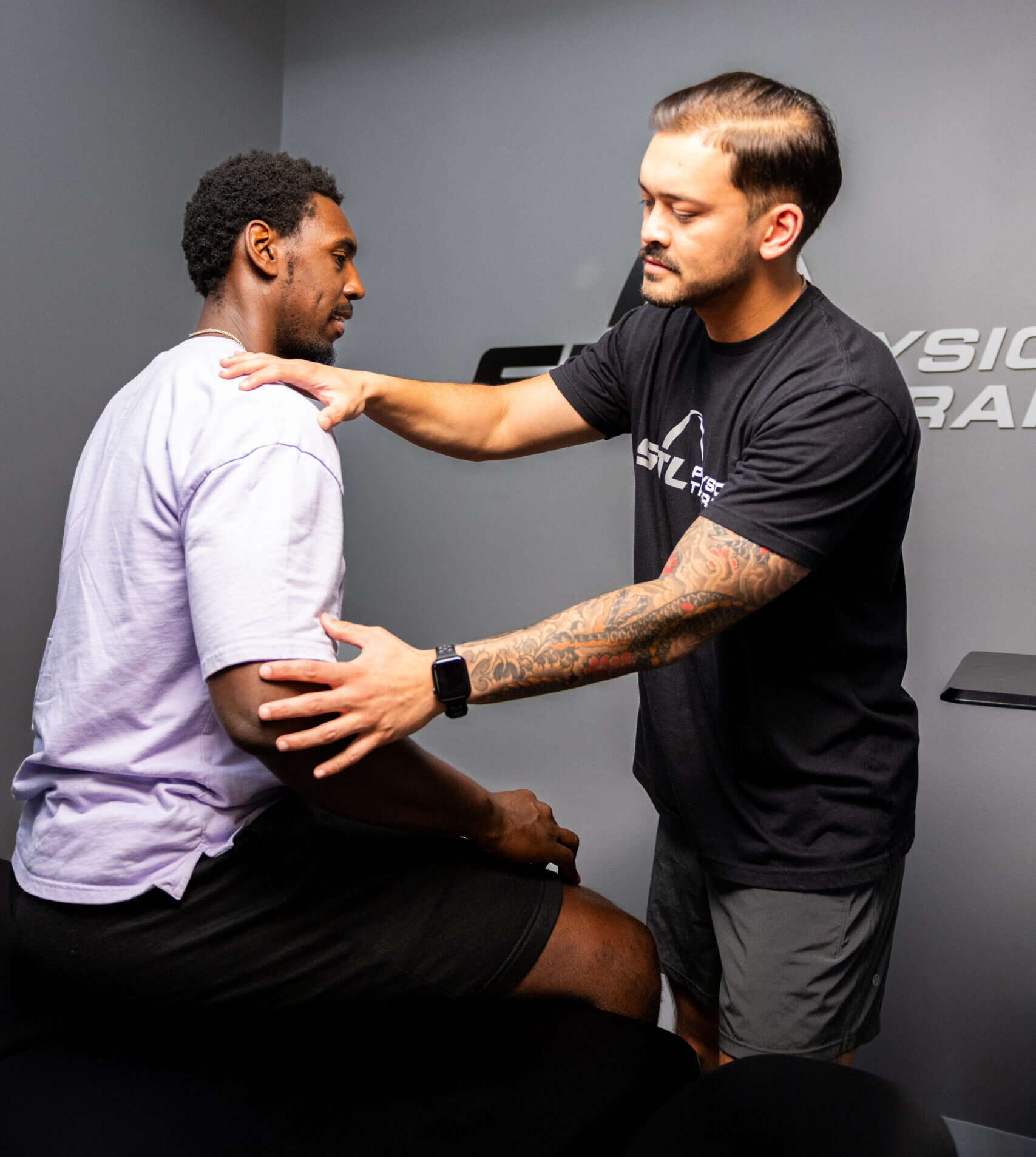
    We kick things off with a thorough evaluation. We watch how you move, listen to your story, and really dig deep to understand what’s truly causing your pain or limiting your game. This is where we pinpoint the real culprits behind your pickleball elbow, pickleball knee pain, or pickleball shoulder injury.

    Ready to figure out what’s really going on? Schedule your evaluation with us.

    2. Targeted, Hands-On Treatment

    Your individualized plan might include a mix of therapies designed to get you feeling better, faster:

    • Hands-on therapy: Our skilled therapists use techniques to reduce your pain and restore natural movement.
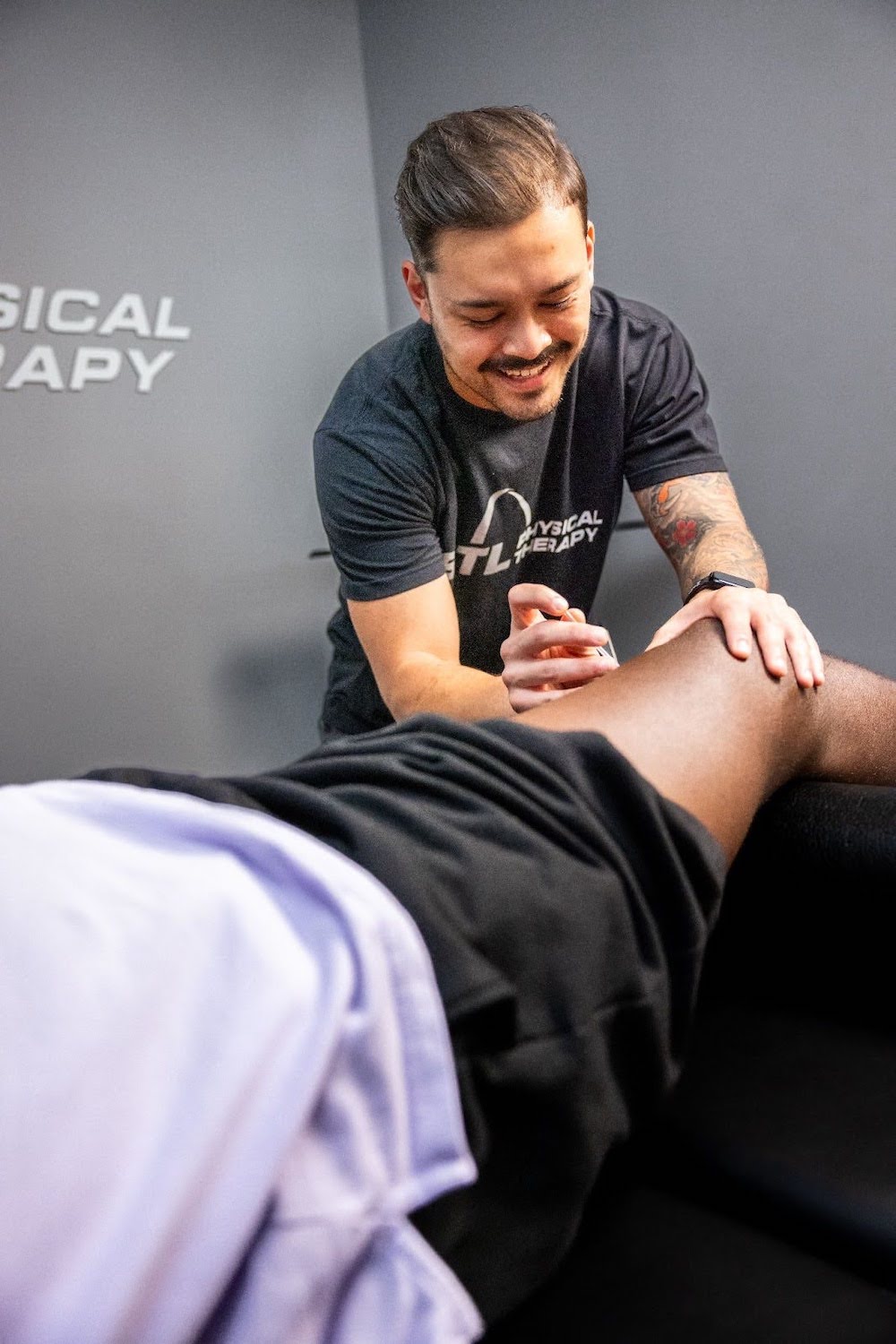
    • Advanced techniques like dry needling: When appropriate, we use methods like dry needling to release stubborn muscle knots and accelerate healing. You can learn more about dry needling in St. Louis here.
    • Mobility work: Think of it as unlocking stiff joints and restoring your natural range of motion.
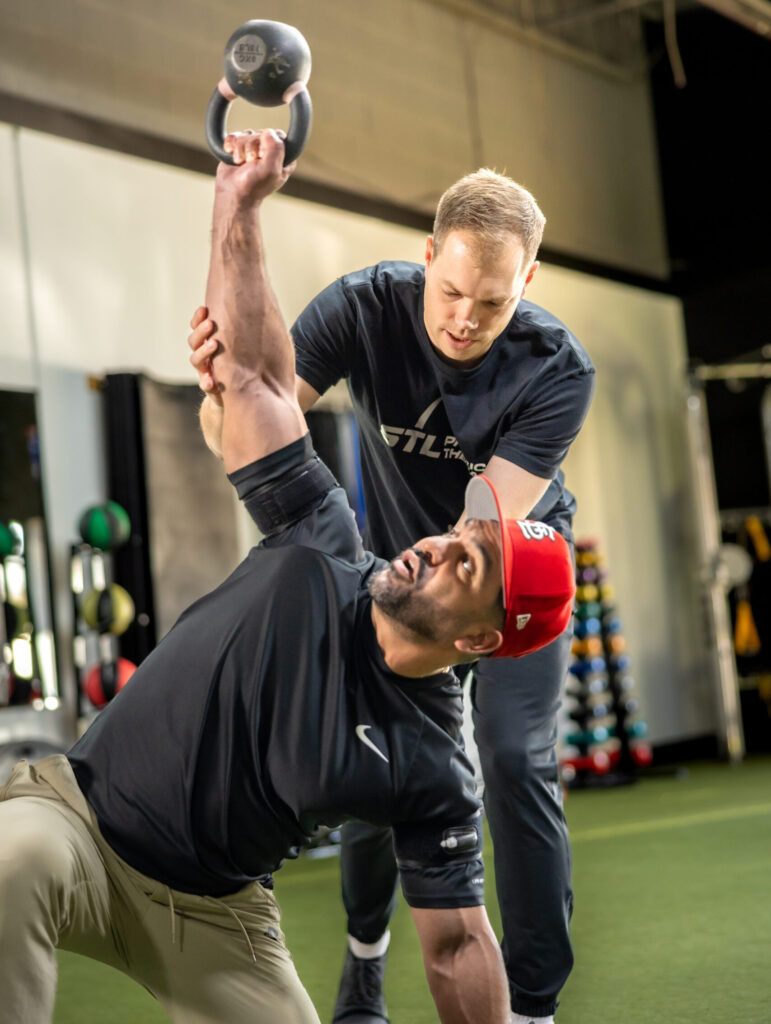
    • Strengthening exercises: We’ll guide you through specific exercises to build stability and support around your joints.

    3. Game-Changing, Sport-Specific Training

    We don’t just want you to feel better; we want you to play better. Our approach includes training that translates directly to the court, helping you improve your:

    • Balance and coordination: Essential for those quick lateral shuffles.
    • Reaction time: So, you can anticipate shots and move with confidence.
    • Strength in key movement patterns: Making every swing and lunge more powerful and safer.

    4. Expert Return-to-Play Guidance

    We’ll be with you every step of the way, guiding you through a safe, progressive return to pickleball. This ensures you regain your confidence and significantly reduce the chance of reinjuring yourself.

    Don’t Wait for the Ache: A Prevention Playbook for Active Pickleball Players

    The secret is that you don’t have to wait until you’re hobbling off the court to benefit from physical therapy. In fact, many of our clients come to us because they’re proactive; they want to stay active, keep improving, and avoid pickleball injuries altogether. This is our prevention philosophy in action.

    Here are some simple, yet powerful, strategies to protect your body and keep playing strong:

    1. Boost Your Mobility

    Stiffness in your hips, shoulders, or ankles often means other parts of your body, like your back or knees, must work overtime. Keeping these key areas flexible and moving freely dramatically reduces stress on your joints.

    2. Build Smart Strength

    Strong muscles are like built-in armor for your joints. They absorb impact and provide stability. Focus on building strength in critical areas:

    • Core stability: Your powerhouse for every shot and movement.
    • Hip strength: Crucial for lateral movements and powerful swings.
    • Shoulder control: Protecting your rotator cuff during serves and overheads.

    3. Always Warm Up Properly

    Jumping straight into a match is like asking a cold engine to redline; it’s just asking for trouble. A quick, dynamic warm-up gets your blood flowing, wakes up your muscles, and prepares your body for the demands of the game.

    4. Manage Your Playing Volume

    It’s easy to get caught up in the thrill and play more often as you improve. But remember, your body needs time to repair and recover. Listen to it. Don’t push through deep fatigue.

    5. Address Pain Early

    Those little aches and twinges are often your body’s early warning signals. Ignoring them and hoping they go away can turn a minor nuisance into a major pickleball injury. Getting them checked out early can prevent much bigger problems down the road.

    If you’re already dealing with specific joint issues, you can learn more here:

    Keep Loving the Game: Stay Active, Stay Strong

    Pickleball is supposed to be pure fun and a great way to stay active, socialize, and challenge yourself. It shouldn’t be a source of constant pain, frustration, or forced breaks.

    Whether you’re battling persistent discomfort or want to move better, prevent future issues, and enhance your game, physical therapy for pickleball can truly make a world of difference.

    At STL Physical Therapy, we’re passionate about helping active adults and athletes across the St. Louis area feel better, move better, and keep doing the activities they love, especially pickleball!

    Ready to Get Back in the Game?

    If pickleball injuries are holding you back, we’re here to help you get back on the court with confidence.
    Don’t wait for the pain to get worse. Schedule your evaluation today and take that crucial first step toward pain-free movement and elevated performance.

  • Physical Therapy for Golfers

    Physical Therapy for Golfers

    Ever watch a pro golfer and think, Wow, that looks so smooth, so effortless? Well, behind every great golf swing is a body working in perfect harmony. It might look calm on the surface, but golf is a serious workout for your body.

    Think about it, all that twisting, turning, and powering through your swing. It demands a lot from you, and when one part of your body isn’t quite pulling its weight, others must pick up the slack. Over time, this can lead to aches, pains, and even injuries that keep you from enjoying your time on the green.

    Here at STL Physical Therapy, we get it. We see active folks and athletes all over the St. Louis area, many of whom are golfers just like you who want to feel better, move better, and keep playing the game they love for years to come. We offer specialized physical therapy for golfers that goes way beyond just fixing injuries. We focus on getting your whole body moving right, boosting your mobility, and making sure you’re ready for all the physical demands of a golf swing.

    And here’s a secret many golfers don’t know: you don’t have to be in pain to benefit from physical therapy. A lot of our golfing clients come in specifically to prevent problems, fine-tune their swing, and keep their bodies in tip-top shape.

    Why Golfers Sometimes End Up on the Bench

    Your golf swing is like a perfectly choreographed dance. It’s one of the most complex moves in sports: a rapid rotation of your body, a symphony of muscles working together, and a whole lot of force going through you.

    Each swing might only last a few seconds, but imagine doing that a hundred times in a round, then over an entire season. That stress really adds up. If your body isn’t quite as mobile or stable in certain spots, other joints end up taking on more stress than they should.

    For golfers, three areas often bear the brunt of it:

    Your Hips: The Powerhouse

    Your hips are super important for generating power and letting your body twist and turn smoothly during your swing. If your hips are stiff or you can’t move through their full range, it can really mess with your backswing and follow-through. This often forces your lower back to twist more than it should.

    And what happens then? Low back pain. Improving your hip mobility for golf is one of the best ways to take the pressure off your spine and get your body moving efficiently again.

    Your Lower Back: The Overworked Hero

    Low back pain is practically a badge of honor for some golfers, but it doesn’t have to be. The constant twisting motion of a golf swing places a lot of rotational force on your spine.

    If your hips or upper back are tight, your lower back ends up doing most of the work. This repetitive stress can lead to muscle strains, irritated joints, and that nagging discomfort that just won’t quit.

    Your Elbow: The Gripping Issue

    Golfer’s elbow is another common complaint, especially if you’re hitting a lot of balls or suddenly playing more often. This happens when the tendons on the inside of your elbow get irritated from all that repetitive gripping and swinging.

    Now, while it’s called golfer’s elbow, the real culprit is usually not just your elbow itself, but rather how that force is distributed throughout your entire swing.

    The Three Pillars of a Healthy Golf Swing

    A great golf swing, a truly efficient and healthy one, relies on three key physical qualities. When your body has the mobility and strength to nail these, you typically see better performance and fewer injuries.

    Rotation: The Twist and Turn

    Your golf swing is all about rotation. Your hips and upper back should spin smoothly while your lower body remains grounded and stable.

    If your rotation is limited, golfers often compensate by overusing their lower back or arms. Physical therapy helps restore that natural mobility so your body can rotate freely and easily during the swing.

    Stability: The Solid Foundation

    While parts of your body are rotating, others need to stay rock solid. Your core muscles are like the anchor, helping to control your pelvis and spine throughout the swing.

    Without good stability, your swing becomes less consistent and puts more stress on your body. Strengthening your core and improving your balance are crucial parts of physical therapy for golfers.

    Power Transfer: The Chain Reaction

    Think of your golf swing like a perfectly timed chain reaction. Energy starts in your lower body, flows through your hips and torso, and then travels through your arms and into the club.

    If there’s a weak link or a restriction in this chain, your entire swing becomes less efficient. Improving the coordination between these areas can mean both more power in your shots and a lower risk of injury.

    How Physical Therapy Can Turbocharge Your Swing

    Many golfers only think of physical therapy after they’ve gotten hurt. But honestly, it’s an incredibly powerful tool for improving your performance and the quality of your movement.

    Golf-focused physical therapy is all about pinpointing those little limitations that might be holding your swing back. Once we address those limitations, golfers often see some amazing improvements.

    First off, your mobility gets a serious boost. Tight hips, stiff shoulders, or limited spinal movement can really restrict your golf swing. Targeted mobility work helps you regain that freedom of movement.

    Next up, your strength and stability improve. A stronger core and a more stable pelvis allow you to maintain your posture and control during your swing, which is huge for consistency.

    Finally, your movement becomes more efficient. When your body moves the way it was designed to, your swing becomes smoother and more repeatable. This means better consistency on the course and less strain on your joints.

    Common Golf Injuries We Treat at STL Physical Therapy

    physical therapy for golfers

    Golf injuries usually don’t just appear overnight. Most golfers notice little aches that slowly get more persistent over time.

    Catching these issues early on can often prevent them from becoming bigger, more serious problems.

    Here are some of the common complaints we help golfers with:

    Low Back Pain in Golfers

    That repetitive twisting and maybe some tight hips often lead to ongoing low back discomfort. Our treatment focuses on getting your hips and upper spine moving freely again, while also strengthening the muscles that support your lower back.

    Hip Pain

    Stiff or irritated hips can really limit your ability to rotate and generate power during your swing. Physical therapy can dramatically improve both the mobility and strength in your hip joint.

    Golfer’s Elbow

    That pain on the inside of your elbow is usually due to all that repetitive stress from gripping and swinging. Treatment might involve strengthening exercises, correcting your movement patterns, and sometimes even techniques like dry needling if it’s the right fit for you.

    What a Golf Physical Therapy Evaluation Looks Like

    When you come in for a golf-focused physical therapy evaluation with us, we look way beyond just where you feel pain. Our goal is to understand how your entire body moves during golf-specific activities.

    At STL Physical Therapy, your evaluation usually includes a few important parts:

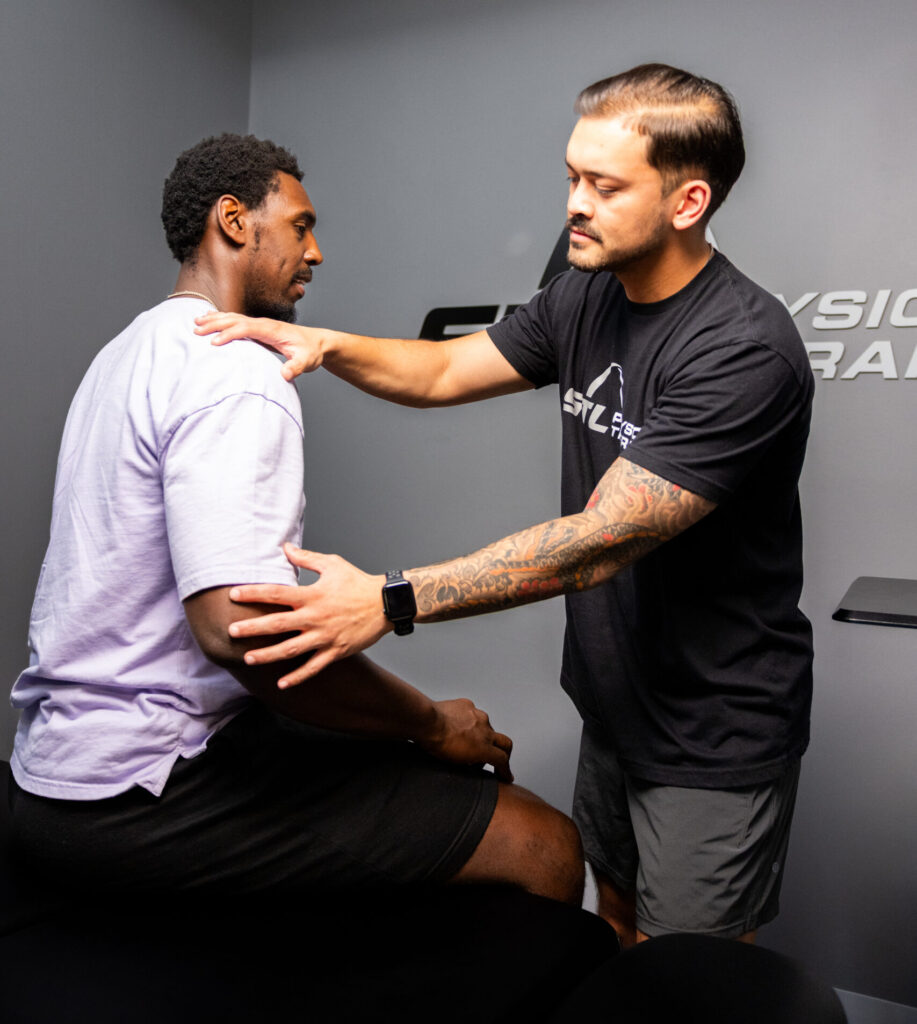
    First, your physical therapist will do a super detailed movement assessment. This helps us find any limitations in your hips, spine, shoulders, and core.

    Next, we check your strength and stability. Golf requires a lot of coordination between different muscle groups, so finding any weaknesses helps us create the best treatment plan for you.

    Your therapist will also chat with you about your injury history and what symptoms you’re currently feeling. This helps us understand how your body has adapted over time.

    Based on everything we find, we create a personalized plan just for you. This program is all about improving your mobility, building strength, and making sure your body is ready for the physical demands of your golf swing.

    You Don’t Need an Injury to Get Ahead with Golf Physical Therapy

    Many golfers think physical therapy is only for when pain has already sidelined them. But truly, prevention is one of the most valuable benefits of working with a physical therapist.

    Improving your hip mobility, strengthening your core, and correcting any faulty movement patterns can help you move much more efficiently and reduce unnecessary strain on your body.

    For many players, this means more consistent swings, more power, and fewer interruptions to their precious time on the course.

    Golf is a sport you can enjoy for decades. Taking care of your body is, hands down, one of the best ways to ensure you can keep playing the game you love for a very long time.

    FAQs You Might Be Wondering About

    Can physical therapy really make my golf swing better?

    Absolutely! Physical therapy can boost your mobility, strength, and coordination, all of which directly impact how your body moves during your golf swing. Many golfers notice improved consistency and less strain after we address their physical limitations.

    What kind of injuries do golfers usually get?

      Common golf injuries include low back pain, hip pain, and golfer’s elbow. These often happen from repetitive movements combined with not enough mobility or strength in certain areas.

      Do I have to be injured to see a physical therapist for golf?

        Nope, not at all! Many golfers come to us to improve their mobility, prevent injuries, and support better performance, even before any pain starts.

        How long does it usually take to recover from a golf injury?

          Recovery time really depends on the injury. Minor irritation might feel better in a few weeks, while more stubborn issues could need several weeks of targeted treatment and exercises.

          What should I wear to my golf physical therapy evaluation?

            Just wear something comfortable that you can move easily in, like athletic shorts or workout pants and a T-shirt. This helps your physical therapist properly check your mobility and movement patterns.

            Ready to Book Your Golf Physical Therapy Evaluation in St. Louis?

            If you’re a golfer in St. Louis dealing with back pain, tight hips, elbow discomfort, or you simply want to move better and play your best on the course, a golf-focused physical therapy evaluation can make a huge difference.

            Here at STL Physical Therapy, our team works with golfers all over the St. Louis area who are looking to improve their mobility, reduce their injury risk, and perform at their peak. During your evaluation, a physical therapist will assess how your body moves, identify any limitations affecting your swing, and create a personalized plan designed just for your goals.

            A lot of golfers are genuinely surprised to learn just how much their mobility and strength influence their swing mechanics. Addressing those physical limitations can lead to smoother movement, better consistency, and less stress on your body.

            You really don’t need to wait until pain forces you to take time off the course. Physical therapy can help you stay active, prevent injuries, and keep enjoying the game you absolutely love.

            Book your golf physical therapy evaluation today, and let’s start building a body that supports a stronger, more efficient golf swing for you!

          1. Dry Needling in St. Louis | STL Physical Therapy

            Dry Needling in St. Louis | STL Physical Therapy

            If you are dealing with ongoing muscle tightness, stubborn pain, or movement that just does not feel right, dry needling may be one of the tools that helps you move forward. At STL Physical Therapy, dry needling is used as part of a larger treatment plan to reduce tension, improve mobility, and help your body start moving more comfortably again.

            Many people searching for dry needling in St. Louis are not just looking for temporary relief. They want to understand why something keeps tightening up, why pain keeps returning, or why recovery feels stalled. That is where the right physical therapy approach matters. Dry needling can help calm irritated tissue and create change quickly, but the long-term goal is always to address the root cause of the problem so you can move better and stay active with confidence.

            At STL Physical Therapy, clients can access dry needling treatment at our Creve Coeur and Manchester locations as part of one-on-one care designed around their goals, symptoms, and movement patterns.

            What Is Dry Needling?

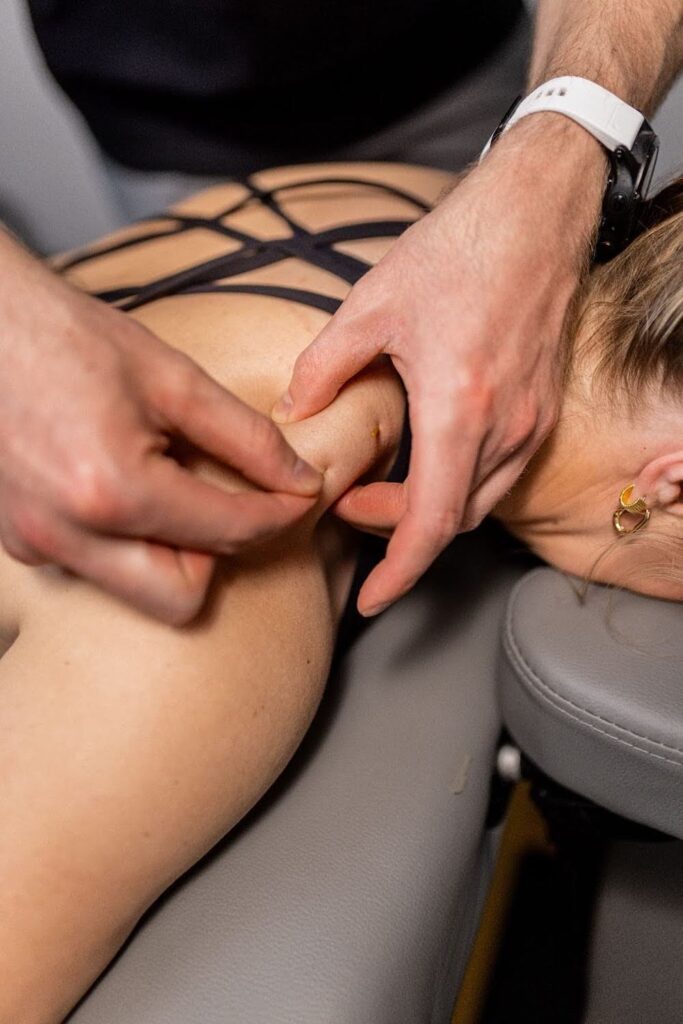
            Dry needling is a treatment technique used by physical therapists to target tight, irritated, or overactive muscles and soft tissues. It involves placing a very thin needle into specific areas of tension in order to reduce muscle guarding, improve tissue mobility, and help decrease pain.

            Despite the name, there is no medication in the needle. The term “dry” simply means the needle itself does not inject anything. What it does is create a response in the tissue that can help muscles relax, improve blood flow, and reduce the stiffness that may be limiting how you move.

            For someone struggling with pain or restricted motion, dry needling can be a helpful step in getting the body ready for the next phase of rehab. At STL Physical Therapy, it is not used as a stand-alone fix. It is one part of a broader plan designed to help clients restore movement, improve control, and build strength so the issue does not keep coming back.

            How Is Dry Needling Different From Acupuncture?

            This is one of the most common questions clients ask, and it is understandable. Both dry needling and acupuncture use thin needles, but they come from different treatment models and are used for different reasons.

            Dry needling is based on modern musculoskeletal assessment. In a dry needling physical therapy setting, the goal is to target tight muscles, trigger points, and movement-related dysfunction that may be contributing to pain or limited range of motion. It is used as part of a rehab plan focused on how the body moves and functions.

            Acupuncture, on the other hand, is rooted in traditional Chinese medicine and follows a different philosophy. While both approaches may help people feel better, dry needling at STL Physical Therapy is specifically integrated into physical therapy care to support recovery, mobility, and performance.

            For clients, the most important difference is not just the needle. It is the full treatment strategy around it. At STL Physical Therapy, dry needling is paired with hands-on care, movement work, and strengthening so relief leads to lasting progress.

            dry needling st louis

            What Can Dry Needling Help Treat?

            Dry needling can be useful for a wide range of musculoskeletal issues, especially when pain and restricted movement are being driven by muscle tension, trigger points, or soft tissue dysfunction. It is often helpful for people who feel like a certain area is always tight, easily aggravated, or slow to recover.

            Some clients come in with neck pain that keeps flaring up during work or after long days at a desk. Others are dealing with shoulder pain, back pain, hip tightness, or persistent calf and hamstring tension. Dry needling may also be used for certain sports injuries, tension-related headaches, and movement restrictions that are interfering with performance or daily activity.

            It can also be part of care for conditions like sciatica when surrounding muscles are contributing to irritation or altered movement. The key thing to understand is that STL Physical Therapy does not apply the same treatment to every client with the same diagnosis. The team looks at the full picture. Pain might show up in one area, but the reason it is happening may start somewhere else. Dry needling can help reduce the symptoms, but identifying and treating the “why” behind those symptoms is what drives more lasting results.

            What to Expect at a Dry Needling Session at STL Physical Therapy

            For many first-time clients, the biggest question is simply what the experience is actually like. If you have been searching for dry needling near me but have never tried it before, knowing what to expect can make the process feel a lot less intimidating.

            Your session starts with an evaluation. The therapist will look at your symptoms, movement limitations, medical history, and goals to determine whether dry needling makes sense for your situation. Not every client needs it, and it is never used just for the sake of using it. It is chosen when it supports the overall treatment plan.

            During treatment, a thin needle is placed into a targeted muscle or irritated tissue area. You may feel a small pinch, pressure, or a quick twitch response in the muscles. Some people barely notice it, while others feel a momentary cramp-like sensation. That response is normal and often signals that the tissue being targeted is the right one.

            Afterward, it is common to feel some soreness for a short period of time, similar to how a muscle might feel after a workout. Many clients also notice that the area feels looser or that movement becomes easier shortly after treatment.

            At STL Physical Therapy, that is not where the work stops. There is a method to the process. Dry needling may be used first to decrease tissue stiffness and improve mobility. From there, treatment continues by improving range of motion, building stability, and then increasing strength and capacity. That progression helps clients not only feel better but also gain the control and resilience needed to stay better.

            Why Dry Needling Works Best as Part of Physical Therapy

            One reason dry needling has become so popular is that it can create noticeable change quickly. When a muscle is highly guarded or movement feels blocked, it can be an effective way to reduce tension and open the door for progress. But symptom relief alone is rarely the whole answer.

            That is why dry needling tends to work best when it is part of a full physical therapy plan. If tight tissue is limiting motion, you still need to restore that motion. If poor stability contributed to the issue in the first place, you need to improve control. If weakness or overload is part of the problem, strength and capacity have to be rebuilt.

            At STL Physical Therapy, the goal is not simply to chase pain from one visit to the next. The goal is to understand why the pain developed, reduce the factors driving it, and then help clients return to activity with a body that moves and performs better. Dry needling is one tool in that process, not the entire process.

            That approach matters whether someone is trying to get through daily life without pain, return to the gym, stay active with their family, or get back to sport.

            Is Dry Needling Covered by Insurance?

            Insurance coverage for dry needling can vary depending on the plan and how treatment is billed. In some cases, it may be included as part of physical therapy care. In others, there may be limitations or out-of-pocket costs associated with it.

            Because every plan is different, the best next step is to contact STL Physical Therapy directly and ask about your specific benefits. The team can help you better understand what may be covered and what to expect before starting care.

            For many clients, the bigger question is not just whether a technique is covered, but whether it is the right fit for the issue they are dealing with. A quick conversation can help clarify that as well.

            Looking for Dry Needling in St. Louis?

            If you have been searching for “dry needling St. Louis,” “dry needling St. Louis MO,” or “dry needling near me,” you are likely looking for more than a place that offers the service. You are looking for a clinic that knows when to use it, how to integrate it into a bigger plan, and how to help you move toward real recovery.

            That is exactly how STL Physical Therapy approaches care. With locations in Creve Coeur and Manchester, the clinic serves clients across the St. Louis area who want personalized treatment that goes beyond temporary symptom management.

            Whether you are dealing with chronic tightness, a nagging injury, or pain that keeps interfering with your workouts or everyday life, dry needling may be a helpful part of your treatment plan.

            Book a Free 15-Minute Phone Consult

            If you are wondering whether dry needling is right for you, the best place to start is with a conversation. STL Physical Therapy offers a free 15-minute phone consult so you can talk through your symptoms, ask questions, and get a better sense of what treatment may look like.

            If you are ready to find a better path forward, reach out today to book your consultation and learn more about dry needling at STL Physical Therapy.

          2. Physical Therapy for Tennis Elbow: Recovery Steps That Help

            Physical Therapy for Tennis Elbow: Recovery Steps That Help

            If the outside of your elbow aches when you grip, lift, shake hands, or even pour a cup of coffee, you might be dealing with tennis elbow. The name is misleading because you do not need to play tennis to get it. This type of elbow pain is extremely common in people who work with their hands, lift weights, use tools, spend long hours at a computer, or do repetitive gripping tasks.

            The good news: physical therapy for tennis elbow is one of the most effective ways to reduce pain and rebuild strength so you can get back to work, workouts, and daily life with more confidence. The key is not just resting until it “goes away” but following a plan that gradually improves your tendon’s tolerance to load.

            What is tennis elbow (lateral epicondylitis)?

            “Tennis elbow” is often called lateral epicondylitis, or more accurately, lateral elbow tendinopathy. It involves irritation and overload of the tendons on the outside of the elbow, commonly where the wrist extensor muscles attach. These muscles help stabilize your wrist and hand during gripping, lifting, and repetitive hand use.

            Many cases are less about inflammation and more about a tendon that has become sensitive and under-prepared for the demands being placed on it. That is why a structured rehab plan usually works better than rest alone.

            physical therapy for tennis elbow

            Common symptoms of tennis elbow

            Tennis elbow typically shows up as:

            • Pain or tenderness on the outside of the elbow (sometimes spreading into the forearm)
            • Discomfort when gripping, lifting, twisting, typing, using tools, or playing racquet sports
            • Reduced grip strength or a feeling that your forearm “gives out”
            • Pain that builds during activity and lingers afterward

            If you also have numbness/tingling, neck pain that seems connected, significant swelling, or pain that does not match the typical pattern, it is worth getting assessed to rule out nerve involvement or other causes.

            Why tennis elbow happens and why rest alone often isn’t enough

            Tennis elbow often starts when your tendon is asked to do more than it can currently tolerate. That “more” could be:

            • A sudden increase in workload (busy season at work, new tool, more lifting)
            • Returning to activity after time off
            • A change in technique (sports, weight training, ergonomics)
            • Repetitive gripping with the wrist in awkward positions

            Rest can calm things down temporarily, but it does not always restore the tendon’s capacity. If you return to the same workload without rebuilding strength and load tolerance, symptoms often come right back. This is where physical therapy for tennis elbow shines: it gives you a progression that helps the tendon adapt safely over time.

            Does physical therapy help tennis elbow?

            In most cases, yes. Physical therapy is designed to address the two biggest problems people run into:

            1. Pain and sensitivity that makes everyday tasks uncomfortable
            2. Reduced load tolerance, meaning the tendon cannot yet handle the gripping/lifting demands of your life

            A PT plan typically includes graded strengthening, mobility work when needed, and activity modifications so you can keep living your life while healing.

            What to Expect at STL Physical Therapy for Tennis Elbow

            At STL Physical Therapy, we do more than chase symptoms. Yes, the first goal is to calm the pain so you can move your arm comfortably again. But the bigger priority is understanding the “why” behind your pain, the underlying movement, mobility, stability, or workload issue that caused the tendon to become irritated in the first place. That way, we are not just helping you feel better temporarily. We are working toward a result that actually lasts.

            Your first visit starts with a thorough evaluation to confirm that your symptoms match tennis elbow (lateral epicondylitis) and to identify the real drivers behind it. For some people, the issue is centered in the forearm tendons themselves. For others, the elbow pain is being fed by limited shoulder control, poor wrist mechanics, restricted joint mobility, or repetitive loading patterns at work or in the gym. The goal is to connect the dots between what is happening in your day-to-day life and why your elbow is reacting the way it is.

            From there, there is a clear method to the process. We typically start with manual therapy to decrease tissue stiffness and improve joint mobility. That often includes hands-on soft tissue work and, when appropriate, dry needling to help reduce sensitivity and restore motion. Once the area is moving better and feels less guarded, we work to improve range of motion so you can access the movement your body needs without compensation.

            Next comes a step many people miss: stability. New motion is only useful if you can control it. We focus on improving your ability to stabilize the wrist, elbow, and shoulder so your arm can handle real-world tasks like gripping, lifting, typing, and sport-specific movements without flaring up again.

            Finally, we build what makes the biggest long-term difference: strength and capacity. This is where rehab turns into resilience. We progress your strengthening in a way that improves tendon load tolerance and helps you return to the activities that matter to you, whether that is racquet sports, weight training, manual labor, or simply getting through the day without pain. For some clients, this looks like return-to-play programming. For others, it is longevity training designed to keep you strong and durable for the long haul.

            Exercises for tennis elbow: what you might see in PT

            You do not need a huge list of 15 exercises to improve. In fact, doing too much too soon is a common reason symptoms flare.

            A typical program might include a small set of exercises that progress over time, often focusing on:

            • Wrist extensor strengthening
            • Grip strengthening that is scaled to your pain tolerance
            • Shoulder and upper back control when needed for overall arm loading
            • A home program you can realistically follow consistently

            If you are looking up exercises online, use caution. Even reputable handouts emphasize exercises should be performed under professional guidance and adjusted to your symptoms.

            What to avoid with tennis elbow

            Many people unintentionally keep tennis elbow going by doing one or more of these:

            Pushing through sharp pain
            Some mild discomfort during rehab can be normal, but sharp pain that lingers and worsens day-to-day is often a sign you need to scale back.

            Random stretching without strengthening
            Stretching alone rarely builds the capacity you need for gripping and lifting.

            Doing everything at once
            More exercises are not always better. Consistency with a focused plan wins.

            Returning to full workload after a “good week”
            Tendons improve in a non-linear way. You want the trend to improve, even if you have occasional difficulties.

            How long does tennis elbow take to heal with physical therapy?

            This depends on how long you have had symptoms, how sensitive the tendon is, and what demands your life places on your arm.

            In general:

            • Mild, newer cases can improve in a matter of weeks with the right plan.
            • More persistent cases often require a longer strengthening and load management period, commonly several weeks to a few months.

            What matters most is not the calendar date, but whether your function is improving. Signs you are on track include:

            • Less pain with gripping tasks
            • Grip strength returning
            • Faster recovery after activity
            • Fewer flare-ups as you increase load

            Your PT should help you set realistic expectations and progress you without guessing.

            When to see a physical therapist for tennis elbow

            Consider scheduling an evaluation if:

            • Pain has lasted over 2–3 weeks and is not improving
            • Gripping and lifting are getting harder, not easier
            • You keep cycling through “rest, feel better, flare again”
            • You have weakness, pain that travels, or symptoms that do not fit the usual tennis elbow pattern

            An evaluation can confirm whether it is truly tennis elbow and help you avoid wasting time on the wrong approach.

            FAQs about physical therapy for tennis elbow

            Is tennis elbow the same as tendonitis?

            It is often labeled “tendonitis,” but many cases are better described as tendinopathy, meaning the tendon has become painful and sensitive because of overload and degeneration rather than simple inflammation.

            Should I use a brace for tennis elbow?

            Some people find temporary relief with a counterforce brace or wrist support, especially during aggravating tasks. A brace can help manage symptoms, but it should not replace a strengthening plan.

            Do I need an X-ray or MRI?

            Most tennis elbow cases are diagnosed clinically based on symptoms and exam findings. Imaging is typically considered if symptoms are unusual, severe, or not improving as expected.

            What is the fastest way to recover from tennis elbow?

            The fastest path is usually the smartest one: reduce irritability, then rebuild strength and load tolerance with a progressive plan you can stick to. Doing too much too soon often slows recovery.

            Can tennis elbow come back after it feels better?

            It can, especially if the workload increases quickly or strength and recovery habits are not maintained. A good PT plan includes a return-to-activity progression and a maintenance approach that fits your lifestyle.

            Ready for a plan that fits your work, workouts, and life?

            If tennis elbow is interfering with your job, training, or everyday tasks, a structured rehab plan can make a big difference. At STL Physical Therapy, we focus on identifying what is driving your symptoms and building a realistic progression to restore strength, grip, and confidence.

            If you would like help, schedule an evaluation and we will map out the next best steps.

          3. Treating Sciatica with Physical Therapy

            Treating Sciatica with Physical Therapy

            Sciatica is one of the most common reasons people come into our clinic. It is also one of the most misunderstood.

            Sciatica is not a diagnosis. It is a symptom. It describes pain, tingling, or numbness that travels from the low back into the glute and sometimes down the leg. For some people it feels sharp. For others it burns or causes pins and needles below the knee.

            The real question is not how to stretch it. The real question is why the nerve is irritated in the first place.

            That is where treating sciatica with physical therapy becomes important.

            What Causes Sciatica?

            Sciatic nerve irritation can come from several sources:

            • Disc irritation in the lower back
            • Limited hip mobility
            • Poor spinal control under load
            • Prolonged sitting
            • Strength imbalances through the glutes and core

            In active adults and athletes, sciatica is often tied to movement patterns. Lifting, running, and even long hours at a desk can create stress that builds over time.

            The nerve does not become irritated randomly. Something is driving it. If you only chase symptoms, the pain often returns.

            Does Physical Therapy Help Sciatica?

            Yes, when it is done correctly.

            Treating sciatica with physical therapy focuses on reducing nerve sensitivity, restoring movement, and building strength that protects the spine and hips.

            Complete rest is rarely the solution. In most cases, the right type of movement improves recovery more than avoiding activity entirely.

            At STL Physical Therapy, we assess how your spine, hips, and pelvis move together. We identify the weak link and build a plan around that.

            Our goal is not short-term relief. It is long-term resilience.

            How We Treat Sciatica at STL Physical Therapy

            Every case is different, but the structure of care remains consistent.

            Step 1: Calm the Irritation

            If the nerve is highly sensitive, we begin by improving tolerance to movement.

            This may include:

            • Specific positioning strategies
            • Targeted mobility work
            • Hands-on soft tissue treatment
            • Dry needling when appropriate

            When muscle tension contributes to nerve sensitivity, dry needling can reduce stiffness and allow us to progress more efficiently. It is not the entire solution, but it can support the larger plan.

            Step 2: Restore Movement

            Once symptoms begin to settle, we focus on restoring how your body moves.

            This may involve:

            • Improving hip mobility
            • Rebuilding glute activation
            • Teaching better hinge mechanics
            • Reducing unnecessary spinal stress

            This is where many clients begin to feel more in control of their symptoms.

            Step 3: Build Strength and Capacity

            Most people have already tried resting, icing, or stretching their feet. Those can help temporarily, but they often don’t solve the underlying capacity issue. A better approach is to reduce the irritation while you build the system back up.

            Pain relief is not the finish line.

            If strength and load tolerance are not rebuilt, symptoms often return.

            We progressively load the spine and hips in a controlled way. That may include:

            • Core strengthening
            • Posterior chain training
            • Modified lifting patterns
            • Gradual return to running or training

            The goal is to make sure your body can handle real-life demands, not just table-based rehab.

            Physical Therapy Exercises for Sciatica

            One of the most searched phrases online is physical therapy exercises for sciatica.

            There is no universal list that works for everyone.

            Some people respond well to extension-based movements. Others benefit from nerve glides. Some need stability work. Others need progressive strength training.

            Aggressively stretching the hamstrings is not always helpful. In some cases, it can worsen symptoms.

            The right exercise depends on why the nerve is irritated. That is why a proper movement assessment matters.

            Can You Lift or Train with Sciatica?

            In many cases, yes.

            We often modify training instead of eliminating it.

            Telling someone to stop lifting or avoid activity may temporarily reduce symptoms, but it does not build durability. With the right adjustments and progressions, most people can continue training while improving.

            How Long Does Sciatica Take to Improve?

            Recovery depends on the underlying cause and how long symptoms have been present.

            Some cases improve within a few weeks. More persistent cases require structured progression over time.

            What matters most is having a clear plan rather than guessing week to week.

            Physical Therapy for Sciatica in St. Louis

            If you are searching for physical therapy for sciatica near you in St. Louis, STL Physical Therapy provides one-on-one care inside a real training environment.

            Our approach blends:

            • Hands-on physical therapy
            • Movement assessment
            • Strength-based rehabilitation
            • Dry needling when appropriate
            • Performance-driven progression

            We are not just trying to quiet pain. We are helping you move well, train confidently, and prevent recurring flare-ups.

            Ready to Address Sciatic Nerve Pain at the Source?

            If you are dealing with radiating leg pain or recurring symptoms, schedule an evaluation and we will build a plan based on how your body actually moves.

          4. Plantar Fasciitis Physical Therapy: What Actually Works for Heel Pain

            Plantar Fasciitis Physical Therapy: What Actually Works for Heel Pain

            If your heel hurts most when you take your first few steps in the morning, you’re not alone. That “sharp, stabbing” pain at the bottom of the foot is one of the most common reasons people stop running, cut back on walking, or dread long days on their feet. And while the internet is full of quick fixes, plantar fasciitis has a habit of sticking around when the plan is built on guesswork.

            This is where plantar fasciitis physical therapy is different. The goal isn’t to throw a random stretch at the problem and hope it disappears. It’s understanding why the tissue is getting irritated in the first place, reducing the stress that’s driving symptoms, and then rebuilding the strength and tolerance your foot and lower leg need so the pain doesn’t keep returning.

            What plantar fasciitis really is and why it’s so stubborn

            Plantar fasciitis refers to irritation and pain involving the plantar fascia, a thick band of connective tissue that supports the arch of your foot and helps transfer force as you walk and run. When that tissue is repeatedly overloaded, whether from sudden increases in activity, prolonged standing, or mechanics your body can’t currently handle, it can become painful and sensitive.

            What makes it frustrating is the pattern. Many people feel it most first thing in the morning or after they’ve been sitting for a while. Then it “loosens up” a bit as they move around, only to flare again later in the day or the next morning. That’s a clue that the tissue isn’t just “tight.” It’s struggling to meet the demand being placed on it.

            And although the term “plantar fasciitis” is commonly used, not every case of heel pain is the same thing. Other conditions can mimic it. That’s why getting the right diagnosis early matters, especially if you’ve been trying the usual remedies without a clear trend toward improvement.

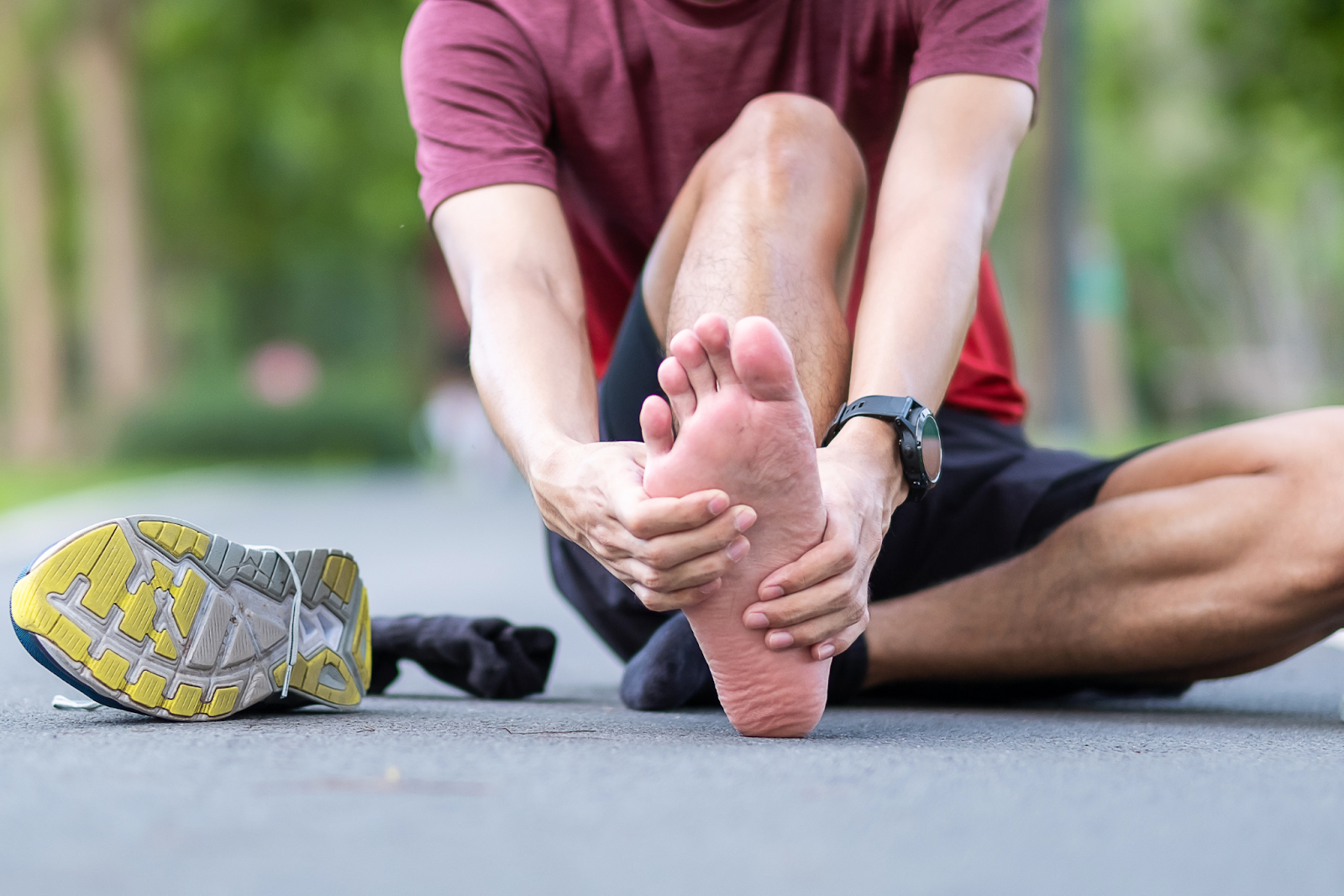
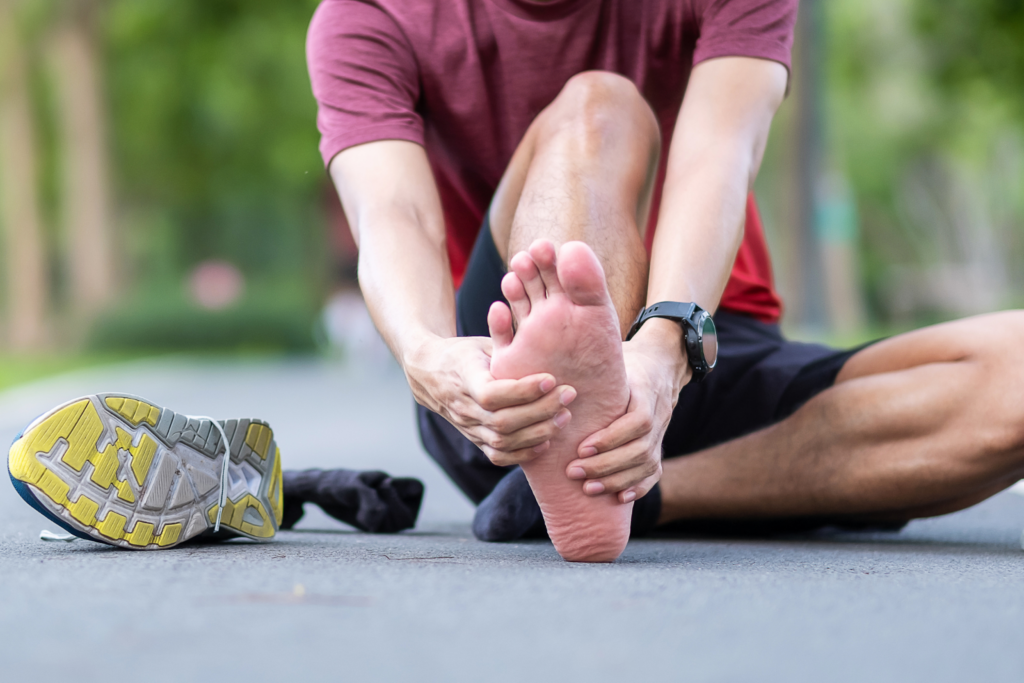
            plantar fasciitis

            Why plantar fasciitis happens: it’s usually a capacity problem

            Most cases aren’t caused by one single “bad step.” Plantar fasciitis tends to show up when your activity level outpaces what your tissues are currently prepared to tolerate. That might be an obvious jump, like ramping up mileage, starting a new workout plan, or taking a trip with way more walking than usual. But it can also be subtler: standing more at work, wearing different shoes, adding hills, or even simply being busier and recovering less.

            Physical therapy looks for the specific factors that are driving the overload in your case. Sometimes it’s limited ankle mobility that forces your foot to compensate. Sometimes it’s calf weakness or poor endurance; your calf fatigues, and the foot takes the hit. In runners, it can be a mix of training errors and strength deficits that show up as your volume increases. In people who stand for work, it’s often less about running mechanics and more about cumulative load across long shifts.

            The important takeaway is this: plantar fasciitis isn’t usually a “stretch it harder” problem. It’s more often a “build capacity and manage load” problem.

            Does physical therapy help plantar fasciitis?

            Yes, when it’s done correctly, physical therapy for plantar fasciitis has a strong track record. The key is that effective care is usually active and progressive, not passive and repetitive. A plan that’s built around restoring function tends to include education, targeted mobility work where it’s actually needed, and a strengthening progression that builds tolerance in the foot and lower leg.

            Current clinical guidance supports interventions like plantar fascia and calf stretching, manual therapy in the right situations, taping for short-term support, and, critically, exercise programs that strengthen and load the involved tissues appropriately.

            In other words, PT works best when it’s a strategy, not a collection of random tools.

            What happens in a plantar fasciitis physical therapy evaluation

            A good evaluation doesn’t just confirm, “Yep, that’s plantar fasciitis.” It identifies why the problem started and what needs to change for it to resolve.

            That usually begins with understanding your symptoms and your routines: how your pain behaves throughout the day, what your activity looks like, what footwear you use, and whether anything recently changed. From there, your therapist will assess ankle motion, calf flexibility and strength, foot control, balance, and how you move during tasks that matter to you, walking, standing, stairs, and for athletes, running or jumping readiness.

            The real value is leaving with a clear plan: what to do now, what to avoid temporarily, and how your rehab should progress over the next several weeks.

            What plantar fasciitis physical therapy actually does

            Most people have already tried resting, icing, or stretching their feet. Those can help temporarily, but they often don’t solve the underlying capacity issue. A better approach is to reduce the irritation while you build the system back up.

            Early on, your therapist may help you adjust your activity so the tissue can calm down. That doesn’t necessarily mean shutting everything down. It often means modifying volume, surfaces, or intensity so you’re not repeatedly spiking the same symptoms day after day. One of the most useful measures is the “next morning” test: if your first-step pain keeps creeping upward from one morning to the next, your tissue is getting more irritated, and something needs adjusting.

            Mobility work can be helpful, but it’s usually most effective when it’s specific and appropriately dosed. If your ankle is stiff or your calf is limited, improving that can reduce strain on the foot. But stretching alone rarely solves it, especially if your strength and endurance is lagging behind your daily demands.

            That’s why strengthening is often the turning point. Building calf capacity is a big deal in plantar fasciitis rehab because the calf helps control how your heel lifts and how force moves through your foot. Strengthening the intrinsic foot muscles can improve arch support and control under load. And depending on the person, strengthening higher up the chain, hips and trunk, can also matter, particularly for runners who need more stability and better force distribution.

            Manual therapy can support this process by improving comfort and movement, and taping or footwear adjustments can provide short-term relief. But the end game is still the same: restore your ability to tolerate the loads you need for your life, whether that’s running, walking, standing at work, or simply being active without thinking about your heel.

            How long does plantar fasciitis take to heal with physical therapy?

            This depends on how long you’ve had symptoms, how high your daily load is, and how consistently you can follow a progression. Many people start to notice meaningful improvement within several weeks of a focused plan, especially when they stop “randomizing” their rehab and follow a progression with clear rules.

            More persistent cases can take longer, often because the overload driver remains high (for example, a job that requires constant standing) or because the tissue has been irritated for a long time and needs a longer runway to adapt. That’s not a reason to lose hope; it’s simply a reminder that the plan needs to match the reality of your schedule and demands.

            Why people get stuck

            A common trap is the cycle of resting until it feels better, then jumping right back into the same activity level that caused the problem. Another is relying only on passive relief: rolling on a ball, icing, massage tools, and inserts are helpful for symptoms but not a full strategy.

            Plantar fasciitis improves more reliably when your plan includes a clear progression and measurable milestones. You should know what you’re doing this week, why you’re doing it, and how it will change next week if symptoms are trending in the right direction.

            If you’ve been “doing exercises” but nothing is changing, it’s often because the exercises aren’t progressed or they’re not targeting the right limitation for you.

            plantar fasciitis physical therapy

            When you should get help

            If heel pain has lasted more than a few weeks without improvement, if you’re limping, or if you’ve tried the usual self-care options and symptoms keep returning, it’s worth getting assessed. Not every heel pain presentation is plantar fasciitis, and you don’t want to spend months treating the wrong thing.

            You should also seek medical evaluation sooner if you have significant swelling, numbness or tingling, night pain that isn’t changing, or a history of trauma.

            Frequently Asked Questions

            Is walking good or bad for plantar fasciitis?

            Walking isn’t automatically bad, but too much walking too soon often keeps symptoms going. A helpful way to judge is how your heel responds later that day and the next morning. If your first-step pain is trending worse, your current load is likely too high.

            What are the best exercises for plantar fasciitis?

            The best program depends on what’s driving your symptoms. Most people need some combination of calf strengthening, foot strengthening, and targeted mobility work, progressed over time.

            Do I need orthotics for plantar fasciitis?

            Some people benefit short-term, especially during high-irritation phases. But for many, orthotics are most useful as a temporary support while strength and tolerance improve, not as a stand-alone fix.

            How many PT visits are typical for plantar fasciitis?

            It varies. Some people improve quickly once they follow a structured progression and adjust load, while others need more support when symptoms have been present for a long time or when their daily demands are high.

            Should I stretch my foot if it hurts?

            Gentle, well-timed stretching can help, especially if you’re stiff. But aggressive stretching into sharp pain can keep tissue irritated. If stretching makes your next-morning symptoms worse, it should be adjusted.

            The bottom line

            If plantar fasciitis is affecting your walking, workouts, or workday, you don’t have to keep guessing. Plantar fasciitis physical therapy focuses on the real driver: balancing load and rebuilding tissue capacity so your heel can handle your life again.

            At STL Physical Therapy, we focus on 1-on-1 care and individualized plans, so you’re not bouncing between generic advice and temporary fixes. If you’d like help figuring out what’s driving your heel pain and what to do next, you can start with a free 15-minute phone consultation, and we will guide you from there.