ACL Injury Prevention & Rehab in St. Louis
A guide to recovering from an ACL injury and returning to sport with 1-on-1, individualized care.
ACL Injuries Can Change Your Season. The Right Rehab Can Help You Come Back Stronger.
An ACL injury can take an athlete out of the game in an instant, but recovery is about much more than waiting for the knee to heal. If you are looking for ACL injury rehab in St. Louis, STL Physical Therapy provides individualized, one-on-one care designed to rebuild strength, restore movement, and prepare you for the demands of your sport.
Whether you are a soccer player working to get back on the field, a football athlete preparing for your next season, or an active individual recovering from an ACL injury, your rehabilitation should reflect what you need to do when you return.
Our approach combines ACL rehab physical therapy, progressive strength training, movement retraining, and return-to-sport testing to help you move forward with confidence.
Book your evaluation today and take the next step toward a safe, confident return to activity.
What Is an ACL Injury?
The anterior cruciate ligament, or ACL, is one of the major ligaments that helps stabilize the knee. It plays an important role during movements that involve running, jumping, landing, cutting, pivoting, and quickly changing direction.
ACL injuries are especially relevant in sports such as soccer, football, and basketball because athletes regularly perform these high-demand movements at speed.
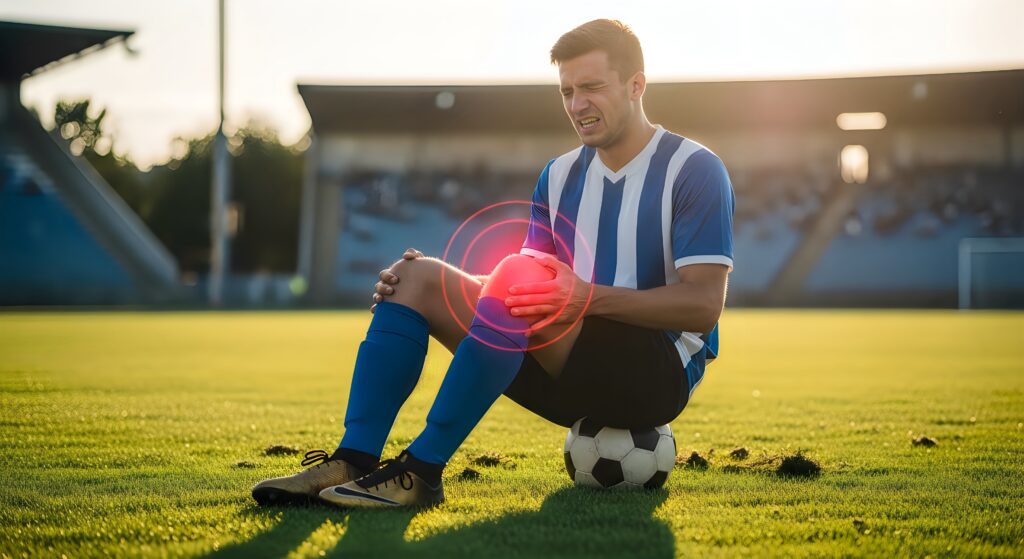
An ACL injury can happen during contact with another athlete, but many ACL injuries also occur without direct contact. A sudden change of direction, awkward landing, or rapid deceleration can place significant stress on the knee.
Depending on the severity of the injury and the athlete’s goals, treatment may involve rehabilitation alone or surgery followed by a structured rehabilitation program.
No matter which path is appropriate, ACL injury rehab should focus on more than the injured ligament. Restoring strength, movement quality, coordination, and confidence is an important part of preparing the entire athlete to return to sport.
Signs You May Need ACL Rehab
ACL injuries can look different from one person to another. Some athletes know immediately that something is wrong, while others notice ongoing instability or difficulty returning to normal movement after the initial injury.
You may benefit from ACL rehab if you are experiencing:
- Knee swelling or stiffness
- Difficulty fully bending or straightening the knee
- Weakness in the injured leg
- Reduced confidence putting weight through the knee
- Difficulty running, jumping, or changing direction
- A feeling that the knee is unstable
- Difficulty returning to practices or competition
- Strength or movement differences between your legs
- Ongoing limitations after ACL surgery
If an ACL injury is keeping you from participating fully in your sport, a comprehensive evaluation can help determine what needs to improve and create a clear plan for moving forward.
Why ACL Rehab Is Especially Important for Soccer, Football, and Basketball Athletes
Soccer, football, and basketball require much more from the knee than walking, jogging, or completing basic strengthening exercises.
Athletes need to accelerate, decelerate, cut, jump, land, react, and change direction while maintaining control. Returning to these activities requires progressive preparation for the actual demands of the game.
Soccer ACL Injury Rehabilitation
Soccer athletes repeatedly cut, pivot, sprint, land, and react to unpredictable situations on the field. Following a soccer ACL injury, rehabilitation should gradually rebuild the strength and movement skills needed for these demands.
As recovery progresses, ACL rehab may include running progressions, jumping and landing mechanics, change-of-direction training, and soccer-specific movement.
The goal is not simply to get back to running. It is to prepare the athlete to tolerate the speed, intensity, and unpredictability of soccer again.
Football ACL Injury Rehabilitation
Football places its own unique demands on the knee. Depending on the athlete’s position, returning to the field may require sprinting, cutting, backpedaling, jumping, absorbing contact, or quickly producing force from different positions.
Following a football ACL injury, rehabilitation should account for those demands.
Our approach progresses athletes from foundational strength and mobility toward sports-specific rehabilitation that reflects what they will need during practices and games.
Basketball ACL Injury Rehabilitation
Basketball places significant demands on the knee through repeated jumping, landing, sprinting, stopping, and quick changes of direction. Following a basketball ACL injury rehabilitation should gradually prepare the athlete to handle these movements with strength, control, and confidence.
As recovery progresses, ACL rehab may include jumping and landing progressions, deceleration training, lateral movement, change-of-direction drills, and basketball-specific movement.
The goal is to prepare the athlete for the speed and repeated high-impact demands of basketball, whether that means driving to the basket, defending, rebounding, or reacting quickly during practices and games.
Return-to-Sport Testing After an ACL Injury
Being cleared based on time alone does not necessarily tell you how prepared you are for sport.
Return-to-sport testing gives us objective information about strength, movement, power, control, and other physical qualities that matter when returning to athletic activity.
Depending on your sport and stage of recovery, testing may evaluate:
- Lower-body strength
- Strength differences between limbs
- Single-leg performance
- Hop and jump ability
- Landing mechanics
- Balance and control
- Change-of-direction ability
- Sport-specific movement
The results can help identify areas that still need work and guide the next phase of rehabilitation.
At STL Physical Therapy, our goal is to help athletes understand where they are in the process rather than relying only on how the knee feels.
ACL Prevention Program for St. Louis Athletes
You do not need to experience an ACL injury before paying attention to how your knees move.
Research on ACL injury prevention training supports multicomponent programs that address areas such as strength, balance, agility, and movement technique to help reduce the risk of noncontact ACL injuries.
An individualized ACL prevention program can help athletes develop the strength, control, coordination, and movement strategies needed for demanding sports.
Our ACL injury prevention approach may focus on:
- Lower-body strength
- Single-leg stability
- Jumping and landing mechanics
- Deceleration
- Cutting mechanics
- Hip and trunk control
- Balance and coordination
- Sport-specific movement patterns
An ACL prevention program can be especially valuable for athletes participating in sports that involve frequent jumping, landing, cutting, and changes of direction.
Rather than promising that every injury can be prevented, the goal is to identify modifiable factors and build physical qualities that can help athletes better manage the demands of their sport.
ACL Injury Prevention for Youth Soccer, Football, and Basketball
Young athletes are often playing and training throughout much of the year. As the intensity of competition increases, strength, movement quality, recovery, and workload become increasingly important.
For soccer players, an ACL prevention program may emphasize landing mechanics, deceleration, cutting, lower-body strength, and single-leg control.
For football players, training can be adjusted based on position and may include acceleration and deceleration, change-of-direction mechanics, lower-body strength, and control during high-force movements.
For basketball players, an ACL prevention program may focus on jumping and landing mechanics, deceleration, lateral movement, change-of-direction control, lower-body strength, and single-leg stability to help prepare athletes for the repeated high-impact demands of the game.
For young athletes, strength training can also help build the strength, control, and coordination needed to meet the demands of their sport.
The goal is not to make every athlete move exactly the same way. It is to give them the physical tools they need to perform their sport efficiently and confidently.
Why Choose STL Physical Therapy for ACL Rehab?
ACL recovery can be a long process, and the needs of an athlete can change significantly from one stage to the next.
At STL Physical Therapy, we provide one-on-one care that allows your physical therapist to follow your progress, adjust your program, and help you work toward the specific activities that matter to you.
When you work with our team, you can expect:
- One-on-one physical therapy
- Individualized rehabilitation programs
- Comprehensive movement assessments
- Progressive strength and performance training
- Return-to-sport testing
- Sport-specific rehabilitation
- Clear education throughout your recovery
- A plan built around your goals
Whether your goal is returning to soccer, football, tennis, baseball, recreational sports, or everyday activity, we work to bridge the gap between rehabilitation and performance.
Our Approach to ACL Injury Rehab in St. Louis
Every ACL recovery is different. Your sport, position, injury history, surgery status, current strength, movement quality, and goals all influence how rehabilitation should progress.
That is why we do not rely on a one-size-fits-all protocol.
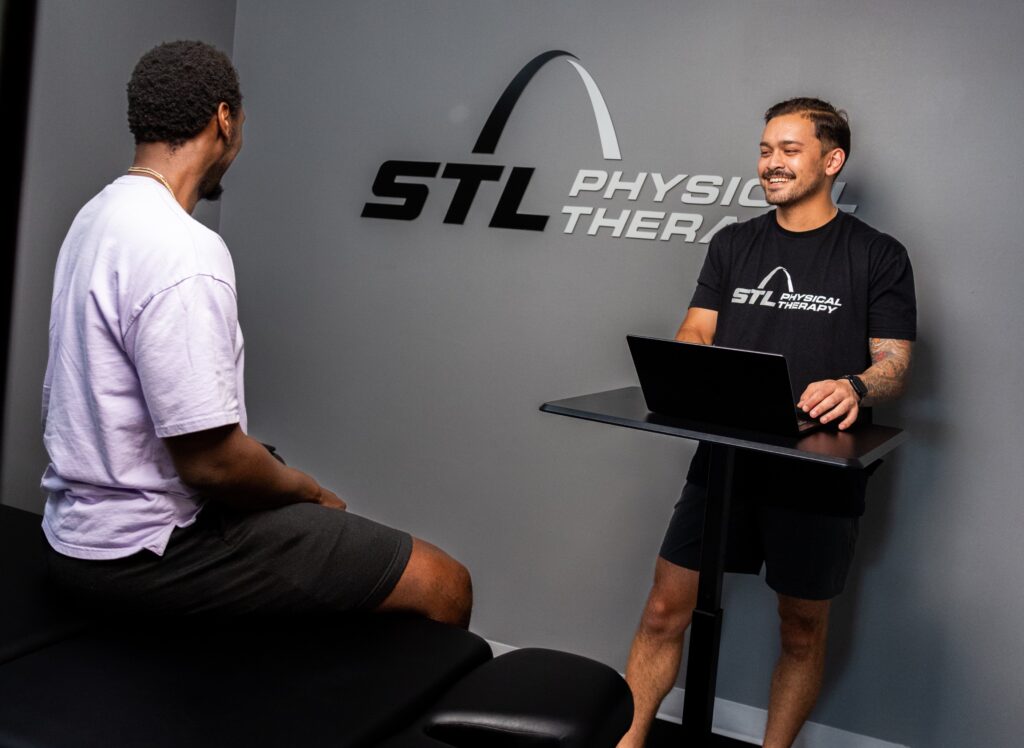
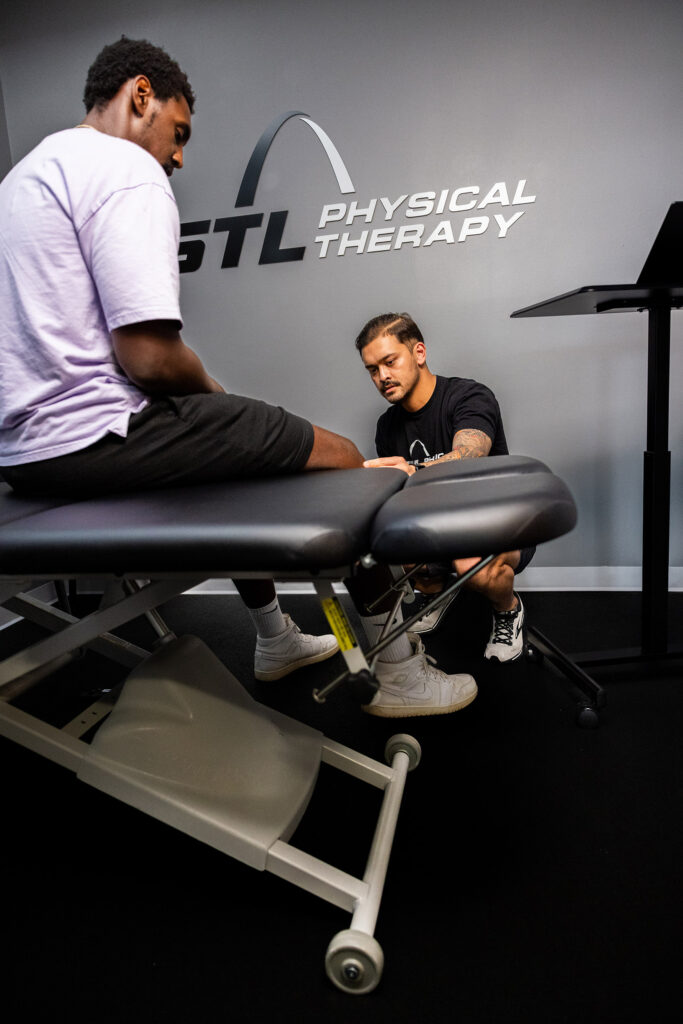
At STL Physical Therapy, ACL injury rehab begins with a comprehensive evaluation that typically lasts around 60 minutes. This gives your physical therapist time to understand where you are in your recovery, assess how your knee and body are moving, discuss your goals, and identify the physical qualities that need to improve before progressing to more demanding activities.
Depending on your stage of rehabilitation, we may assess:
- Knee mobility and range of motion
- Quadriceps and hamstring strength
- Hip and lower-body strength
- Single-leg control
- Balance and stability
- Walking and running mechanics
- Jumping and landing mechanics
- Change-of-direction ability
- Sport-specific movement
- Confidence during higher-level tasks
From there, we build an individualized plan designed to progress with you throughout recovery.
What Your ACL Rehab Program May Include
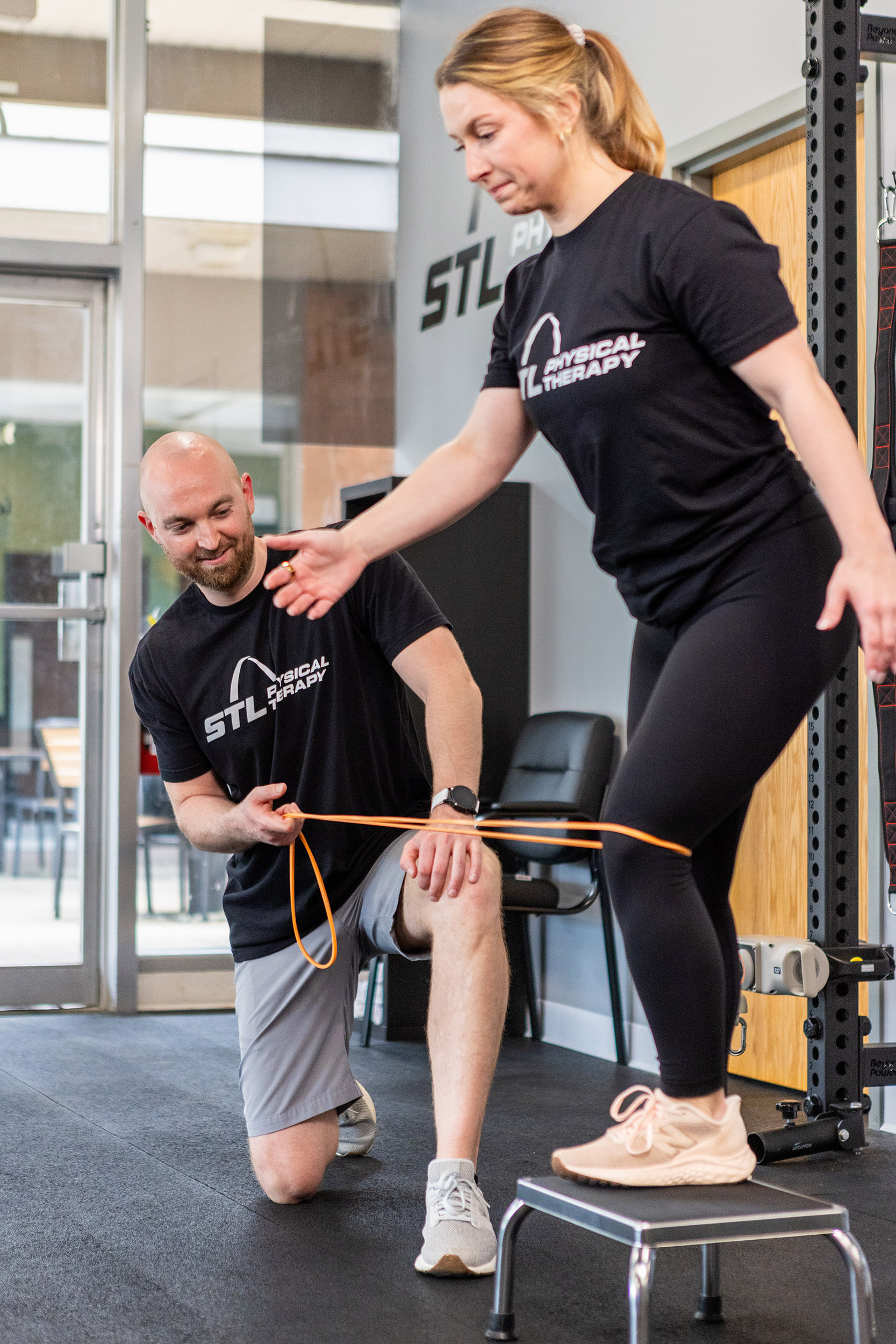
ACL rehabilitation changes as you recover. Early goals can look very different from what you need several months later when you are preparing to run, cut, jump, or return to competition.
Your program may include:
Mobility and Range of Motion
Restoring comfortable knee movement is an important early part of ACL rehabilitation. Treatment may focus on improving knee extension and flexion while addressing stiffness that limits normal movement.
Progressive Strength Training
Strength is essential for supporting the knee and preparing the body for higher-level activity.
Your program may progressively target the quadriceps, hamstrings, hips, calves, and other lower-body muscles based on your evaluation and stage of recovery.
Balance and Single-Leg Control
Soccer, football, tennis, baseball, and many everyday activities require the ability to control your body on one leg.
Single-leg exercises can help improve balance, stability, coordination, and the ability to manage forces through the lower body.
Running, Jumping, and Landing Progressions
As your knee becomes ready for greater demands, rehabilitation can progress toward running, jumping, and landing.
Rather than simply adding these activities because enough time has passed, we look at how you perform them and whether your body is prepared for the next level of activity.
Change-of-Direction and Sport-Specific Training
Cutting and changing direction are major components of many sports.
Later stages of ACL rehab may incorporate progressively faster and more complex movement patterns to help bridge the gap between traditional rehabilitation exercises and the demands of practice and competition.
Frequently Asked Questions
How long does ACL rehab take?
ACL recovery timelines vary depending on the severity of the injury, whether surgery was required, your progress, your sport, and your individual goals. Instead of focusing only on a specific date, rehabilitation should also consider objective measures such as strength, movement quality, and readiness for higher-level activity.
When can I return to sports after an ACL injury?
Return-to-sport timing is different for every athlete. Your medical team and physical therapist can consider healing, strength, functional performance, movement quality, sport demands, and other factors when determining whether you are ready to progress.
Return-to-sport testing can provide objective information to help guide that process.
Can physical therapy help prevent an ACL injury?
No program can guarantee that an ACL injury will never occur. However, an ACL prevention program can address modifiable factors such as lower-body strength, landing mechanics, balance, coordination, and movement control.
What does ACL rehab involve?
ACL rehab physical therapy typically progresses through several stages. Depending on where you are in recovery, treatment may involve restoring range of motion, building strength, improving single-leg control, returning to running, progressing in jumping and landing, practicing change-of-direction movements, and eventually preparing for sport-specific demands.
Do you work with youth soccer, football, and basketball athletes?
Yes. STL Physical Therapy works with youth athletes and can tailor rehabilitation and injury prevention to the demands of soccer, football, basketball and other sports. Programs are individualized based on the athlete’s age, sport, position, stage of recovery, and goals.
Do I need to be injured to start an ACL prevention program?
No. ACL prevention training can be incorporated before an injury occurs. An evaluation can identify areas such as strength, balance, landing mechanics, or movement control that may benefit from additional training.
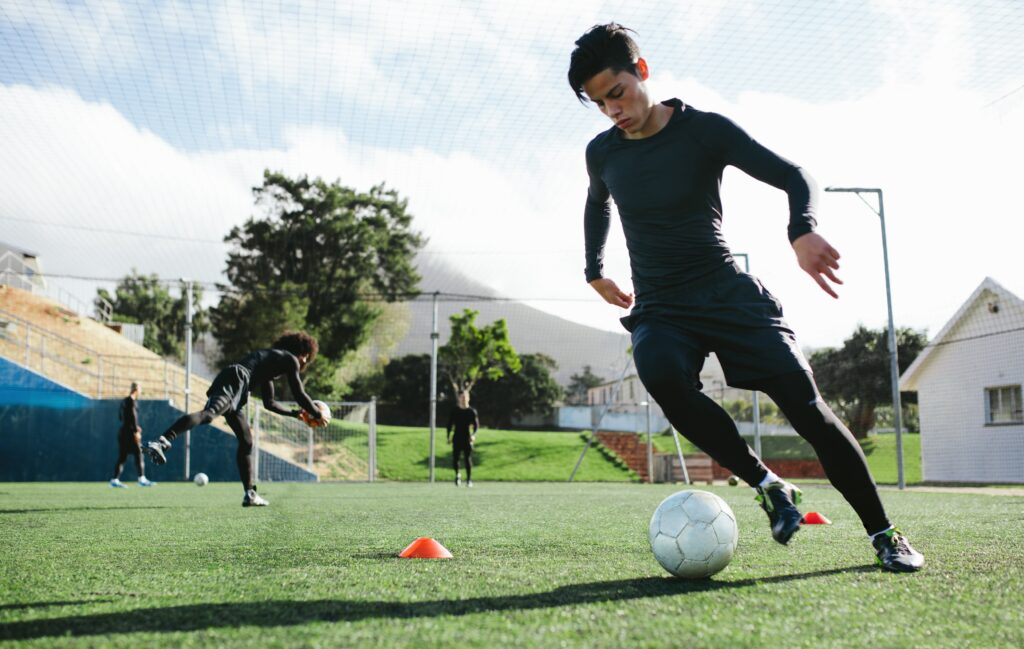
Get Back to the Sport You Love
An ACL injury may interrupt your season, but rehabilitation gives you an opportunity to rebuild the strength, movement, and confidence you need for what comes next.
Whether you are recovering from surgery, working through a non-operative rehabilitation plan, preparing to return to soccer, football or basketball or looking for an ACL prevention program, STL Physical Therapy can build a plan around your goals.
If you are looking for ACL injury rehab in St. Louis, our team is ready to help you move from rehabilitation toward performance with individualized care and objective return-to-sport testing.
Your Next Step
Do not leave your return to sport to guesswork.
Book an evaluation for ACL injury rehab in St. Louis or call us (314) 275-0703 and get an individualized plan designed to help you rebuild strength, restore movement, and confidently work toward the activities and sports that matter to you.