Low Back Pain Treatment in St. Louis, MO
A guide to relieving low back pain and moving with confidence again through one-on-one, individualized care.
Low Back Pain Has a Way of Getting Into Everything
Low back pain rarely affects just one part of your day. You may notice it when you bend down to tie your shoes, sit through a long meeting, swing a golf club, or reach for a ball. Many people assume it is just part of getting older, staying active, or something that will eventually work itself out.
Sometimes it does. But when pain sticks around, it can gradually change the way you move, often without you even realizing it.
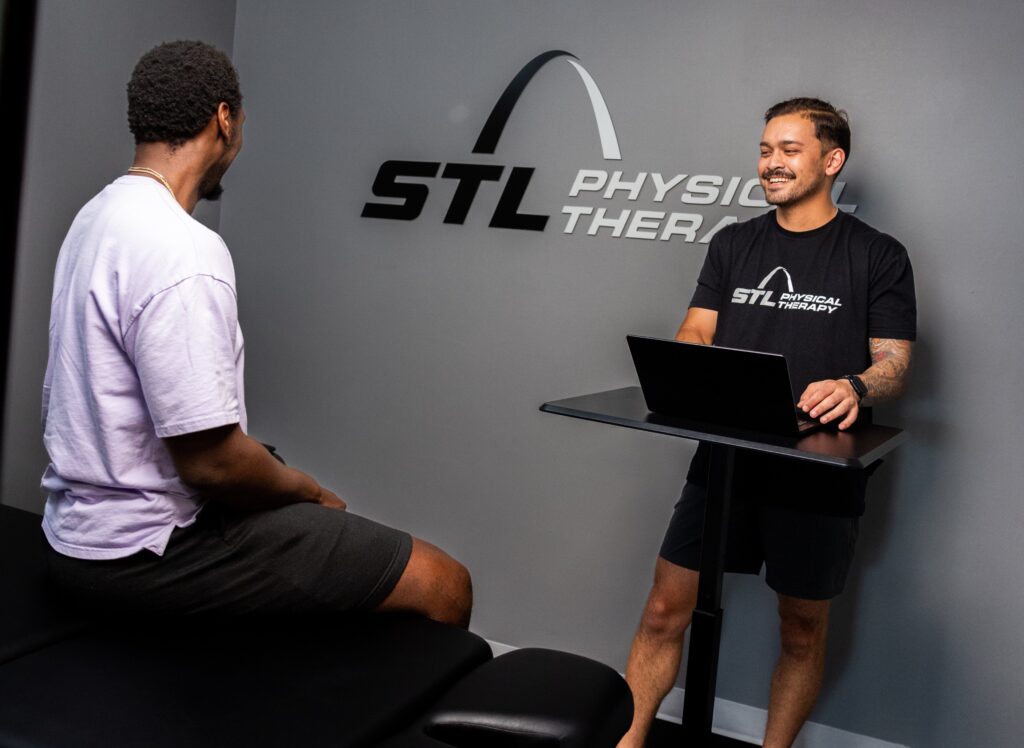
At STL Physical Therapy, we do not treat low back pain as an isolated symptom. We look at how your hips move, how your core is working, and how you sit, stand, lift, and play. Then, we build a plan around what may actually be contributing to your pain.
If you have been searching for low back pain treatment in St. Louis that goes beyond a quick fix, this is where that starts.
Book your evaluation today and take the first step toward moving without hesitation.
Why Does Low Back Pain Happen?
Your low back does a lot of work. It supports your upper body, helps transfer force between your hips and spine, and manages load every time you walk, bend, twist, or lift. When part of that system is not moving or working as well as it should, the low back can end up taking on more stress.
Common contributors to low back pain include:
- Muscle strain from lifting, twisting, or overuse
- Limited hip mobility that causes the low back to compensate
- Weak or underactive core and glute muscles
- Disc-related issues, including bulging or degenerative discs
- Sacroiliac (SI) joint dysfunction
- Nerve irritation, including sciatica
- Poor movement patterns during sports or daily activities
- Prolonged sitting or sedentary habits
- A previous injury that never fully resolved
- Pregnancy-related changes in posture, stability, and joint laxity
Pregnancy deserves a special mention because it changes how the body manages load, balance, and core support. Low back pain is a common concern during pregnancy, and our team works with clients through every trimester to address the specific movement and stability changes that can come with each stage.
Signs You May Benefit From Low Back Pain Physical Therapy
You do not need to wait until pain becomes unbearable to get help. Addressing low back pain earlier can help prevent compensations from developing and other areas of the body from taking on additional stress.
Consider low back pain physical therapy if you are dealing with:
- Pain that lasts more than a few days or keeps returning
- Stiffness that is worse in the morning or after sitting
- Pain that travels into your hip, glute, or down your leg
- Discomfort when bending, lifting, or twisting
- Trouble finding a comfortable position to sleep
- Pain during or after golf, pickleball, running, or working out
- A feeling of instability or weakness through your core or hips
- Pain that changes the way you move, sit, or stand
Even one of these signs may be worth addressing, especially if it persists, keeps coming back, or starts interfering with your daily activities. An evaluation can help identify what may be contributing to your pain and determine the best next steps for getting you moving comfortably again.
Conditions We Commonly Treat
Low back pain does not always come with one clear diagnosis. It can be connected to or overlap with several other conditions. Some of the most common issues we treat include:
Sciatica
Sciatica occurs when the sciatic nerve, which runs from the low back through the hip and down the leg, becomes irritated or compressed. It may cause sharp, burning, or shooting pain, as well as numbness or tingling that travels down the leg.
Treatment focuses on reducing irritation, improving mobility, and addressing the movement or mechanical factors that may be placing additional stress on the nerve.
Sacroiliac (SI) Joint Pain
The sacroiliac joints connect your spine to your pelvis. When these joints are not moving or stabilizing as they should, they can cause pain that feels very similar to general low back pain.
Because SI joint pain and low back pain often overlap, we look at both during your evaluation rather than treating them as completely separate problems.
Muscle Strain and Overuse
Whether it starts with a single lifting incident or develops gradually from repetitive strain, muscle strain is one of the most common causes of low back pain we see. It is also often very responsive to physical therapy.
Disc-Related Pain
Bulging, herniated, or degenerative discs can cause pain in the low back or symptoms that travel into the leg. Treatment may focus on reducing irritation, improving supporting strength, and helping you return to comfortable, confident movement.
Postural and Sedentary-Related Pain
Long hours at a desk or in a car can contribute to stiffness, weakness, and discomfort that develops gradually rather than starting with one specific injury.
Pregnancy-Related Low Back Pain
Pregnancy changes posture, core stability, and joint laxity, all of which can contribute to low back pain. We work with clients through every trimester and tailor each evaluation to their stage of pregnancy and individual needs.
If this applies to you, let us know when you book so we can make sure your evaluation is appropriate for you.
Why Choose STL Physical Therapy for Low Back Pain Treatment?
One-on-One Attention
You work directly with a physical therapist at every visit, giving you consistent, personalized care throughout your treatment. Your therapist gets to know your needs, tracks your progress, and adjusts your plan as you improve.
We Look Beyond the Symptom
Where it hurts is not always the whole story. Hip mobility, core stability, strength, and movement patterns elsewhere in the body can all influence what you feel in your low back.
That is why our evaluations look at the bigger picture rather than focusing only on the painful area.
A Movement-Based Approach
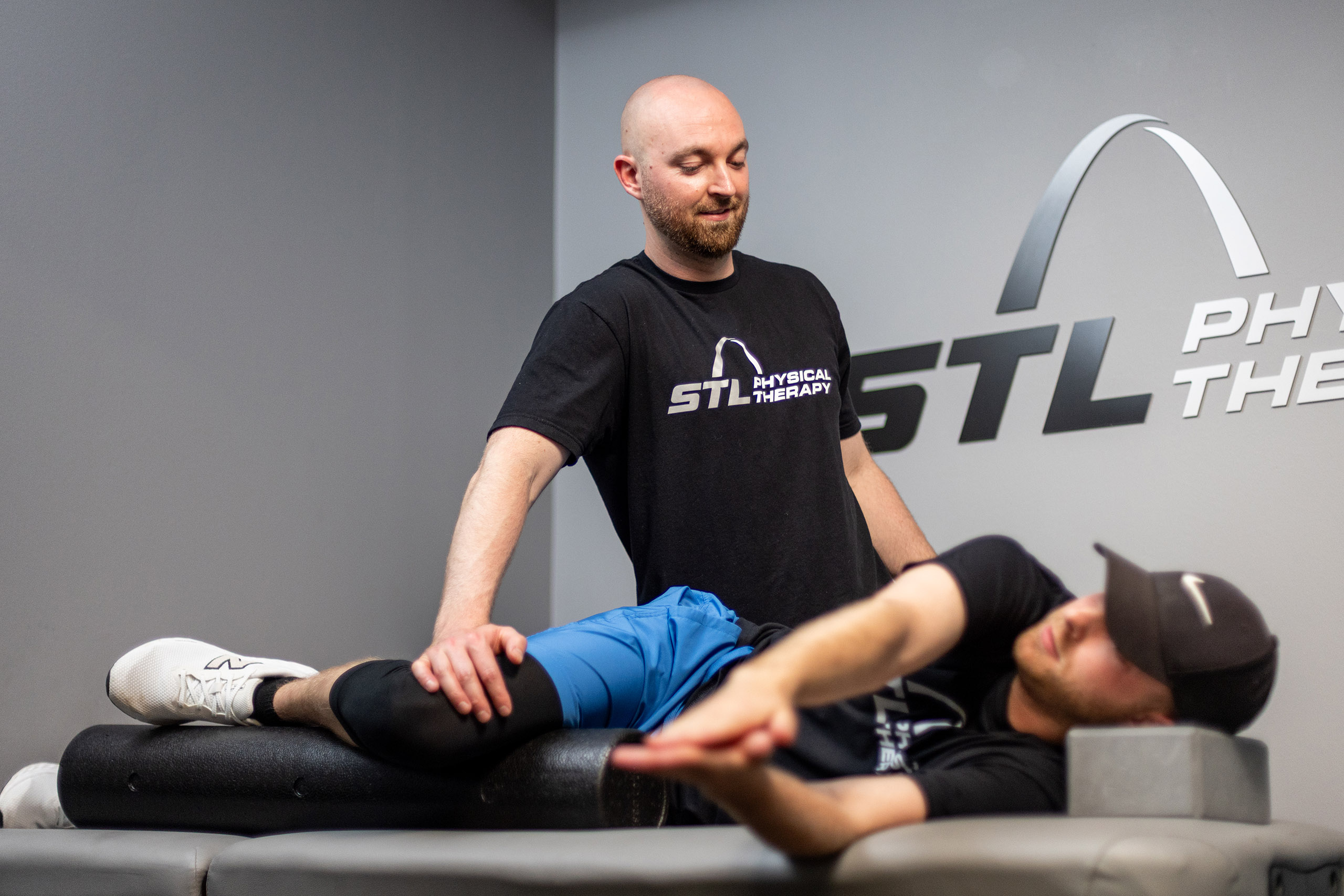
We combine hands-on treatment, targeted exercise, mobility work, and movement coaching to help you feel better while also building the strength and capacity you need for everyday life, exercise, or sport.
Care Built Around Your Goals
Whether you want to get back to golf, pickleball, another sport, the gym, or simply move through your day without pain, your plan is built around what matters to you rather than a standard protocol.
What to Expect During Your First Visit
Your first evaluation typically takes about 60 minutes. That gives us time to understand what you are experiencing, how it is affecting your life, and what you want to get back to doing.
During that visit, we will talk through:
- Your pain history and how your symptoms started
- What makes your symptoms better or worse
- How your pain affects daily life, work, and activity
- Your movement goals, whether that involves sports, fitness, or simply moving comfortably
- Previous injuries or treatments you have tried
From there, we assess mobility, strength, and movement quality throughout your hips, core, and spine, not just the area where you feel pain.
Our Approach to Low Back Pain Treatment in St. Louis
Every case of low back pain is different, so we do not rely on a one-size-fits-all approach. Your evaluation may look at:
- Hip mobility and rotation
- Core and glute strength
- Spinal mobility and mechanics
- Movement patterns during bending, lifting, and twisting
- Posture and daily movement habits
- Sport-specific demands, including golf, tennis, and pickleball movement patterns
For active clients, understanding how the body moves during a specific sport can be an important part of identifying what may be contributing to low back pain.
Golf, for example, requires repeated spinal rotation throughout the swing, while pickleball involves quick changes of direction, lateral movement, and frequent bending. If golf, pickleball, or another sport is part of your routine, we consider those specific movement demands during your evaluation and when developing your treatment plan.
What Your Treatment May Include
Manual Therapy
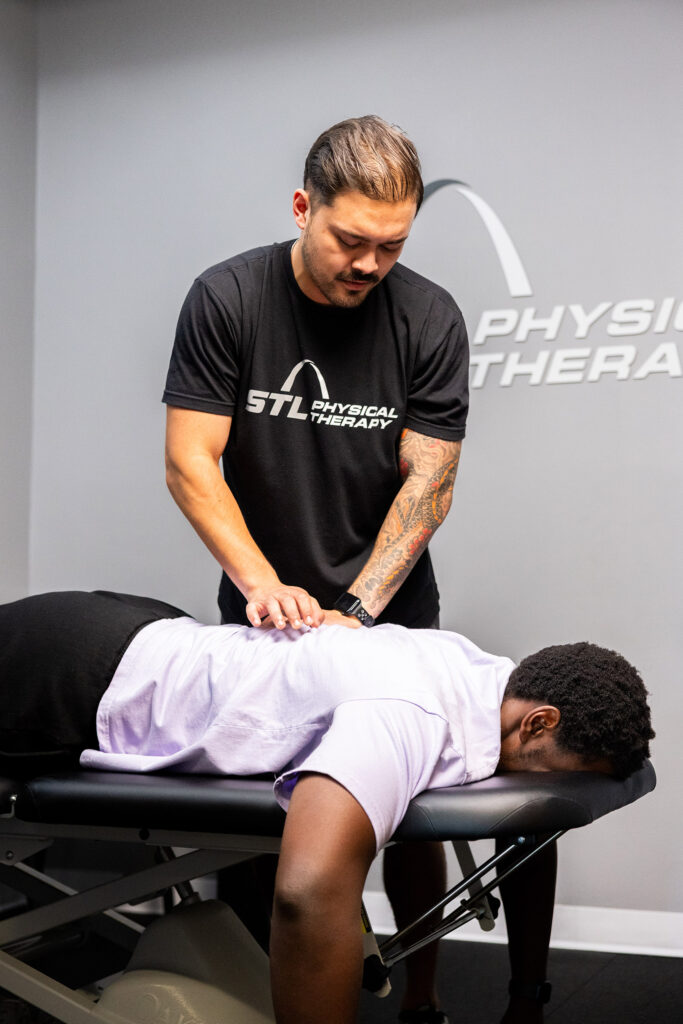
Hands-on techniques may be used to reduce muscle tension, improve joint mobility, and address irritated tissue around the low back, hips, and SI joints.
Therapeutic Exercise and Core Stability
Targeted strengthening for the core, glutes, and hips can help build the support and capacity your low back needs for everyday movement, exercise, and sport.
Mobility Training
Improving hip and spinal mobility can help distribute movement more effectively so your low back does not have to compensate for restrictions elsewhere.
Movement Retraining
We look at how you bend, lift, twist, and move during sports or daily activities. From there, we help you improve those movement patterns so you can move more efficiently and confidently.
Dry Needling
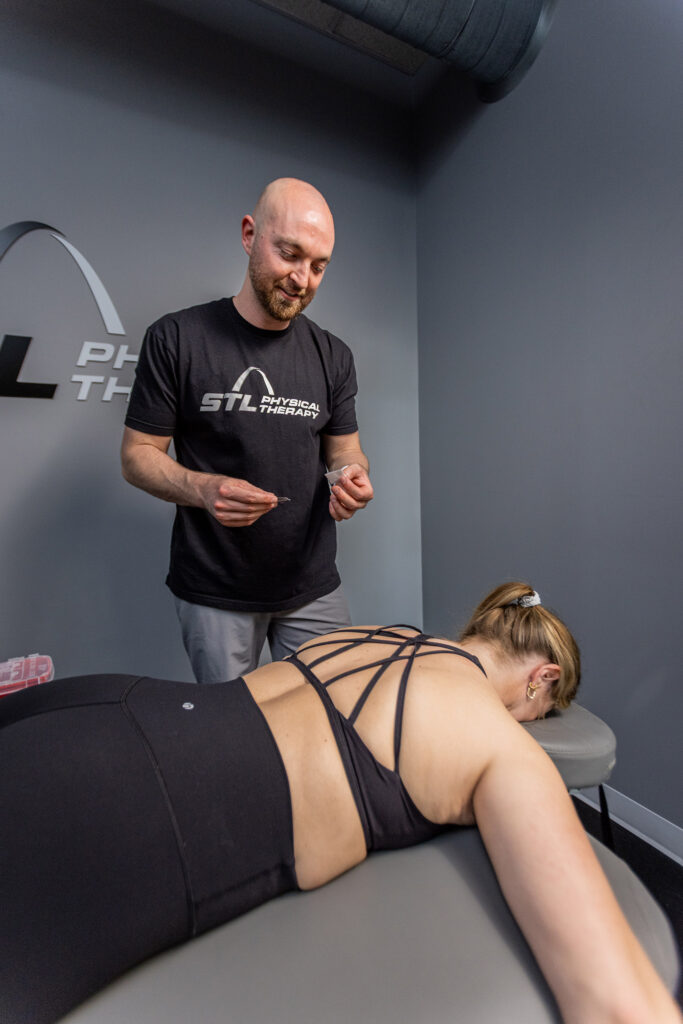
Dry needling may be used selectively to address muscle tightness and trigger points contributing to low back or SI joint pain. When appropriate, it is incorporated as one part of a broader treatment plan rather than used as a standalone solution.
Your specific mix of treatment depends on what we find during your evaluation, your goals, and how your body responds as you progress.
Treating the Whole Picture, Not Just Your Back
Low back pain does not always happen in isolation. It can sometimes show up alongside knee pain as movement patterns change or alongside shoulder pain when the body begins compensating in other ways.
Because we look at movement as a connected system rather than treating one joint at a time, your plan considers how different areas of the body may be influencing the way you move and feel.
Frequently Asked Questions
How long does low back pain treatment take?
It depends on what is contributing to your pain, how long you have had symptoms, and what you want to get back to doing. Many clients notice improvement within the first few weeks, while returning fully to sports or more demanding activities may take longer.
Your treatment plan and timeline are built around your specific needs rather than a fixed schedule.
What is the difference between sciatica and general low back pain?
General low back pain is typically felt primarily in the low back itself. Sciatica involves irritation of the sciatic nerve and often includes pain, tingling, or numbness that travels into the hip, glute, or down the leg.
Both can be addressed with a movement-based approach, although sciatica may require additional attention to nerve mobility and the mechanical factors contributing to the irritation.
What is SI joint pain, and how is it different from low back pain?
SI joint pain comes from the joints that connect your spine to your pelvis rather than the spine itself. It can feel very similar to low back pain, and the two frequently overlap.
That is why we look at both when evaluating pain in this region.
Do I need a referral to start physical therapy in Missouri?
No. Missouri’s direct access law means most people can begin physical therapy without seeing a doctor first. If low back pain is holding you back, you can typically start physical therapy right away.
Can physical therapy help with low back pain during pregnancy?
Yes. We work with clients through every trimester, and low back pain is a common concern during pregnancy. Let us know when you book so we can tailor your evaluation to your stage of pregnancy and individual needs.
Do you treat low back pain related to golf or pickleball specifically?
Yes. Both sports place specific demands on the low back through rotation, bending, and quick changes of direction. We consider those demands during your evaluation and when building your treatment plan.
Low Back Pain Does Not Have to Limit Your Life
Whether low back pain is keeping you off the course, off the court, out of the gym, or simply making everyday movement harder than it should be, you do not have to keep working around it.
The right evaluation can help identify what may be contributing to your pain. From there, we can build a plan focused not only on helping you feel better but also on improving the strength, mobility, and movement you need to get back to the activities that matter to you.
Your Next Step
If low back pain, sciatica, or SI joint pain is affecting how you move, work, exercise, or play, our team is ready to help you understand what is going on and build a plan around your specific goals.
Book an evaluation for low back pain treatment in St. Louis and start moving with more confidence.