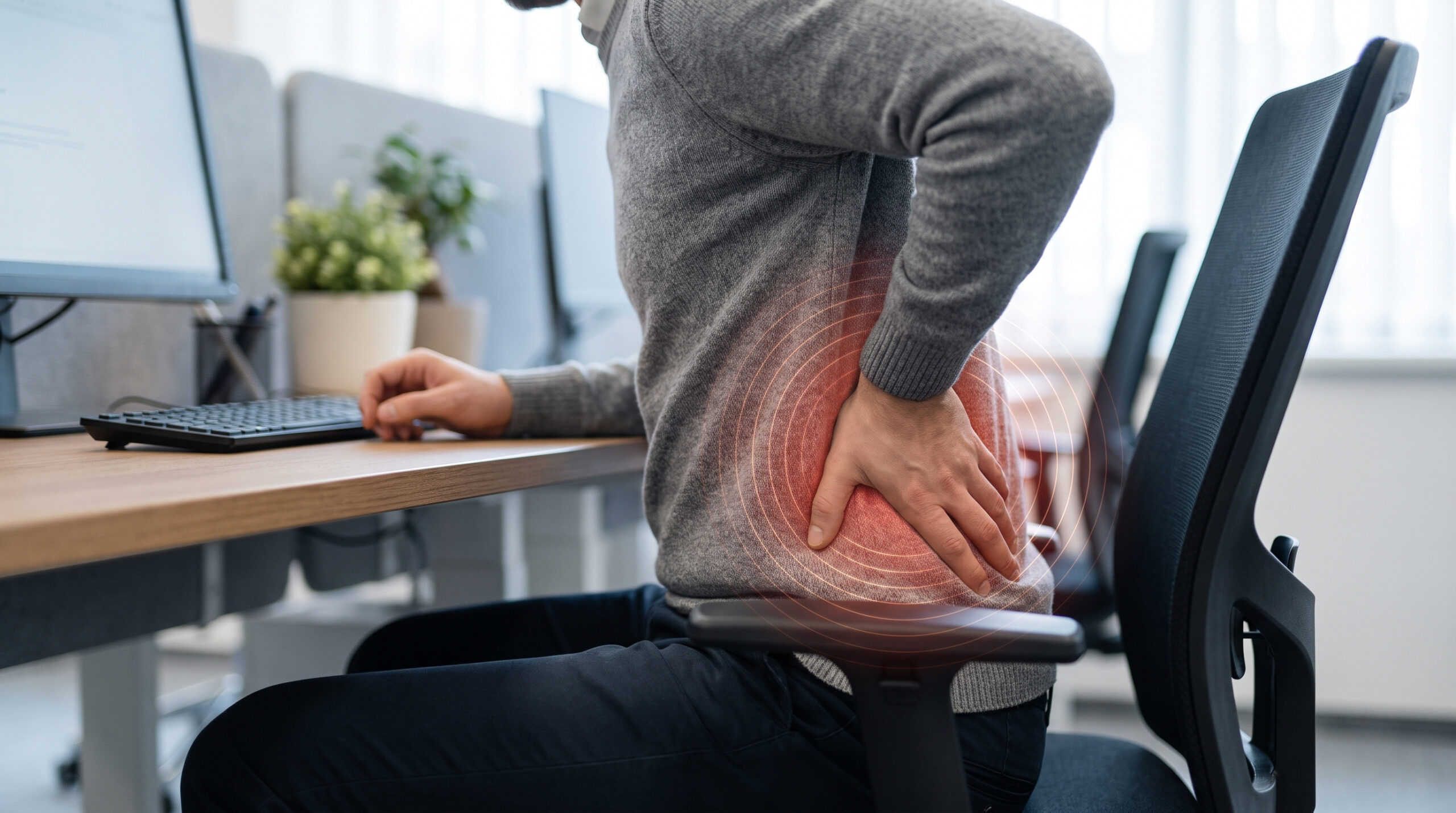
If you spend most of your day at a desk, you probably know the feeling. Your back feels fine in the morning, but by the middle of the afternoon, it starts to ache, tighten up, or simply feel stiff. Then you stand up after a long meeting or a few hours of focused work and realize your body does not want to move quite as easily as it did earlier. Low back pain from sitting is common for people who spend most of their workweek at a computer. But that does not mean you have to accept it as part of having a desk job.
Sitting itself is not necessarily the problem. What often matters more is how long you stay in the same position, how much movement you get throughout the day, and whether your hips, core, and the rest of your body have the strength and mobility to handle the demands you place on them.
Understanding what is driving your back pain is the first step toward doing something about it.
Why Does Your Low Back Hurt After Sitting All Day?
Your body is built to move.
Sitting is part of that. So are standing, walking, bending, lifting, rotating, and changing positions throughout the day. Problems can start when your body spends hours doing only one of those things.
The best posture is the one that is constantly changing.
If you sit at a desk for long stretches, your back, hips, and surrounding muscles are repeatedly exposed to the same position. Depending on your posture, desk setup, movement habits, and individual mobility and strength, certain areas may eventually start taking on more work than they handle comfortably.
That is why two people can sit at similar desks for the same number of hours and have completely different experiences.
For one person, limited hip mobility may contribute to the problem. For another, it may be reduced trunk or glute strength. Someone else may simply need more movement throughout the day.
The important question is not just, “How do we make my back stop hurting?”
It is, “Why is my back having trouble handling what I am asking it to do?”
That is where a good physical therapy evaluation can make a difference.
Signs Your Low Back Pain Is Related to Sitting
Not every low back ache comes from sitting, but your daily pattern can provide some useful clues.
Low back pain from sitting may be connected to your workday if you notice:
- Pain or stiffness that gradually builds throughout the workday
- Discomfort after sitting through long meetings or focused work sessions
- Stiffness when you first stand up from your desk
- Symptoms that improve once you start walking or moving
- Tightness through your hips or glutes along with your back discomfort
- Less pain on weekends or days when you spend less time sitting
- Symptoms that have gradually developed over weeks or months rather than after one specific injury
If this sounds familiar, the answer is not necessarily to stop sitting altogether. It may be about helping your body become better prepared to handle sitting while adding more movement into your day.
Small Changes Can Make a Big Difference
You do not need to completely redesign your office or buy the most expensive chair available to start making your workday easier on your back.
Start with the basics.
Your screen should be positioned so you are not constantly looking down or leaning forward. Your chair should allow your feet to stay supported, and your keyboard and mouse should be positioned so you can work without constantly reaching or shrugging your shoulders.
But even a great ergonomic desk setup does not replace movement.
One of the simplest things you can do is change positions regularly. Stand up between meetings. Walk to refill your water. Take a short lap around the office. Work standing for a few minutes if you have that option.
You do not need a perfect posture that you hold for eight hours. You need options.
The more comfortable positions your body can move between throughout the day, the less you rely on one position to do all the work.
How Physical Therapy Helps With Low Back Pain From Sitting
Changing your desk setup and moving more often can help, but sometimes the problem goes beyond your chair.
If low back pain from sitting keeps returning, there may be mobility, strength, or movement limitations that need to be addressed.
At STL Physical Therapy, we do not just look at the place that hurts. We look at how your whole body moves and how that movement relates to what you do every day.
For someone with a desk job, that may include looking at:
- Hip mobility and rotation
- Core and glute strength
- Spinal mobility and mechanics
- How you bend, lift, and rotate
- Your sitting and movement habits throughout the workday
- Previous injuries or areas that may be compensating
- The activities you want to get back to outside of work
From there, your plan is built around what your body actually needs.
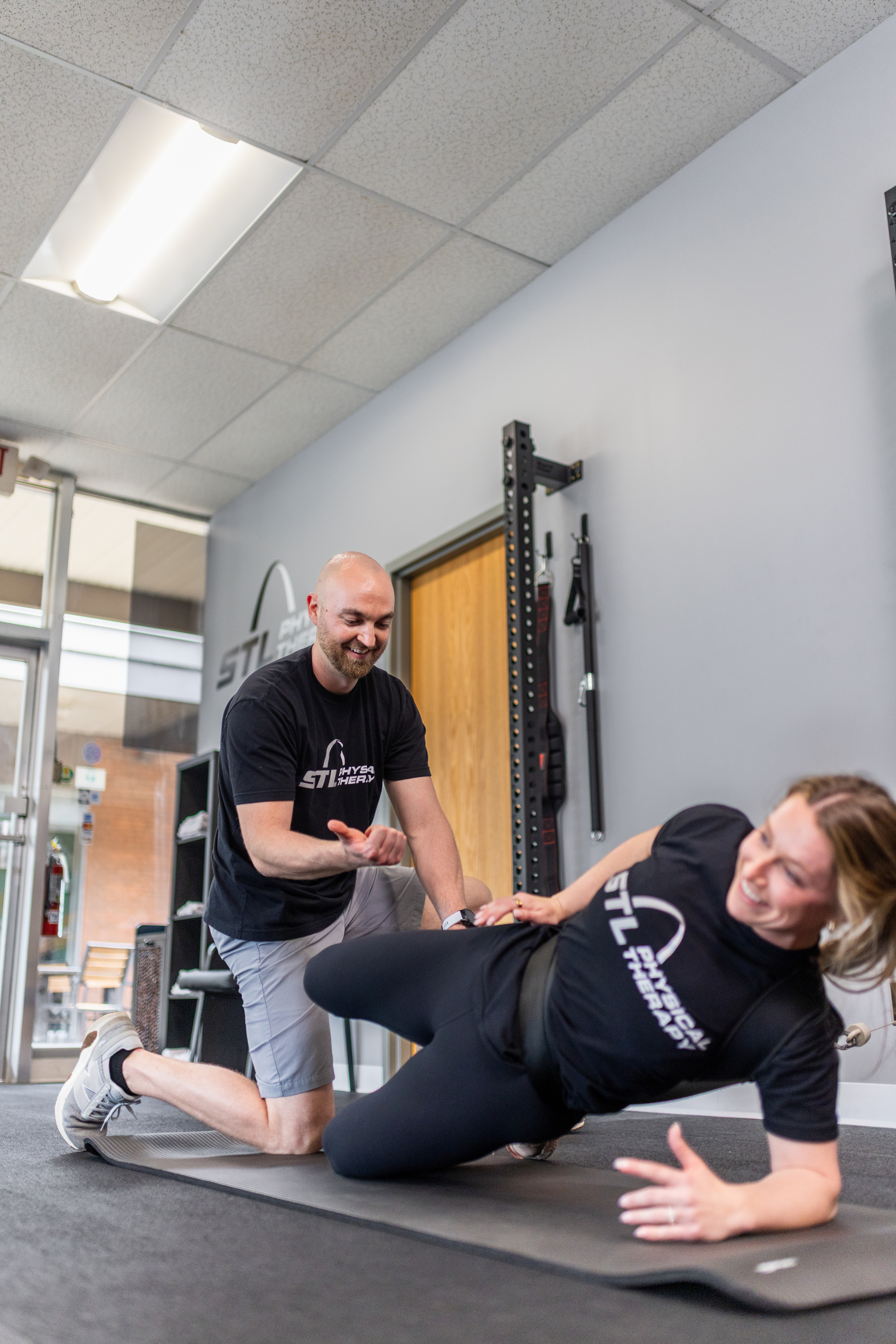
Treatment may include hands-on work to help improve movement or reduce symptoms, mobility exercises, progressive strengthening, and movement coaching. The goal is not to hand you a generic list of stretches and send you home.
It is to figure out what is limiting you and build the strength and movement capacity you need to handle your day with more confidence.
Getting Out of Pain Is Only Part of the Goal
Feeling better is important. But if nothing changes about your body’s ability to handle the demands that contributed to the problem, the same symptoms can show up again.
That is why strength matters.
Building strength through your core, hips, glutes, and surrounding muscles can help your body better handle long workdays and the activities you want to do once you leave your desk.
Maybe that means picking up your kids without worrying about your back. Maybe it is getting back to the gym, running, golfing, playing pickleball, tennis, baseball, soccer or simply making it through the workday without thinking about your back every afternoon.
The goal is bigger than temporary relief.
We want you to understand what is happening, build the capacity your body needs, and feel confident using it.
For some people, dry needling may also be used as part of treatment to help address muscle tightness or improve mobility. It is a tool, not the entire solution. Long-term progress still comes from addressing the movement, strength, and activity demands behind the problem.
Building Better Habits for Your Back
You do not need to overhaul your entire routine overnight.
A few consistent habits can go a long way:
- Change positions regularly instead of trying to maintain one “perfect” posture all day
- Take short movement breaks throughout your workday
- Build strength through your core, hips, and lower body
- Pay attention to how your body feels after long periods in one position
- Stay active outside of work rather than avoiding movement because your back feels stiff
- Address recurring pain before it starts limiting what you can do
Most importantly, do not assume that pain means your back is fragile or that movement is something you should avoid.
The right movement, at the right level, is often part of building your way back.
How STL Physical Therapy Approaches Desk Job Back Pain
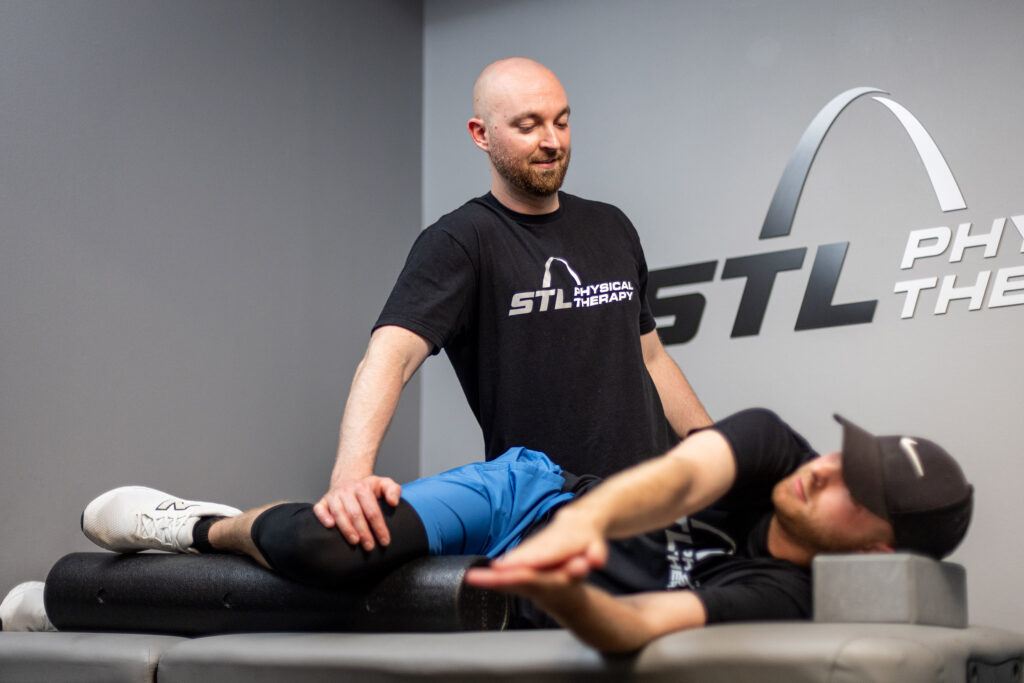
At STL Physical Therapy, every plan starts with understanding the person in front of us.
Your first evaluation looks at your symptoms, movement, strength, history, daily routine, and goals. We want to understand not only where your back hurts, but why it may be struggling with the demands of your day.
From there, you work directly with your physical therapist through a plan designed specifically for you.
That may mean getting through a full day of work without constantly shifting in your chair. It may mean getting back to lifting, running, golf, tennis, pickleball, or playing with your kids after work.
Either way, we do not want to stop at helping you feel better.
We want to help you move better, get stronger, and build the capacity to keep doing the things that matter to you.
Frequently Asked Questions
Is a standing desk enough to fix low back pain from sitting?
Not necessarily. A standing desk gives you another position to use throughout the day, which can be helpful. But standing in the same position for hours is still standing in the same position for hours. Alternating between sitting, standing, walking, and other movement is usually more useful than relying on one position all day.
How long does it take for low back pain from sitting to improve?
It depends on what is contributing to the pain, how long it has been going on, and what your body needs. Some people notice changes relatively quickly, while others need more time to rebuild strength, mobility, and tolerance. Your evaluation helps establish a plan based on your specific situation rather than a generic timeline.
Can I still exercise if my back hurts after sitting all day?
In many cases, yes. Staying active and progressively building strength can be an important part of recovery. Your physical therapist can help you determine which activities you can continue, what may need to be modified temporarily, and how to progress safely.
Do I need a referral to see a physical therapist in Missouri?
Missouri allows direct access to physical therapy, which means you can typically schedule an evaluation without first getting a physician referral. Some insurance plans may have separate requirements for reimbursement.
Do I need to stop sitting altogether?
No. The goal is not to eliminate sitting from your life. It is to help your body tolerate the positions and activities your life requires. That usually means combining better movement habits with the mobility, strength, and capacity to handle your workday comfortably.
Your Back Should Be Ready for More Than Your Desk
Low back pain from sitting does not have to become something you simply expect every afternoon.
Sometimes a few changes to your workday can help. Other times, recurring pain is a sign that your body needs more mobility, strength, or a better strategy for handling the demands you place on it.
At STL Physical Therapy, we look beyond the painful area to understand what is actually driving the problem. Then we build a plan around your body, your workday, and the things you want to keep doing outside of work.
Ready to get answers and start moving with more confidence?
Book an Evaluation or call (314) 275-0703.