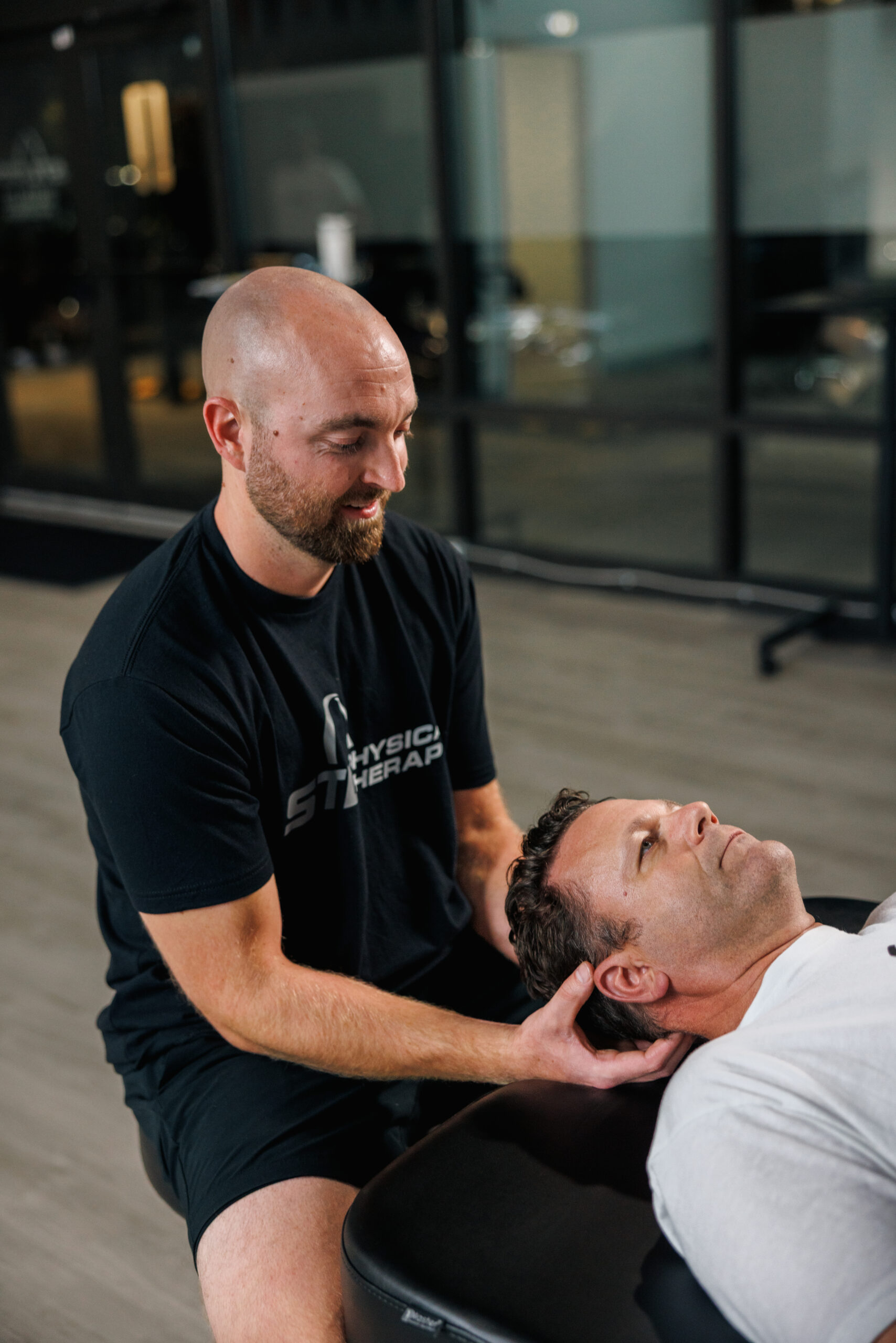

Neck Pain Treatment in St. Louis, MO
A guide to easing neck pain and tension headaches and moving freely again through 1-on-1, individualized care.
Neck Pain Has a Way of Following You Around
Neck pain is easy to ignore at first. It is the stiffness you feel when you check your blind spot, the ache that builds by mid-afternoon at your desk, and the tightness that creeps in after a long tennis match or a bullpen session. Most people roll their shoulders, crack their neck, and keep going. Then one morning you wake up and can barely turn your head, or the tension starts climbing into a headache that sticks around for the rest of the day.
At STL Physical Therapy, we do not treat neck pain as a sore spot to rub out. We look at how your upper back moves, how your shoulders are positioned, how you sit, sleep, throw, and swing, and we build a plan around what is actually keeping your neck irritated. If you have been searching for neck pain treatment in St. Louis that addresses the cause instead of chasing the symptom, this is where that starts.
Book your evaluation today and get back to turning your head without thinking twice about it.

Why Does Neck Pain Happen?
Your neck has a demanding job. It holds up a head that weighs roughly as much as a bowling ball, it lets you look in almost every direction, and it works as the link between your upper back, your shoulders, and your jaw. When the areas around it stop doing their share, the neck usually ends up working overtime.
Common contributors to neck pain include:
- Long hours at a computer, looking down at a phone, or driving
- A stiff upper back that forces the neck to do more of the turning
- Weak or tired muscles around the shoulder blades and deep neck
- Sleeping in awkward positions or on a pillow that does not support you
- Repetitive overhead motion in sports like tennis, pickleball, baseball, and swimming
- Muscle strain from a sudden movement, lift, or minor collision
- Disc changes or joint stiffness in the neck
- Nerve irritation that sends symptoms into the shoulder or arm
- Jaw clenching, teeth grinding, and stress-related tension
- An old injury, including whiplash, that never fully settled
Many of these build up quietly. Nobody gets neck pain from one bad day at the desk, but a few months of the same posture, the same pillow, and the same stress can add up to a neck that feels tight almost all the time.
Signs You May Benefit from Neck Pain Physical Therapy
You do not need to wait until you cannot turn your head to get help. Neck pain physical therapy tends to work best when it starts early, before your body settles into compensations that are harder to undo.
Consider an evaluation if you are dealing with:
- Neck pain or stiffness that lasts more than a few days or keeps coming back
- Trouble turning your head to check traffic or look over your shoulder
- Headaches that start at the base of your skull or behind your eyes
- Tightness across the tops of your shoulders that never seems to let go
- Pain, tingling, or heaviness that travels into your shoulder, arm, or hand
- Neck soreness after tennis, pickleball, golf, throwing, or lifting
- Jaw tightness, clicking, or clenching that seems tied to your neck tension
- Waking up stiff or sore most mornings
On their own, any of these might feel like something to push through. Together, they usually mean your neck is carrying more load than it should.
Conditions We Commonly Treat
Neck pain shows up in a lot of different ways, and it is often linked to problems in the shoulders, upper back, or jaw. We commonly treat:
Mechanical Neck Pain and Stiffness
This is the most common type of neck pain we see. It usually comes from joint stiffness, muscle tension, and posture habits rather than one specific injury, and it often responds well to a mix of hands-on care, mobility work, and strengthening.
Tension Headaches and Neck-Related Headaches
Some headaches start in the head. Others start in the neck. When the muscles and joints at the top of the neck are tight or irritated, they can refer pain into the back of the head, the temples, or behind the eyes. Tension headache treatment in physical therapy focuses on easing that tension, improving how the upper neck moves, and building the endurance your postural muscles need so the headaches are not constantly returning.
TMJ-Related Neck Pain
The jaw and the neck are closely connected. Clenching, grinding, and jaw tension can feed into neck tightness, and neck tension can make jaw discomfort worse. When jaw symptoms show up alongside neck pain, we look at both together rather than treating them as two separate problems.
Pinched Nerve (Cervical Radiculopathy)
When a nerve in the neck becomes irritated, symptoms can travel into the shoulder, arm, or hand as pain, tingling, numbness, or weakness. Treatment focuses on calming the irritated nerve, restoring movement, and addressing the positions and habits that keep it aggravated.
Disc-Related Neck Pain
Disc changes are common, and many people have them without any pain at all. When they do contribute to symptoms, treatment focuses on reducing irritation, building supporting strength, and helping you move with confidence again.
Whiplash and Strain Injuries
A car accident, a fall, or a hard collision on the field can leave the neck sore, stiff, and guarded for weeks. A gradual, guided plan helps restore normal movement without pushing too hard too soon.
Sport-Related Neck Pain in Overhead Athletes
Tennis serves, pickleball overheads, and baseball throwing all ask the neck and upper back to stay stable while the shoulder moves fast and hard. When shoulder or upper back mechanics break down, the neck often picks up the slack. Our baseball physical therapy and tennis physical therapy programs factor neck and upper back mechanics into every sport-specific plan.
Why Choose STL Physical Therapy for Neck Pain Treatment in St. Louis?
One-on-One Attention
You work directly with a physical therapist at every visit. The same person tracks your progress and adjusts your plan as you improve, so nothing gets lost between appointments.
We Look Past the Sore Spot
Where your neck hurts is only part of the story. Upper back mobility, shoulder blade control, breathing patterns, jaw tension, and daily posture often drive what you feel in your neck, so our evaluations look at the full picture.
A Movement-Based Approach
We combine hands-on care, targeted exercise, and education because that combination produces results that hold up after your last visit, not just relief that fades by the weekend.
Care Built Around Your Life
Whether you want to get through a workday without a headache, serve without neck tightness, or throw a full season pain-free, your plan is shaped around what matters to you.
What to Expect During Your First Visit
Your first evaluation typically runs about 60 minutes. That time lets us understand what is going on before we start treatment.
During that visit, we will talk through:
- When your neck pain started and how it has changed
- What makes your symptoms better or worse
- Whether you are also dealing with headaches, jaw tension, or arm symptoms
- Your work setup, sleep habits, and daily routine
- Your sport or activity goals
- Previous injuries or treatment you have tried
From there, we assess mobility, strength, and movement through your neck, upper back, shoulders, and jaw, not just the spot where you feel pain.
Our Approach to Neck Pain Treatment
No two necks are the same, so we do not follow a one-size-fits-all protocol. Our assessment typically looks at:
- Neck range of motion in every direction
- Upper back (thoracic) mobility and rotation
- Shoulder blade position and control
- Deep neck and postural muscle endurance
- Jaw movement and tension, when relevant
- Workstation, phone, and sleep habits
- Sport-specific demands, including overhead and throwing motions
That last point matters for athletes. In tennis, the serve and overhead put the neck in an extended position while the shoulder generates a lot of force, which is one reason neck tightness and tennis shoulder pain so often show up together. Pickleball players deal with something similar on overheads and quick reactive shots at the net. Baseball players are another group that commonly deals with neck pain, especially pitchers and catchers who repeat the same demanding motions hundreds of times a week, and it often travels with the shoulder issues pitchers face over a long season. If any of these sports are part of your life, we build those demands directly into your evaluation and plan.
What Your Treatment May Include
Manual Therapy
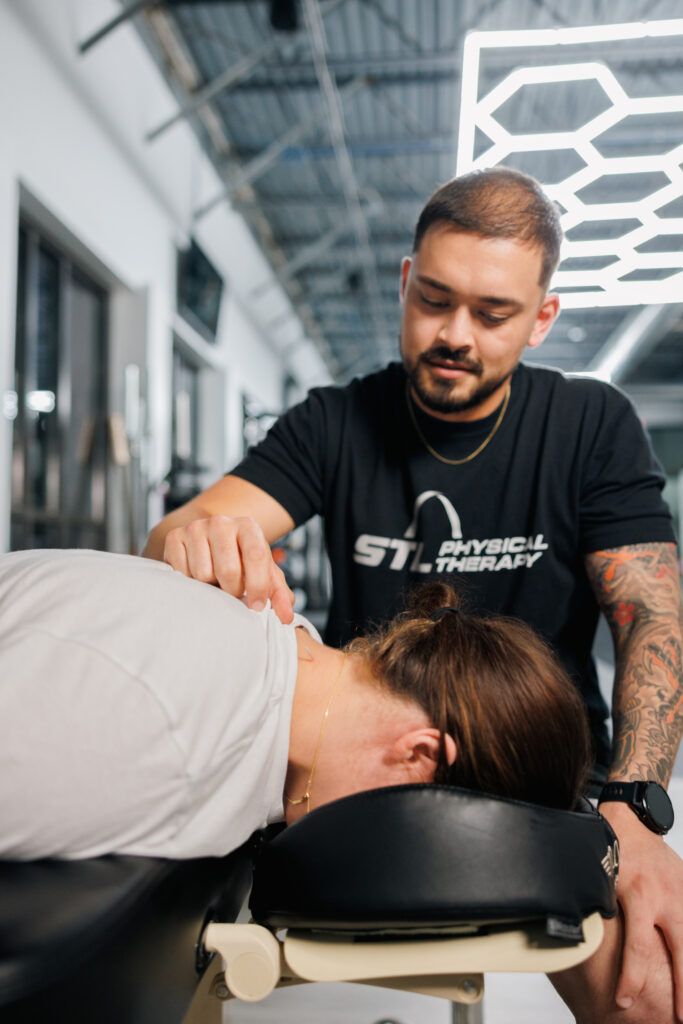
Hands-on techniques to ease muscle tension, improve joint mobility, and calm irritated tissue in the neck, upper back, and shoulders.
Therapeutic Exercise
Targeted strengthening for the deep neck muscles, shoulder blades, and upper back, so your neck has the support it needs to handle long days and hard training.
Mobility Training
Improving upper back and neck mobility so your neck is not forced to make up for stiffness elsewhere.
Posture and Ergonomic Coaching
Practical changes to your desk setup, phone habits, driving position, and sleep setup. Small adjustments here often make a noticeable difference.
Movement Retraining
Refining how you lift, reach, serve, swing, or throw so the patterns that contributed to your pain do not bring it right back.
Dry Needling
Used selectively to address trigger points and muscle tightness in the neck and upper shoulders, especially when tension headaches are part of the picture. Dry needling is one part of a broader plan, not a standalone fix.
Your specific mix of treatment depends on what your evaluation shows and how your body responds as you progress.
Neck Pain Rarely Travels Alone
Neck pain is closely tied to what is happening around it. It often shows up alongside shoulder pain when the shoulder blade is not moving well, and it can be part of a bigger chain that includes the upper back and even the low back when posture and movement habits break down. Because we evaluate movement as a full system, treating your neck often helps the rest of your body feel better too.
Frequently Asked Questions
How long does neck pain treatment take?
It depends on what is causing your pain, how long you have had it, and your goals. Many clients notice changes within the first few weeks, while a full return to sport or heavy training may take longer. Your plan is built around your case, not a fixed number of visits.
Can physical therapy help with tension headaches?
Yes. When headaches are linked to tension and stiffness in the neck and upper shoulders, physical therapy can help by easing that tension, improving how the upper neck moves, and building better postural endurance. Part of your evaluation is figuring out whether your neck is playing a role in your headaches.
Do you treat jaw pain or TMJ-related neck pain?
When jaw tension or clenching is connected to your neck symptoms, we evaluate and address both together. Let us know about any jaw symptoms when you book so we can factor them into your first visit.
Why do baseball and tennis players get neck pain?
Throwing, serving, and hitting overheads all require the neck and upper back to stay stable while the shoulder moves with a lot of speed and force. When upper back mobility or shoulder blade control is limited, the neck often absorbs extra stress. We look at those mechanics directly during your evaluation.
Do I need a referral to start physical therapy in Missouri?
No. Missouri’s direct access law means most people can begin physical therapy without seeing a doctor first. If neck pain is holding you back, you can typically start treatment right away.
When should I see a doctor instead of starting with physical therapy?
If your neck pain follows a significant accident or fall, or comes with symptoms like a fever, unexplained weakness, or changes in balance or coordination, check in with a physician first. For most everyday neck pain and stiffness, physical therapy is a great place to start, and we will always let you know if something calls for a referral.

Neck Pain Does Not Have to Run Your Day
Whether neck pain is cutting your workday short, pulling you off the court, or showing up as headaches that drain your energy, it is not something you have to keep managing on your own. The right evaluation finds what is actually driving your symptoms, and the right plan addresses it instead of buying a few days of relief at a time.
Your Next Step
If neck pain, tension headaches, or jaw-related neck tightness is affecting how you work, sleep, or play, our team is ready to help you build a plan that fits your life.
Book an evaluation for neck pain treatment in St. Louis or call us at (314) 275-0703.