
You finish a tough set, a long afternoon of pickleball, or a bullpen session, and your neck feels tight and heavy. Maybe it is sore along one side. Maybe it is hard to turn your head to back out of the parking lot. Most players brush it off as part of playing hard, but a neck that keeps flaring up after you play is usually telling you something about how you move. In overhead and throwing athletes, neck and upper back pain usually traces back to how the whole upper body shares the work, and that is something you can change.
Tennis, pickleball, and baseball all share one demanding motion. Your arm goes overhead or back behind you, then whips forward with a lot of speed. Every serve, overhead smash, and throw asks your neck to hold your head steady and your eyes on target while the rest of your body produces force underneath it.
When your upper back, shoulder blades, and trunk do their share of that work, your neck handles it fine. When they don’t, your neck picks up the slack, and that shows up as stiffness, soreness, and sometimes headaches.
This guide breaks down why overhead and throwing sports load the neck, how it shows up in each sport, and what you can do about it.
What Makes Overhead and Throwing Sports Hard on Your Neck
Your neck has two jobs during an overhead or throwing motion. It keeps your head stable so your eyes can track the ball, and it stays connected to everything happening below it. Your neck muscles attach to your skull, your upper back, and your shoulder blades, so what happens in those areas travels straight up.
Three things tend to drive sport-related neck pain more than anything else.
A Stiff Upper Back Makes Your Neck Do Extra Work
Your upper back, the thoracic spine, is supposed to extend and rotate when you serve, smash, or throw. It does a lot of the work in those motions, even if you never feel it.
When your upper back is stiff from hours at a desk, a long drive, or just years of sport without much mobility work, that motion has to come from somewhere. Usually it comes from the neck and the shoulder. Your neck tips back further to look up at the ball and twists more to follow it, and the extra motion adds up over hundreds of reps.
Your Shoulder Blade Muscles Share Space With Your Neck
Several of the muscles that move and control your shoulder blades, like the upper trapezius and the levator scapulae, attach directly to your neck. When the muscles lower down on the shoulder blade are weak or worn out, these upper muscles often take over. They were not built to carry that load for a full match or a full game.
That is one reason neck tightness and shoulder pain so often show up together in overhead athletes. If you have dealt with tennis shoulder pain or a sore throwing arm, there is a good chance your neck has been feeling it too.
Volume Adds Up Faster Than You Think
A single serve is not a problem. Two hundred serves in a weekend tournament, a pickleball session that turns into four hours, or a jump in pitch count early in the season is a different story. Sudden spikes in how much you play are one of the most common reasons tissue gets irritated, and the neck is no exception. Neck pain after a workout or a long match often traces back to a jump in volume your body was not ready for.
How Neck Pain Shows Up in Each Sport
Overhead and throwing sports load the neck in similar ways, but each one has its own habits and patterns.
Tennis
The serve is the biggest neck demand in tennis. You toss the ball, tip your head back to track it, arch through your back, and rotate hard into contact. Overheads ask for the same thing with less time to set up. Players with a stiff upper back or limited shoulder rotation tend to crank their neck back further to reach the same contact point.
Neck pain after tennis is often worse on your dominant side, and it can come with tightness across the top of the shoulder or a headache at the base of the skull after long matches.
Pickleball
Pickleball does not have the same big serve, but it has plenty of overheads when your opponent throws up a lob. You are looking up and backpedaling at the same time, often without much warmup. Fast hand battles at the net add quick, reactive head and shoulder movements, and the ready position keeps your head slightly forward for long stretches.
Many pickleball players are active adults who also spend a lot of the day at a desk. That combination of a stiff upper back during the week and several hours of play on the weekend is a common recipe for neck and upper back pain.
Baseball and Softball
Throwing asks your neck to keep your head still and your eyes on the target while your trunk rotates violently underneath it. Then your body has to slow the arm down during the follow-through, which puts more load through the muscles around the neck and shoulder blade.
Spine problems are a real issue at the highest level of the game. A NewYork-Presbyterian summary of research on Major League Baseball players reported that neck injuries made up 13 percent of the spine injuries studied and cost players an average of almost 22 days. The same researchers found pitchers had about twice the rate of spine sprains, strains, and spine-related nerve issues compared with position players.
Pitchers and catchers deal with the most repetition. Catchers also spend innings in a deep crouch looking up through a mask, then pop up to throw. If you are a pitcher, neck tightness often travels with the shoulder issues pitchers face over a long season.
Signs Your Neck Is Taking On Too Much
Some soreness after a hard match or a long game can be normal. It is worth paying attention when you notice any of these.
- Neck stiffness or soreness after most sessions, not just the hard ones
- Pain that sits mostly on your dominant side
- Tightness across the top of your shoulder that never fully lets go
- Aching or stiffness between your shoulder blades after you play
- Headaches that start at the base of your skull after playing
- Trouble turning your head fully to check a blind spot
- A serve or throw that feels less powerful or less smooth than usual
- Neck pain that starts showing up during play instead of after
If you notice numbness, tingling, or weakness traveling into your arm or hand, get it checked sooner. Those symptoms can point to an irritated nerve in the neck and deserve a proper evaluation. The same goes for neck pain that follows a collision, a fall, or a hard dive.
How Physical Therapy Treats Neck and Upper Back Pain in Overhead Athletes
Good care starts by figuring out why your neck is working so hard, then fixing the pieces that are making it happen. That is the difference between neck pain that calms down for a week and neck pain that stays gone.
A Full Movement Evaluation.
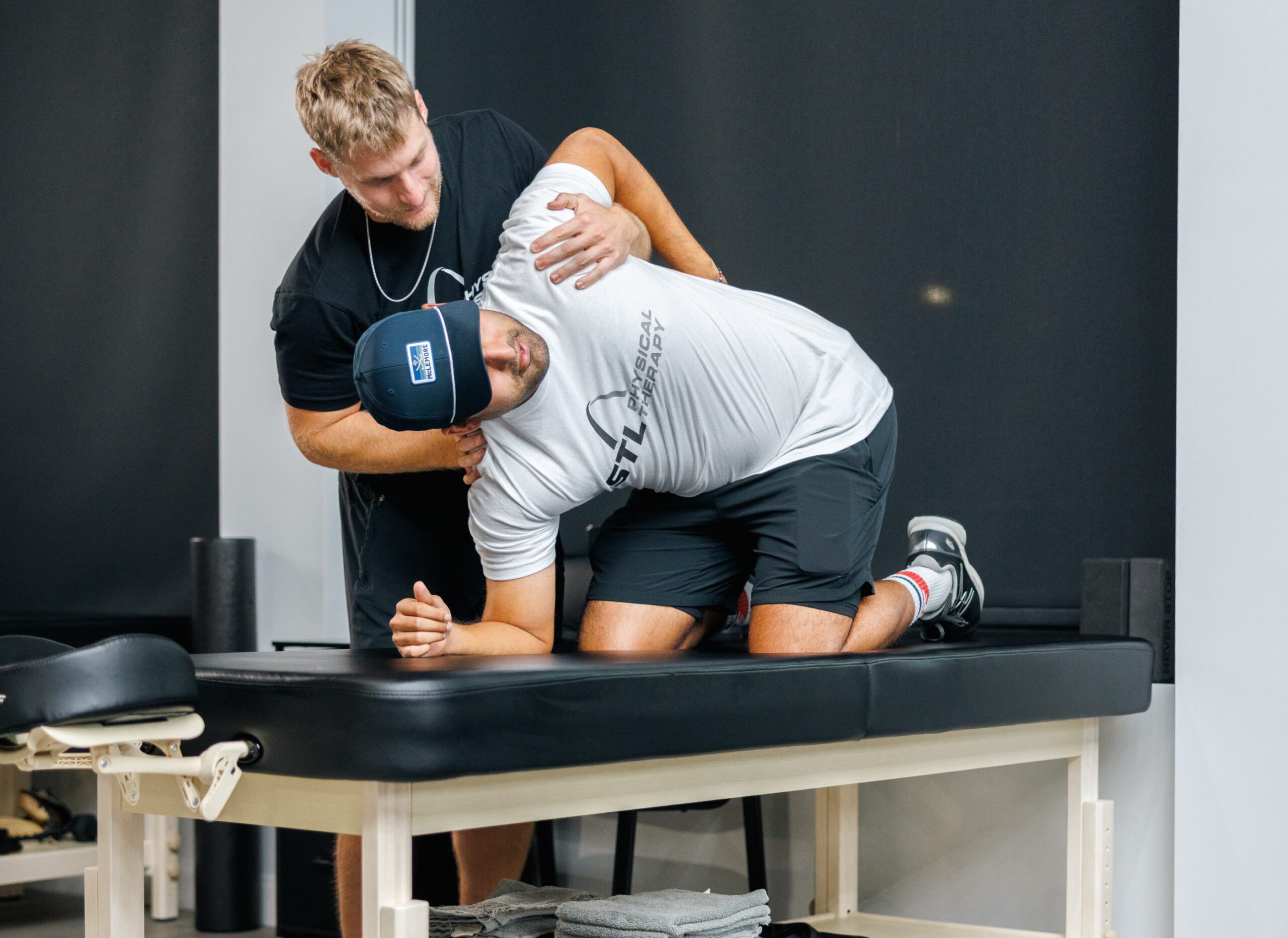
At STL Physical Therapy, you work one-on-one with a physical therapist from your first visit. We look at your neck, but we also look at how your upper back rotates and extends, how your shoulder blades move, how much rotation you have at the shoulder, and how your hips and trunk help produce force. We talk through your sport, your position, how much you play, and what changed before the pain showed up.
Hands-On Care to Calm Things Down.
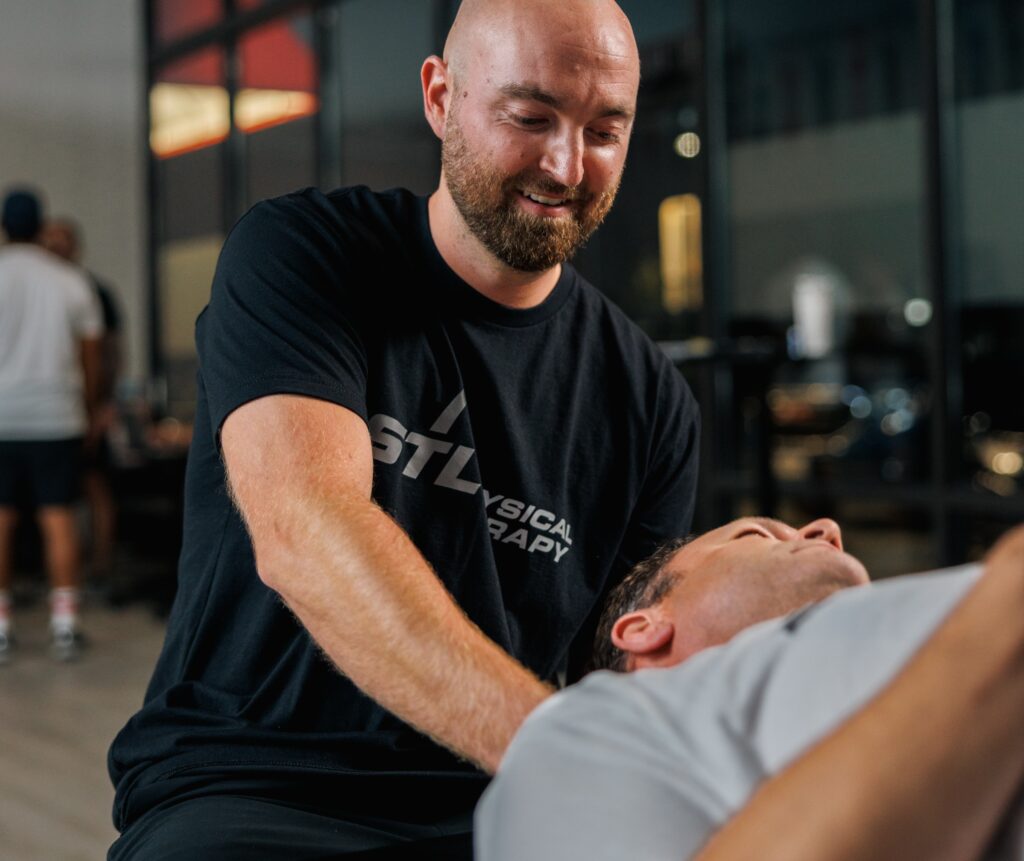
When the muscles and joints around your neck are irritated, it is hard to move well enough to make progress. Manual therapy can help ease tension and restore motion. When it fits your plan, dry needling may be used to help release stubborn trigger points in the upper traps and neck. These tools are one part of the plan and work best alongside the active work that follows.
Mobility Where You Need It.
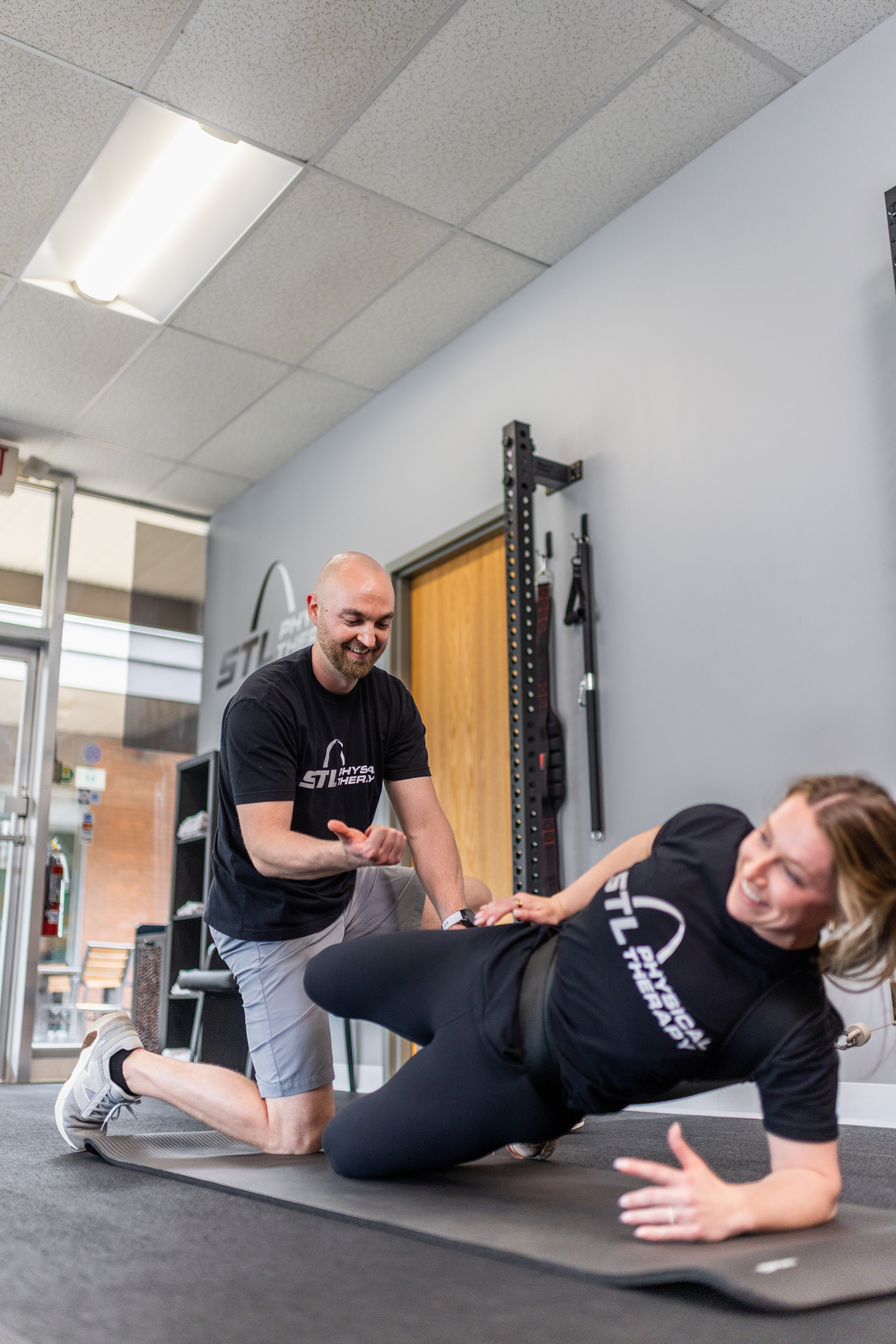
For most overhead athletes, that means the upper back. Getting your thoracic spine to rotate and extend again takes pressure off the neck on every serve, smash, and throw. We also address shoulder rotation and chest tightness when they are part of the problem.
Strength That Supports Your Neck.
We build endurance in the deep neck muscles and strength in the muscles that control your shoulder blades, especially the ones lower on the back. The American Physical Therapy Association lists strengthening, stretching, posture correction, and a home program among the core parts of neck pain treatment, and in our experience that combination is what keeps it from coming back.
A Gradual Return to Your Sport.
As your neck settles, we work back toward full-speed serves, overheads, and throws. That may include sport-specific drills, rotational power work, and a plan for how much to play each week so you are not spiking your volume all over again.
Your neck pain may also connect to your shoulder, elbow, or low back. Our neck pain treatment in St. Louis looks at the full picture, and our tennis and baseball physical therapy programs build neck and upper back mechanics into every sport-specific plan.
Simple Ways to Protect Your Neck Between Sessions
You do not have to wait for pain to start taking care of your neck. A few habits make a real difference for overhead and throwing athletes.
Warm up your upper back, not just your arm. Open books, thread the needles, and band pull-aparts take a few minutes and get your thoracic spine and shoulder blades ready before you start serving or throwing.
Build up your volume gradually. Add playing time, serves, or pitches a little at a time, especially at the start of a season or after time off.
Strengthen the back of your shoulders. Rows, band external rotations, and exercises for the lower shoulder blade muscles give your neck more support to lean on.
Watch your posture off the court. Hours looking down at a phone or laptop leave your upper back stiff before you ever pick up a racquet, paddle, or ball. Raising your screen and taking short movement breaks during the workday helps.
Give yourself recovery time. Sleep, rest days, and light mobility work after hard sessions give irritated tissue a chance to settle.
If your neck keeps flaring up even with these changes, something in the chain is still off, and a closer look is the fastest way to find it.
Frequently Asked Questions
Why does my neck hurt after playing tennis?
Neck pain after tennis usually comes from the serve and overheads. Your head tips back to track the ball while your arm moves fast overhead, and a stiff upper back or tired shoulder blade muscles can leave your neck doing more of that work than it should. A physical therapist can help pinpoint which piece applies to you.
What is sport-related neck pain?
Sport-related neck pain is neck soreness, stiffness, or headaches linked to the demands of your sport, and it often comes with upper back tightness too. In tennis, pickleball, and baseball, it most often comes from repetitive overhead and throwing motions, sudden jumps in playing time, and limited mobility in the upper back. It is different from a sudden neck injury from a collision or fall, which should be checked right away.
Can I keep playing pickleball with neck pain?
Often, yes, with some changes. Many people can keep playing at a lower volume while they work on mobility and strength, as long as the pain stays mild and does not travel into the arm. If playing makes your symptoms noticeably worse, or you have numbness or tingling, get evaluated before you keep going.
Why do pitchers and catchers get neck pain?
Both positions repeat demanding motions more than anyone else on the field. Pitchers rotate hard while keeping their head still on the target, then decelerate the arm on every pitch. Catchers spend innings crouched and looking up before throwing from a tough position. Both put a steady load on the neck and the muscles around the shoulder blades.
How long does physical therapy for neck pain take?
It depends on what is driving your pain, how long you have had it, and your goals. The American Physical Therapy Association notes that many people feel better within 6 to 12 weeks. Getting back to full-speed serves or throws may take a bit longer, since we build the strength and mobility to keep it from returning.
Get Back to Your Game With Help for Neck and Upper Back Pain
Neck and upper back pain is common in overhead and throwing athletes, but it does not have to be part of every match or every game. When your upper back moves well, your shoulder blades do their job, and your playing volume builds gradually, your neck can handle what your sport asks of it.
If you play tennis, pickleball, or baseball and your neck keeps getting in the way, STL Physical Therapy can help. Our care for neck and upper back pain is one-on-one, built around your sport, and focused on helping you move better and stay active for the long haul. Schedule your evaluation or call us at (314) 275-0703 to talk with a physical therapist.