If your lower back starts aching by mid-afternoon, or rolling over in bed has turned into a careful, three-step process, you are far from alone. Back pain during pregnancy is incredibly common, and it is one of the main reasons expecting clients come to see us. The good news is that physical therapy during pregnancy can help you understand what is driving that pain and give you practical ways to move, work, sleep, and stay active with more comfort.
Your body changes quickly over nine months. Your center of gravity shifts, your posture adapts, your abdominal muscles stretch, and your ligaments become more flexible as your body prepares for delivery. All of that is normal. But those changes can also put more demand on your lower back and pelvis, especially if you are on your feet all day, chasing a toddler, or trying to keep up with your usual workouts.
Many people are told that back pain is just part of being pregnant. It is common, but common does not mean you have to accept it without help. At STL Physical Therapy, we work with clients through every trimester and right up to full term, with one-on-one care built around how your body is changing and what you want to keep doing.
Schedule an evaluation and talk with a physical therapist about what may be behind your back pain.
Why Back Pain During Pregnancy Is So Common
Research reviews estimate that more than two-thirds of pregnant women experience low back pain, and close to one in five experience pelvic pain. For many, it shows up or gets worse in the second half of pregnancy, when the physical changes are most noticeable.
There is rarely just one cause. More often, several changes add up at the same time.
Your center of gravity moves forward. As your baby grows, weight shifts toward the front of your body. To stay balanced, many people lean back slightly and increase the curve in their lower back. Holding that position for hours at a time can leave the muscles and joints of the low back working overtime.
Your abdominal muscles stretch. Your abdominal wall has to make room for your baby, which changes how well those muscles can support your trunk. When your core is providing less support, your back muscles often try to pick up the slack.
Your ligaments become more flexible. Hormones such as relaxin and progesterone loosen ligaments and joints, especially around the pelvis. That flexibility helps prepare your body for delivery, but it also means the muscles around your hips and pelvis have more work to do to keep you stable.
Your daily routine keeps going. Work, commuting, lifting older kids, household tasks, and poor sleep all add load to a body that is already adapting. Pain often builds gradually from that combination rather than from one specific moment.
Low Back Pain or Pelvic Girdle Pain? Knowing the Difference
Not all back pain during pregnancy comes from the same place, and that matters when it comes to treatment.
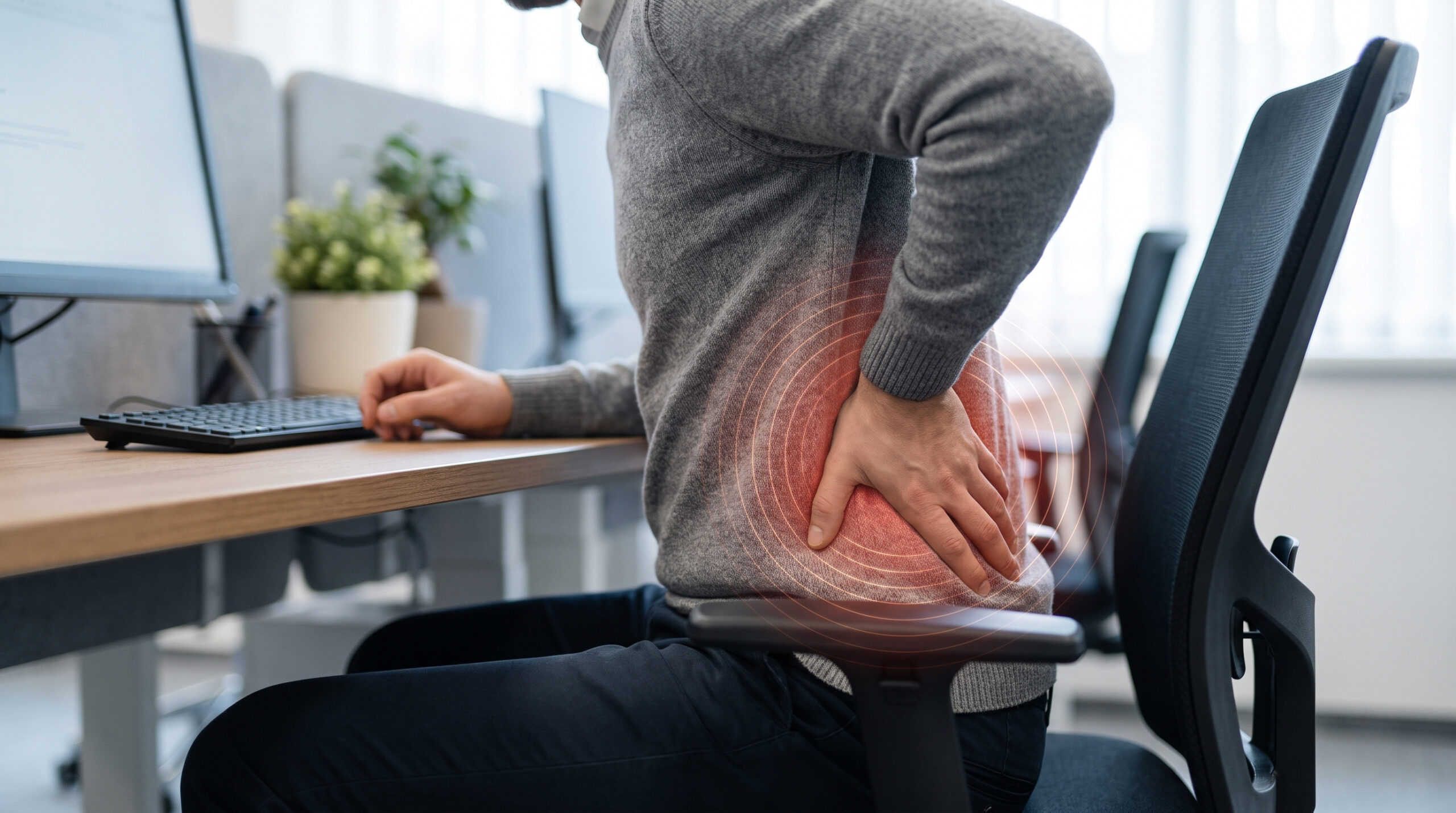
Lumbar pain is felt in the lower back itself, above the waist and along the spine. It often feels like a dull ache that gets worse with long periods of sitting or standing, and it may ease when you change positions.
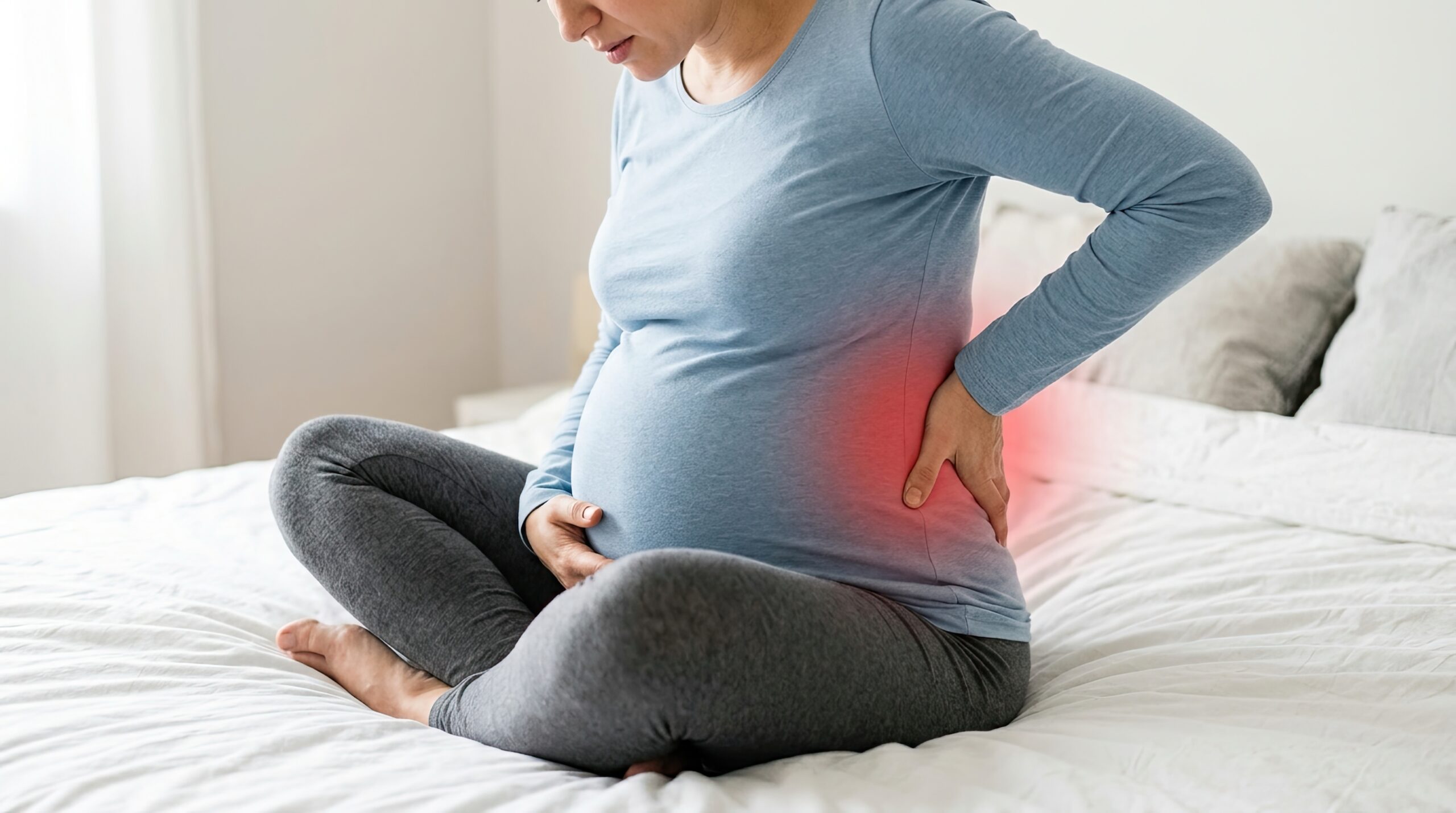
Pelvic girdle pain is felt lower, in the back of the pelvis near the sacroiliac joints, across the buttocks, or at the front of the pelvis where the pubic bones meet. It is often aggravated by climbing stairs, standing on one leg, turning over in bed, or getting in and out of the car. Some people feel a sharp or catching pain with these movements rather than a steady ache.
Many clients have some of both. Sorting out where your pain is coming from (and which movements set it off) helps us choose the right strategies instead of giving you a generic list of stretches that may not match your symptoms.
How Back Pain Can Change the Way You Move
Back pain during pregnancy does more than make you uncomfortable. It can gradually change the way you move through your day.
You might start avoiding stairs, shortening your stride when you walk, or skipping the workouts that used to help you feel like yourself. You might shift your weight to one leg when standing or twist awkwardly to get out of bed. Those small adjustments make sense at the moment, but over time they can lead to stiffness, less strength, and more sensitivity in the areas that were already sore.
Staying active matters during pregnancy. Regular movement supports your strength, energy, and mood, and it can make the physical demands of late pregnancy, delivery, and life with a newborn feel more manageable. The goal is not to stop moving because of pain. It is to find ways to keep moving that your body tolerates well.
How Physical Therapy During Pregnancy Can Help
Physical therapy during pregnancy is not about pushing through pain or following a one-size-fits-all routine. It is about understanding how your body is changing, finding what is overloaded, and building the strength and movement strategies that help you stay comfortable and active.
Here is what that can look like at STL Physical Therapy.
A One-on-One Movement Assessment
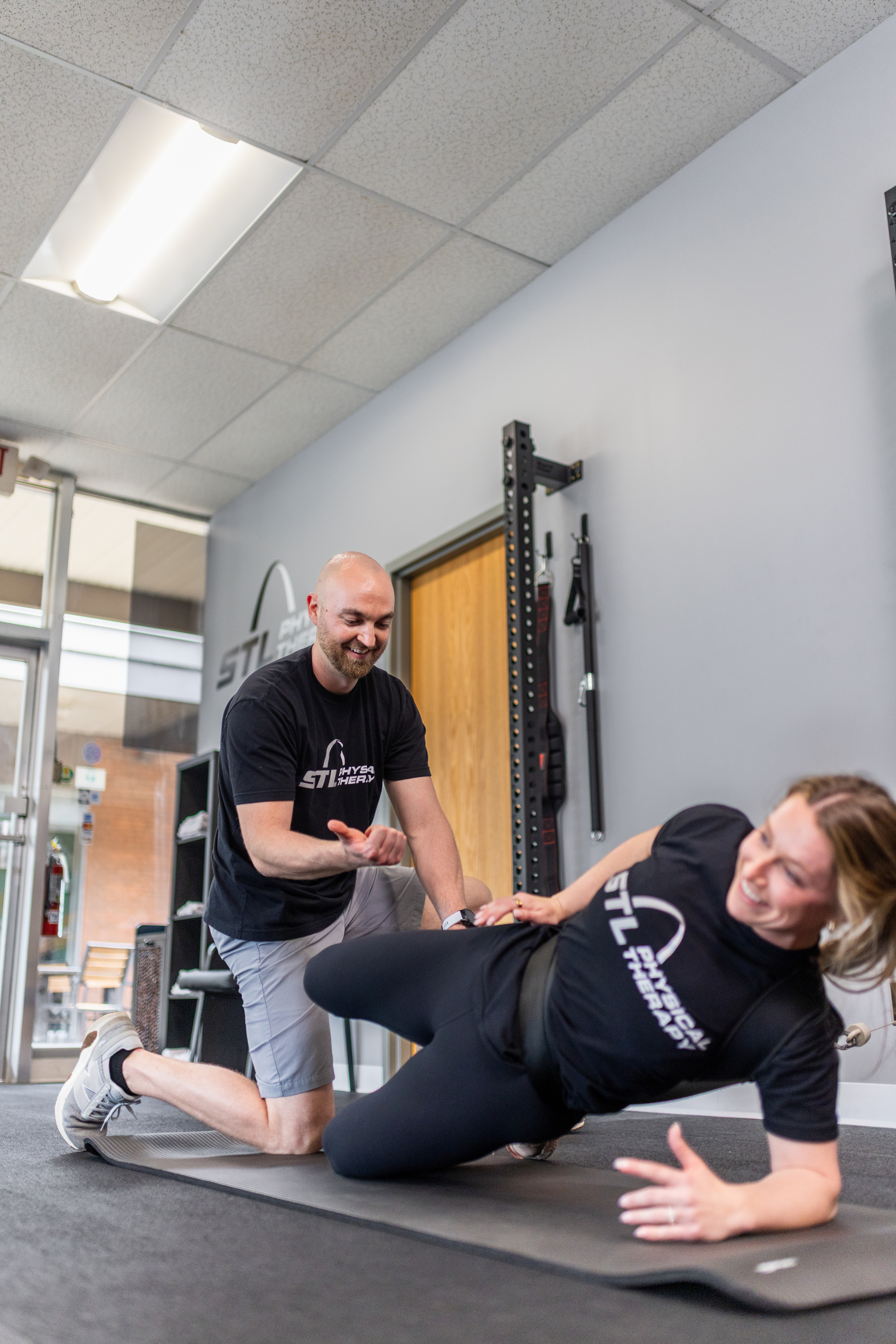
Every plan starts with a thorough evaluation. We look at your posture, how you move through everyday tasks like sitting, standing, bending, and walking, and which specific movements bring on your symptoms. We also look at strength and mobility in your hips, pelvis, trunk, and upper back.
Just as important, we talk about your life. What does a normal day look like? Are you still training, running, or playing a sport? Do you have a physically demanding job? Your plan should reflect what you actually need to do, not just where it hurts.
Building Strength That Supports Your Changing Body
As your abdominal muscles stretch and your ligaments loosen, strength becomes one of your best tools for stability. We focus on the muscles that help support your pelvis and spine, including your glutes, deep core muscles, and the muscles around your hips.
Exercises are chosen and progressed based on how you feel, how far along you are, and what your provider has cleared you to do. They are adjusted as your body changes, because what works at 16 weeks may need to look different at 34 weeks.
Restoring Mobility Where You Need It
When your hips or upper back get stiff, your lower back often ends up doing more than its share. Gentle mobility work for the hips, thoracic spine, and surrounding muscles can help take pressure off the areas that are working too hard and make everyday movements feel easier.
Breathing, Core, and Pelvic Floor Working Together
Your diaphragm, deep abdominal muscles, and pelvic floor work as a team to support your trunk. Pregnancy changes how that system functions, which can affect stability and comfort in your back and pelvis.
We teach breathing and core strategies that help these muscles work together during the movements you do every day, such as lifting, getting out of a chair, or carrying groceries. This also sets a helpful foundation for your recovery after delivery.
Hands-On Care and Practical Strategies for Daily Life
When appropriate, hands-on techniques can help ease muscle tension and improve how your joints move so that exercise feels more comfortable. We also give you practical strategies you can use right away, such as better sleeping positions, easier ways to get in and out of bed or the car, how to set up your workstation, and when a support belt might help.
These tools are part of a bigger plan. The real goal is helping you build the strength and confidence to keep moving well through the rest of your pregnancy and beyond.
Is Physical Therapy During Pregnancy Safe?
For most people with a healthy pregnancy, yes. Physical therapy during pregnancy is built around safe, controlled movement and is adjusted for each trimester. The American College of Obstetricians and Gynecologists notes that exercise can strengthen and stretch the muscles that support your back and legs and can help ease back pain.
We always recommend keeping your OB or midwife in the loop, especially if you have a high-risk pregnancy or have been given specific activity restrictions. Your care should work alongside the guidance from your prenatal provider, not around it.
Simple Ways to Ease Back Pain at Home
A few small changes can make a real difference between visits:
- Sleep on your side with a pillow between your knees and another supporting your belly.
- Change positions often. Try not to sit or stand in one spot for too long.
- Wear supportive, low-heeled shoes with good arch support.
- When lifting, bend your knees, keep the object close to your body, and avoid twisting.
- Keep your knees together when rolling over in bed or getting out of the car to reduce strain on your pelvis.
- Stay active with movement you tolerate well, such as walking or swimming, if your provider has cleared you to exercise.
- Try heat or ice on sore muscles for short periods.
If these strategies are not enough, or your pain keeps limiting what you can do, that is a good sign it is time to get a closer look.
When to Call Your Doctor Right Away
Most back pain during pregnancy is musculoskeletal, but some symptoms need prompt medical attention. Contact your OB or midwife if your back pain is severe or lasts longer than two weeks. Seek care right away if back pain comes with:
- Vaginal bleeding or fluid leaking
- Fever
- Burning with urination
- Rhythmic cramping or tightening that could signal contractions
- Numbness, tingling, or weakness in your legs
These can be signs of preterm labor, infection, or another issue that should be evaluated by your medical provider first.
Frequently Asked Questions
When should I start physical therapy during pregnancy?
There is no need to wait until your pain is severe. Many clients start as soon as they notice back or pelvic discomfort that is not going away or is starting to change how they move. Starting early often makes it easier to stay ahead of symptoms as your pregnancy progresses.
Can I keep working out if my back hurts?
In many cases, yes, with some adjustments. The goal is usually to modify your training rather than stop completely. A physical therapist can help you figure out which exercises to keep, which to change, and which to set aside for now based on your symptoms and your provider’s guidance.
Will my back pain go away after I give birth?
For many people, back and pelvic pain improves in the weeks and months after delivery. For others, it lingers, especially if strength and movement habits have changed a lot during pregnancy. Building strength now can help set you up for an easier recovery later.
Is a pregnancy support belt a good idea?
A support belt can help some people, particularly those with pelvic girdle pain, by giving the pelvis a little extra support during walking or standing. It works best alongside strengthening, not as a replacement for it.
Do I need a referral to start physical therapy in Missouri?
No. Missouri’s direct access law allows most people to begin physical therapy without first seeing a physician. During pregnancy, we still recommend letting your OB or midwife know you are starting physical therapy so everyone is on the same page.
Stay Active and Comfortable Through Every Trimester
Back pain during pregnancy is common, but you do not have to simply wait it out. Understanding why your back and pelvis are working harder, and building the strength and movement strategies to support them, can help you stay comfortable, active, and confident as your body changes.
At STL Physical Therapy, we offer one-on-one physical therapy during pregnancy for clients across St. Louis, from the first signs of discomfort through full term. If low back pain is making it harder to work, sleep, train, or get through your day, schedule an evaluation and let’s build a plan that helps you keep doing what you enjoy.