
If you experience pain every time you reach overhead, press a barbell, or lift something off a shelf, you are not alone. Shoulder pain is one of the most common musculoskeletal complaints among active adults, athletes, and people whose jobs involve repetitive arm movements. Fortunately, many of these cases respond well to shoulder impingement physical therapy, especially when addressed before the problem becomes more severe.
Understanding why the pain happens is the first step toward lasting relief. In many cases, shoulder impingement is not caused by one single injury. Instead, it develops gradually as muscles, tendons, posture, and movement patterns place extra stress on the structures inside the shoulder.
At STL Physical Therapy, our team focuses on identifying the source of the problem, restoring healthy movement, and helping people return to the activities they enjoy with confidence.
What Is Shoulder Impingement?
The shoulder is one of the most mobile joints in the body. That mobility allows you to lift, throw, push, pull, and reach in almost every direction.
To make all of that movement possible, several muscles and tendons work together inside a relatively small space beneath a part of the shoulder blade called the acromion.
Shoulder impingement occurs when the tendons of the rotator cuff or the nearby bursa become compressed during certain arm movements, particularly when lifting overhead. Repeated compression can lead to irritation, inflammation, and pain over time.
Although people often describe this as something being “pinched,” the condition usually involves several contributing factors rather than a single structure getting trapped.
Common Signs of Shoulder Impingement
Symptoms often begin gradually and may seem minor at first. Many people continue lifting or exercising until the discomfort becomes difficult to ignore.
Some of the most common symptoms include:
- Pain when reaching overhead
- Discomfort during bench press, shoulder press, or lateral raises
- Pain when reaching behind your back
- Weakness while lifting objects
- Difficulty sleeping on the affected shoulder
- Pain that increases after activity rather than during it
- A feeling of stiffness or reduced shoulder motion
These symptoms can also occur with other shoulder conditions, which is why a thorough evaluation is important before beginning treatment. Some shoulder impingement symptoms may overlap with rotator cuff injuries, making an accurate evaluation especially important.
Why Does Your Shoulder Hurt When You Lift?
Many people assume lifting itself causes the injury. In reality, the exercise is often exposing an underlying movement problem that has developed over time.
Several factors can contribute to shoulder pain from lifting, including:
Poor Shoulder Mechanics
Healthy shoulder movement depends on precise coordination between the shoulder joint, shoulder blade, upper back, and surrounding muscles.
If one part of the system is not moving efficiently, extra stress may be placed on the rotator cuff and surrounding tissues.
Rotator Cuff Weakness
The rotator cuff muscles help keep the upper arm centered within the shoulder joint during movement.
When these muscles become weak or fatigued, the shoulder may lose some of its stability, increasing the likelihood of irritation during lifting.
Limited Thoracic Spine Mobility
The upper back plays a major role in overhead movement.
When the thoracic spine becomes stiff, the shoulder often compensates by moving differently, increasing stress on the structures around the joint.
Shoulder Blade Dysfunction
The shoulder blade provides the foundation for nearly every upper-body movement.
If it does not rotate, stabilize, or move efficiently during lifting, the shoulder joint has to work harder. Over time, this altered movement can contribute to impingement symptoms.
Training Errors
Rapid increases in training volume, poor lifting technique, insufficient recovery, or repeatedly performing overhead exercises without adequate mobility can all contribute to shoulder irritation.
How Physical Therapy Helps Shoulder Impingement
One of the biggest misconceptions about shoulder impingement is that rest alone will solve the problem.
While temporarily reducing painful activities may help calm irritation, long-term improvement usually requires addressing the movement limitations that caused the symptoms in the first place.
This is where shoulder impingement physical therapy can make a significant difference.
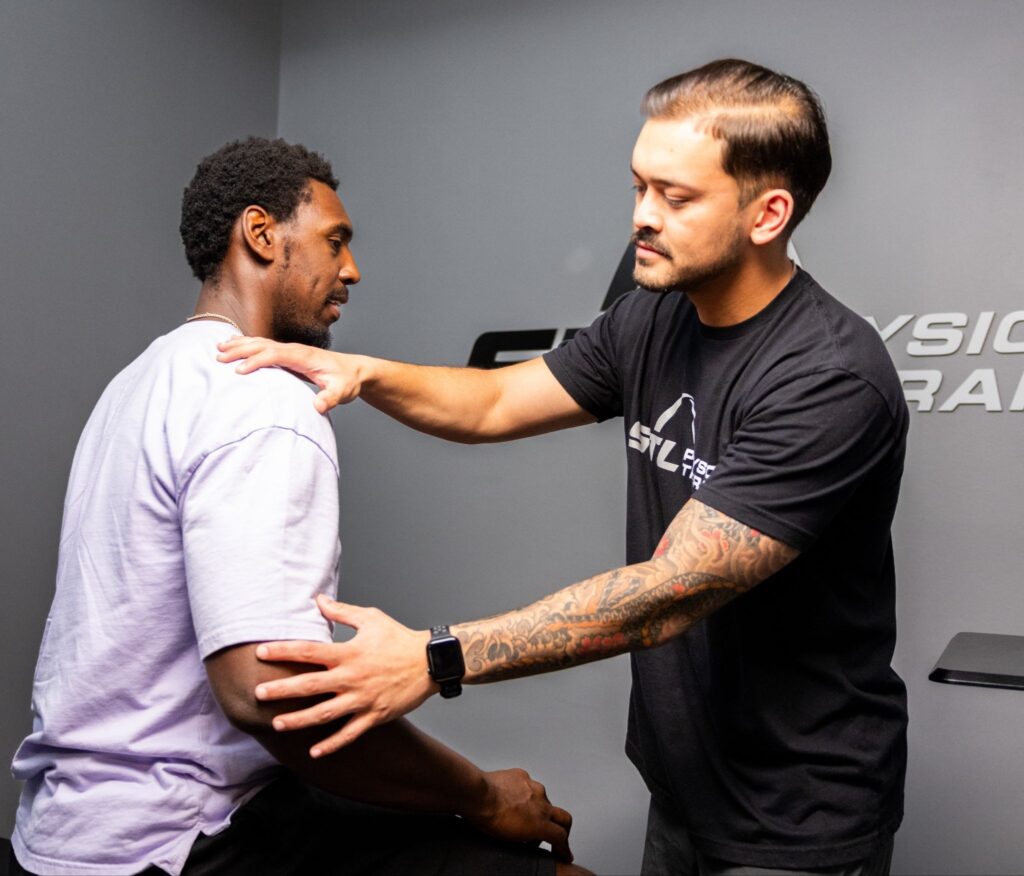
A comprehensive evaluation looks beyond the painful area to understand how the entire shoulder complex is functioning.
Your physical therapist may assess:
- Shoulder range of motion
- Rotator cuff strength
- Shoulder blade movement
- Thoracic spine mobility
- Posture
- Lifting mechanics
- Functional movement patterns related to work, sports, or daily activities
Rather than simply treating pain, the goal is to restore efficient movement throughout the entire kinetic chain.
Exercises Often Used During Shoulder Impingement Physical Therapy
Every person receives an individualized treatment plan based on their evaluation; depending on your evaluation, treatment may also include dry needling to help reduce muscle tension and improve movement.
Rehabilitation often includes a combination of:
Mobility Exercises
Improving flexibility in the shoulder, chest, and upper back can reduce unnecessary stress during overhead movements.
Rotator Cuff Strengthening
Targeted strengthening helps improve shoulder stability while lifting and reaching.
Scapular Stabilization
Strengthening the muscles that control the shoulder blade creates a stronger foundation for healthy shoulder mechanics.
Postural Training
Improving posture may reduce excessive stress placed on the front of the shoulder during everyday activities and exercise.
Functional Movement Retraining
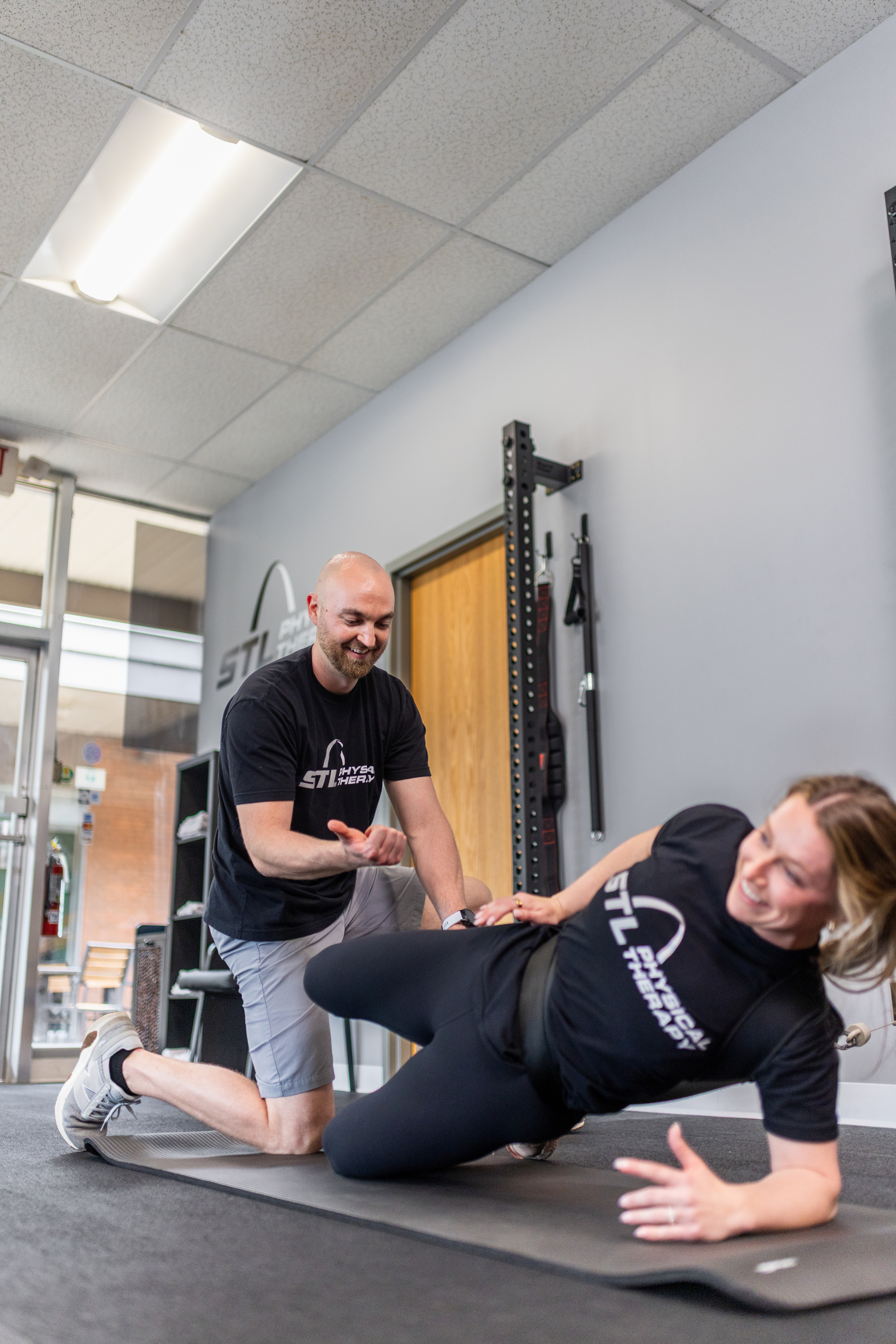
Therapists help people gradually return to lifting by improving technique, correcting compensations, and building confidence with movement.
Should You Stop Lifting Completely?
Not necessarily.
For many people, continuing to move is beneficial, but certain exercises may need to be modified while the shoulder heals.
Instead of completely avoiding activity, your physical therapist may recommend temporarily reducing painful movements while maintaining exercises that can be performed without increasing symptoms.
As strength, mobility, and movement quality improve, lifting activities can often be reintroduced gradually.
When Should You See a Physical Therapist?
Early treatment often leads to faster recovery and may help prevent symptoms from becoming more persistent.
You should consider an evaluation if:
- Shoulder pain has lasted longer than a few weeks
- Lifting overhead has become increasingly painful
- You notice weakness during workouts
- Your shoulder pain is limiting work, sports, or daily activities
- Rest has not improved your symptoms
Receiving an accurate diagnosis early can also help rule out other conditions that may require a different treatment approach.
Why Movement Quality Matters
At STL Physical Therapy, we believe pain is often the result of how the body moves rather than simply where it hurts.
Movement quality refers to how efficiently your muscles, joints, and nervous system work together during everyday activities and exercise.
When movement improves, the shoulder is often able to tolerate lifting with less stress on the surrounding tissues.
That is why shoulder impingement physical therapy addresses more than just painful symptoms. It also focuses on improving the movement patterns that support long-term shoulder health.
Get Back to Lifting With Confidence
Shoulder pain should not keep you from staying active or enjoying the activities you love.
With the right evaluation and treatment plan, many people recover without surgery and return to lifting safely. Shoulder impingement physical therapy focuses on identifying the underlying cause of your symptoms, improving strength and mobility, and helping you move with greater confidence.
If shoulder pain has been interfering with your workouts or daily routine, the team at STL Physical Therapy is here to help. Schedule your initial evaluation today and learn how shoulder impingement physical therapy can help you return to lifting with less pain and better movement.