
Golf looks effortless when it is done well.
A smooth backswing, powerful rotation, solid contact, and a ball flight that travels exactly where you intended can make the game look easy. But every experienced golfer knows that a great swing is anything but simple.
Proper golf swing mechanics are about much more than technique. They require mobility, strength, balance, coordination, and the ability to move efficiently through every phase of the swing. When one piece of the puzzle is missing, performance often suffers, and injury risk can increase.
At STL Physical Therapy, we work with golfers of all ages and skill levels who want to improve how they move, reduce pain, and perform better on the course. Understanding proper golf swing mechanics is often one of the first steps toward playing more consistent golf while protecting your body from unnecessary stress.
What Are Proper Golf Swing Mechanics?
Proper golf swing mechanics refer to the sequence of movements that allow a golfer to generate power, maintain control, and consistently strike the ball effectively.
While every golfer has unique physical characteristics and swing tendencies, efficient swings typically share several common qualities:
- Good posture at address
- Adequate mobility throughout the body
- Stable balance during movement
- Efficient weight transfer
- Proper sequencing of the hips, trunk, shoulders, and arms
- Consistent clubface control through impact
- A balanced finish position
The goal is not to create a perfect swing. The goal is to create a swing that works efficiently with your body.
Many golfers attempt to copy the swing of a professional golfer without considering their own physical limitations. What works for one player may not work for another. Mobility restrictions, strength deficits, previous injuries, and movement habits all influence how your body moves during the golf swing.
Why Swing Mechanics Matter
Good swing mechanics do more than help you hit the ball farther.
Efficient movement patterns can improve consistency, accuracy, endurance, and overall enjoyment of the game. These benefits are consistent with broader research on the benefits of physical activity and healthy movement patterns.
Proper mechanics may help golfers:
- Improve clubhead speed
- Increase driving distance
- Create more consistent ball striking
- Improve shot accuracy
- Reduce fatigue during rounds
- Lower injury risk
- Maintain performance as they age
Poor mechanics often force the body to compensate. These compensations can place excessive stress on the lower back, shoulders, hips, elbows, wrists, and knees.
Over time, repetitive stress can contribute to pain, stiffness, and injuries that limit your ability to play.
The Foundation: Golf Posture
Every golf swing starts before the club even moves.
Proper posture creates the foundation for efficient movement throughout the swing.
At address, golfers should generally maintain:
- A neutral spine position
- Slight knee flexion
- Hips hinged appropriately
- Relaxed shoulders
- Balanced weight distribution through both feet
Poor posture can affect the entire swing sequence.
For example, excessive rounding of the upper back may limit shoulder rotation. Standing too upright may reduce power generation. Poor balance at setup often creates compensation throughout the swing.
The setup position should allow your body to move freely and efficiently throughout the entire motion.
Mobility and Rotation: The Engine of the Golf Swing
Golf is a rotational sport.
One of the most important components of proper golf swing mechanics is the ability to rotate effectively through multiple regions of the body.
Key areas that contribute to golf rotation include:
Thoracic Spine Mobility
The thoracic spine, or upper back, plays a major role in rotational movement.
When thoracic mobility is limited, golfers often compensate by placing additional stress on the lower back or shoulders.
Adequate thoracic rotation allows for:
- Better backswing positioning
- Improved separation between the upper and lower body
- Increased power generation
- Reduced stress on surrounding joints
Hip Mobility
The hips are another critical component of an efficient golf swing.
Limited hip mobility can affect weight transfer, rotational power, and balance. Restrictions in hip rotation often contribute to swing faults and may increase stress on the knees and lower back.
Shoulder Mobility
The shoulders must move through significant ranges of motion throughout the golf swing.
Adequate shoulder mobility supports proper positioning during both the backswing and follow-through while helping golfers generate speed and maintain control.
Stability Creates Power
Many golfers focus exclusively on flexibility, but mobility alone is not enough.
The body must also have stability. Stability refers to the ability to control movement while maintaining proper positioning.
In golf, stability is especially important through:
- The core
- The hips
- The shoulders
- The lower body
A stable body provides a strong foundation for transferring force efficiently from the ground through the club.
Without stability, power leaks occur throughout the swing. The result is often inconsistent contact, reduced clubhead speed, and increased injury risk.
Understanding the Kinematic Sequence
One of the most important concepts in proper golf swing mechanics is sequencing.
Elite golfers generate power through a coordinated sequence of movement often referred to as the kinematic sequence.
Generally, the sequence follows this pattern:
- The lower body initiates movement.
- The hips rotate.
- The torso follows.
- The shoulders accelerate.
- The arms and club move through impact.
This sequence allows energy to transfer efficiently throughout the body and into the golf club.
When sequencing breaks down, golfers may lose distance, struggle with consistency, or place unnecessary stress on specific body regions.
Many swing issues that appear technical are actually movement limitations affecting sequencing and timing.
Common Physical Limitations That Affect Swing Mechanics
Many golfers spend years working on swing changes without realizing their body may be preventing those changes from happening.
Some of the most common physical limitations we see include:
Limited Hip Rotation
Restricted hip mobility may lead to:
- Early extension
- Loss of posture
- Reduced rotational power
- Lower back discomfort
Limited Thoracic Spine Mobility
Poor upper back mobility may contribute to:
- Reduced backswing rotation
- Overuse of the lower back
- Loss of swing efficiency
Poor Core Strength and Control
Core weakness can affect:
- Stability during rotation
- Balance
- Force transfer
- Swing consistency
Shoulder Restrictions
Limited shoulder mobility may impact:
- Backswing positioning
- Follow-through mechanics
- Overall swing speed
Addressing these physical limitations often creates opportunities for meaningful swing improvement.
How Poor Swing Mechanics Can Lead to Injury
Golf may seem low impact, but the swing places substantial forces on the body.
A single round may involve dozens of full swings, practice swings, chips, and putts. Over time, repetitive stress can accumulate.
Common golf-related injuries include:
- Lower back pain
- Shoulder pain
- Elbow pain
- Wrist injuries
- Hip discomfort
- Knee pain
In many cases, the problem is not simply overuse. It is the combination of repetitive movement and inefficient mechanics.
When certain joints cannot move properly, other areas often absorb more stress than they were designed to handle.
Improving movement quality can help reduce those demands and support healthier, more efficient golf performance.
Why Movement Assessments Matter for Golfers
Every golfer is different.
Two golfers may display the same swing fault while having completely different underlying causes. That is why movement assessments are so valuable.
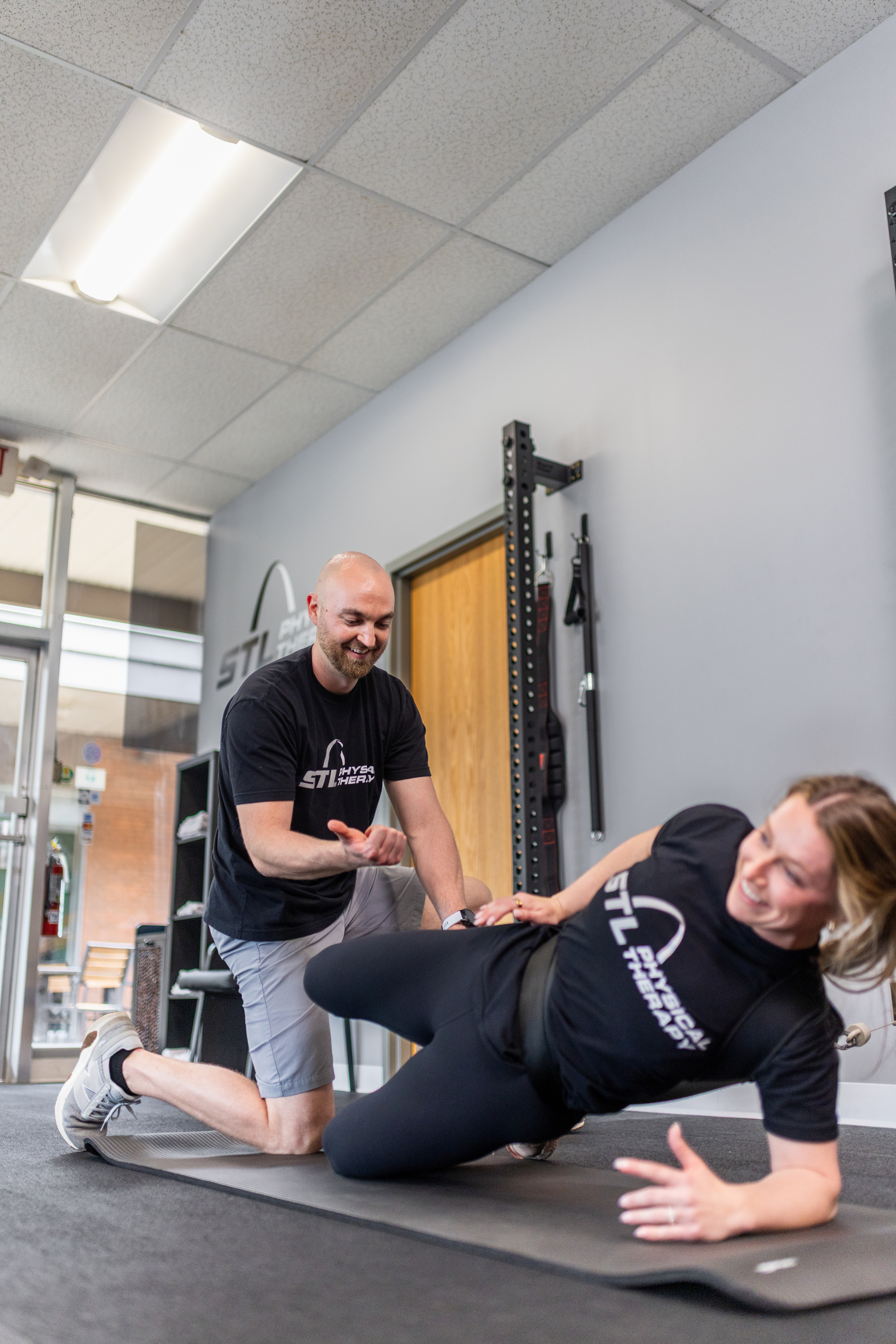
At STL Physical Therapy, we evaluate how your body moves before making assumptions about your swing.
We assess factors such as:
- Mobility
- Strength
- Stability
- Balance
- Rotational control
- Movement quality
- Previous injuries
- Golf-specific demands
This allows us to identify physical limitations that may be affecting both performance and comfort on the course.
Instead of chasing symptoms, we focus on the underlying factors that may be limiting your game.
Building a Better Swing Through Better Movement
Many golfers immediately think about lessons when they want to improve their swing.
Instruction can be valuable, but physical limitations often need to be addressed before meaningful changes can occur.
When mobility, stability, strength, and movement quality improve through a comprehensive Physical Therapy for Golfers program, golfers often find it easier to:
- Rotate effectively
- Generate power
- Maintain posture
- Improve consistency
- Reduce discomfort during play
The goal is not simply to swing differently. The goal is to create a body that can support the swing you want to achieve.
Play Better Golf for Years to Come

Proper golf swing mechanics involve far more than club positions and swing tips.
Your mobility, stability, strength, balance, and movement patterns all play an important role in how you perform on the course.
When your body moves efficiently, it becomes easier to generate power, improve consistency, and reduce unnecessary stress on your joints.
If pain, stiffness, mobility limitations, or movement restrictions are affecting your golf game, STL Physical Therapy can help identify what may be holding you back. Our golf-focused approach helps golfers move better, perform better, and continue enjoying the game for years to come.
Contact STL Physical Therapy today to schedule an evaluation and learn how improving the way your body moves can help improve the way you play.