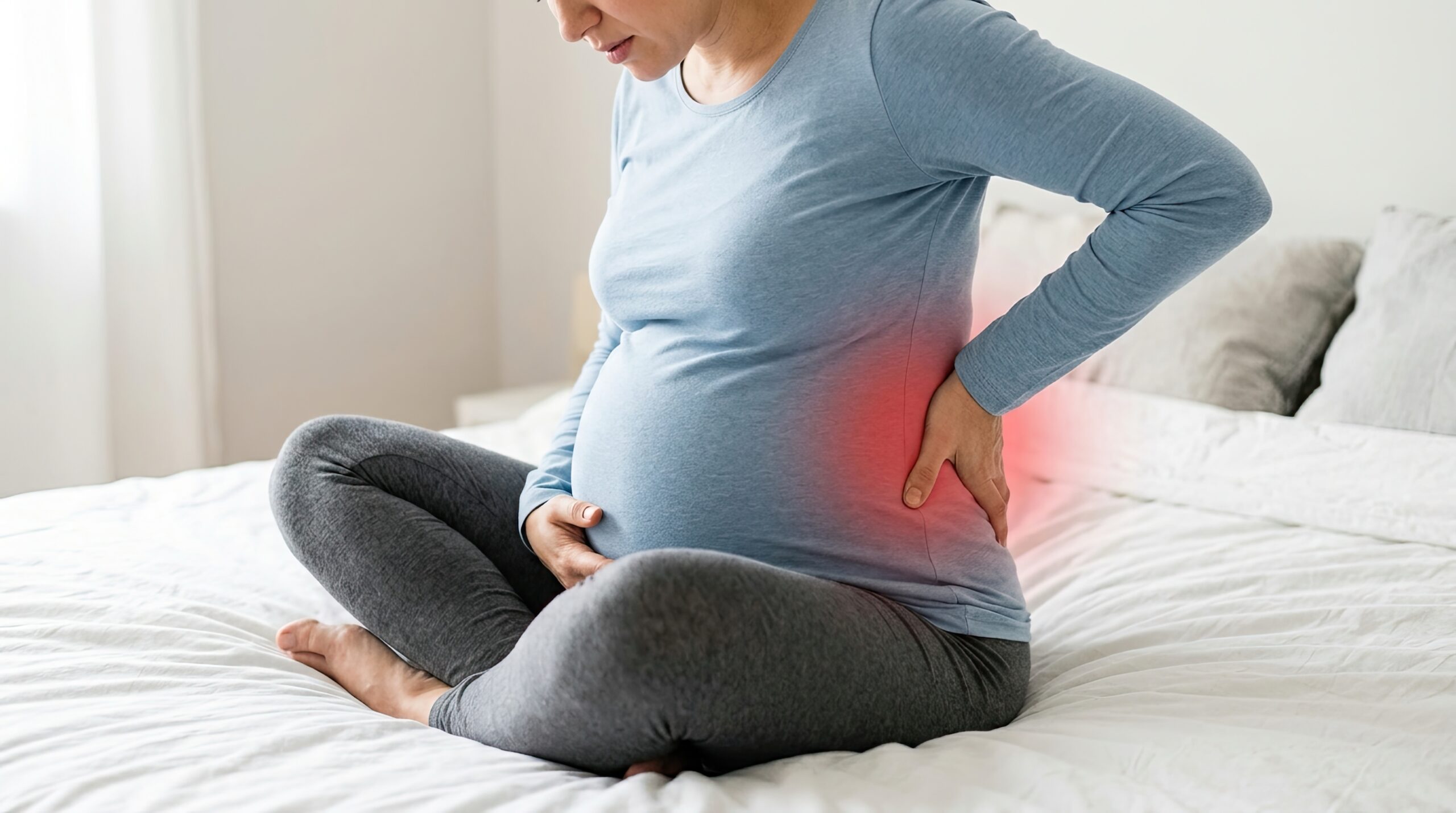

If your lower back tightens up halfway through a round or aches the morning after eighteen holes, you are not alone. Golf swing lower back pain is something we see often at STL Physical Therapy, from weekend golfers to low handicappers who play several times a week.
The golf swing asks a lot of your body. Your spine has to handle rotation, side bending, and forward flexion through a fast, repeated movement. When other areas of your body are not moving or supporting you the way they should, your low back can end up taking on more of that load.
It is easy to assume that soreness is simply part of playing golf, especially as you get older or start playing more frequently. But recurring pain can also be a sign that your body is having trouble keeping up with the demands of your swing.
At STL Physical Therapy, we work with golfers across St. Louis who want to understand what is actually driving their back pain, not just manage it from one round to the next. Looking at how your body moves during your swing can help us identify what may be contributing to the problem and what needs to change.
Book your evaluation today and find out what may be behind your golf-related lower back pain.
Why the Golf Swing Puts So Much Stress on Your Low Back
Golf may look smooth from the outside, but a powerful swing puts significant forces through your body. Research on golf and low back pain has found that the lumbar spine can experience compressive forces several times your body weight during the swing, particularly around impact.
Part of the challenge is that your spine is being asked to do several things at once. A full golf swing combines rotation, lateral bending, and flexion. When rotation and side bending happen together under load, the joints and discs in the lower back can experience significant repeated stress.
That does not mean golf is inherently bad for your back. The bigger question is whether the rest of your body is helping manage those demands.
Your hips, thoracic spine, core, and glutes all have a role in creating and controlling the movement of your swing. When those areas have enough mobility and strength, the load can be distributed more efficiently. When they do not, your lower back often has to compensate, swing after swing and round after round.
When Does Your Low Back Work Hardest During the Golf Swing?
Not every part of the swing places the same demands on your spine. The downswing, impact, and early follow-through are especially demanding because this is where rotation, lateral bending, and force production come together.
It is also where power has to move efficiently through your body and into the club.
If your hips or upper back cannot rotate well through this part of the swing, your lower back may try to create the movement you are missing elsewhere. You might be able to compensate for a while without noticing much of a problem, but repeated over hundreds or thousands of swings, that extra stress can start to add up.
What Is Usually Behind Golf Swing Lower Back Pain?
Golf swing lower back pain rarely comes down to one single issue. More often, we see a combination of mobility restrictions, strength deficits, and swing compensations that have developed gradually over time.
Limited Hip Rotation
Your hips play an important role in generating and transferring force during the golf swing. During the downswing, they need enough mobility to rotate and transfer weight without forcing your lower back to make up the difference.
When hip rotation, particularly in the lead hip, is limited, your lumbar spine may rotate more than it should to keep the swing moving.
Improving hip mobility for golfers is not about becoming as flexible as possible. It is about having enough usable motion to complete your swing without asking your lower back to compensate for movement you do not have elsewhere.
Limited Thoracic Spine Mobility
Your thoracic spine, or the upper and middle portion of your back, should handle a significant amount of rotation during the backswing and downswing.
If that area is stiff, which is common for people who spend a lot of their day sitting, your lower back may pick up the slack. Less rotation available through your upper back can mean more movement and stress through your lumbar spine.
Weak Core and Glute Muscles
Mobility is only part of the equation. Your body also needs enough strength and control to manage the forces created during your swing.
Your abdominal muscles, glutes, and the muscles surrounding your spine help stabilize your body as you rotate and transfer force. When they are not doing their share of the work, your lower back has less support during the most demanding parts of the swing.
Building core strength for golfers should focus on more than traditional sit-ups or crunches. Golf requires your core to control rotation, transfer force, and keep your trunk stable while the rest of your body moves around it.
Swing Faults That Add Up
Certain swing patterns can also place extra strain on the lumbar spine.
That may include excessive side bending away from the target without proper weight transfer, rotating beyond the range of motion your hips and thoracic spine actually have, or arching your lower back excessively at address or through the follow-through.
These patterns do not always start as technical problems. Sometimes they develop because your body is finding another way to complete the swing when mobility or strength is limited somewhere else.
That is why simply telling someone to “fix their swing” does not always solve the problem. You also have to determine whether their body has the capacity to make that change.
How Low Back Pain Can Change the Way You Play
Lower back pain does more than make a round uncomfortable. It can start changing the way you swing, sometimes without you realizing it.
Golfers dealing with recurring pain may shorten their backswing, rotate less through impact, or rely more heavily on their arms to generate speed because a full turn feels uncomfortable or unstable.
Those compensations can eventually show up in your game as lost distance, inconsistent contact, or a swing that feels harder to repeat.
We often see this with golfers who initially come to us because their performance has changed rather than because their pain feels severe. Once we address the mobility, strength, and control behind their swing, they may notice that both their back and their golf game begin to feel better.
This is closely connected to overall golf swing mechanics. If you want a deeper look at how mobility, stability, and sequencing work together, our guide to proper golf swing mechanics explains what an efficient swing requires from your body.
How Physical Therapy Can Help You Swing With Less Pain
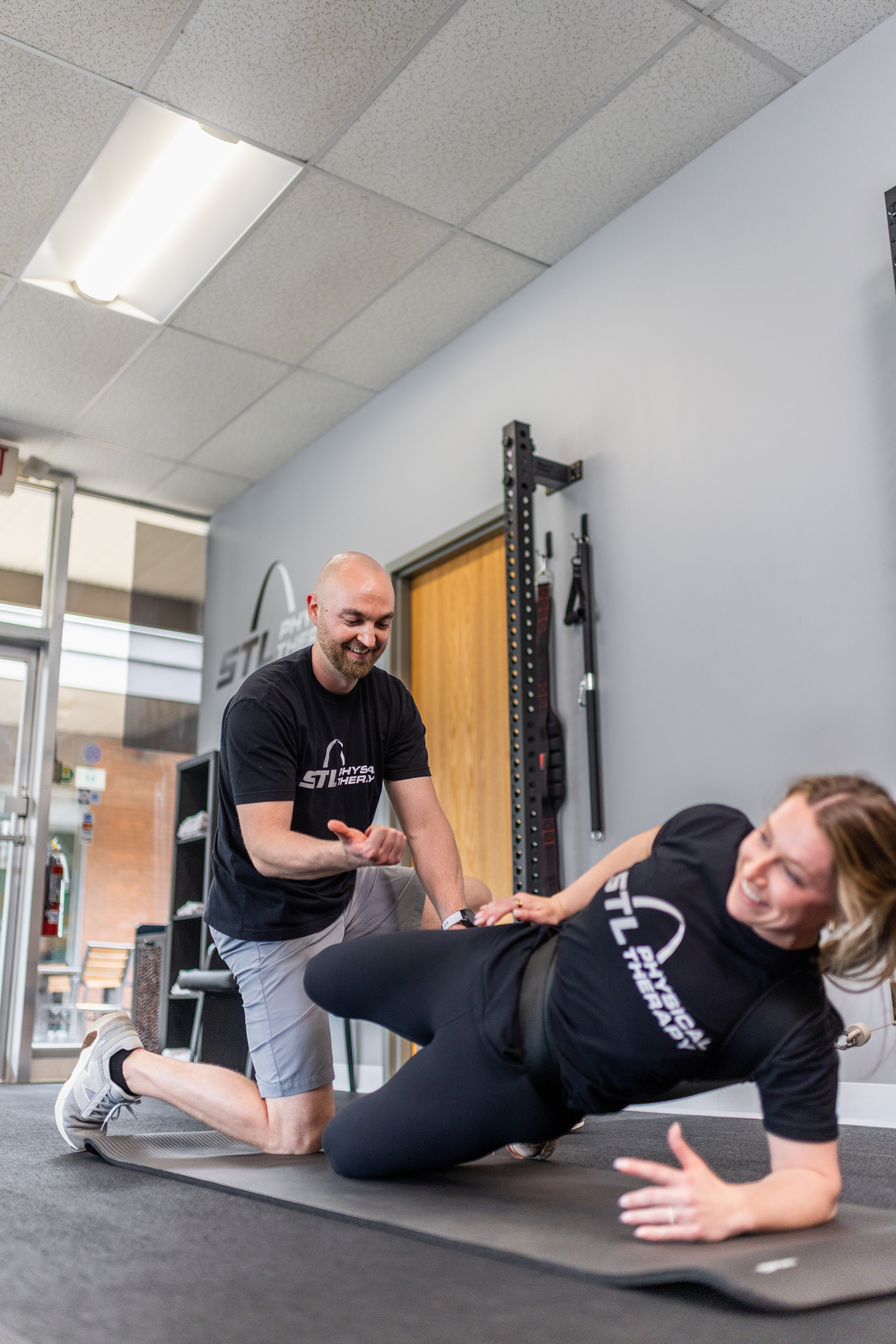
At STL Physical Therapy, we do not look at your lower back as an isolated problem. We look at how your hips, thoracic spine, core, glutes, and lower back are working together and how those pieces relate to your golf swing.
Your plan is then built around what we find during your evaluation and what you want to get back to doing.
A Golf-Specific Movement Assessment
We start by looking at your mobility, strength, balance, rotational control, and the movement patterns that matter for your swing.
Our approach is informed by Titleist Performance Institute (TPI) principles, giving us a golf-specific framework for understanding how the way your body moves may influence your swing.
At our Creve Coeur location, this assessment can also include 3D motion capture technology, giving us a more detailed, real-time look at how you’re rotating, tilting, and sequencing your movement throughout the swing. It’s not a golf lesson, and it doesn’t replace your instructor. It simply gives us a clearer picture of what your body is doing so we can build a more precise plan.
The goal is to identify physical limitations that may be making certain swing positions harder to achieve or repeat.
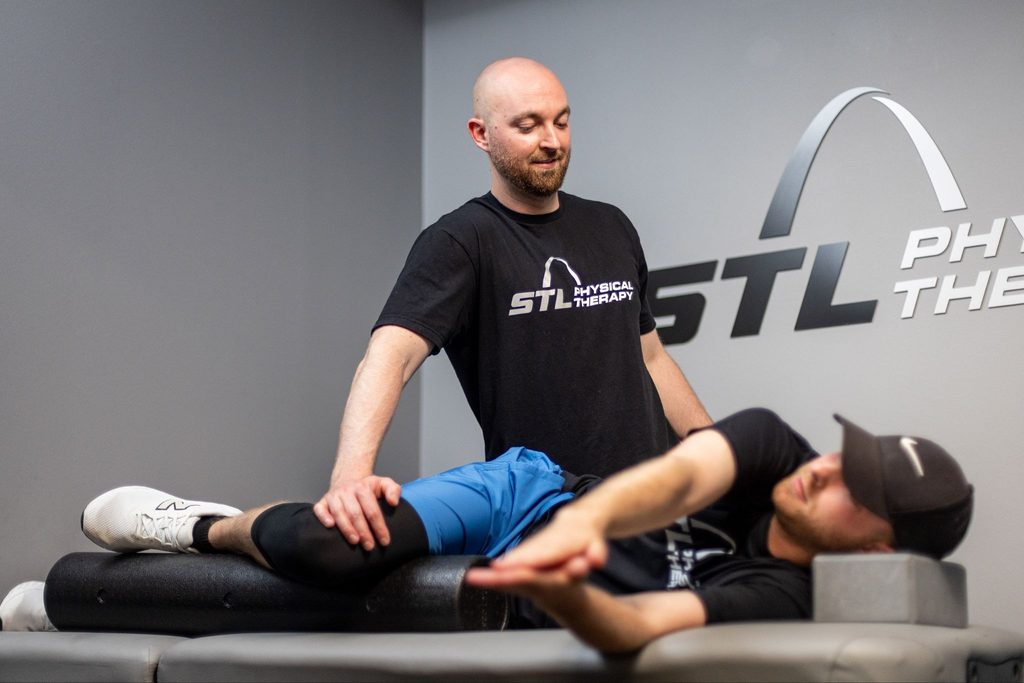
Restoring Hip and Thoracic Mobility
If your hips or upper back are not rotating well, your lower back may be doing more work than it should.
Treatment may focus on improving hip internal rotation, thoracic rotation, and other mobility restrictions that are relevant to your individual swing. The goal is to give your body more options so your lumbar spine does not have to compensate every time you rotate.
Building Core and Glute Strength
Having more mobility only helps if you can control it.
Your core and glutes need enough strength to stabilize your pelvis and spine while force moves through your body. We progressively build strength and control around the movements your golf swing actually requires rather than relying on a generic exercise program.
Strength on its own is not the whole picture. How that strength gets sequenced through your swing matters just as much. An efficient swing generates power from the ground up, moving from your feet and hips through your core and out through your arms and the club, rather than asking your low back to create that power on its own.
Medicine ball training is one of the tools we use often to build that sequencing, and it is an area we focus on closely with our golfers. Rotational throws teach your body to generate power from the ground up instead of compensating through your lower back, and they reinforce the kind of weight transfer that creates a more efficient, more powerful swing.
Addressing Pain Directly When Needed
Sometimes pain or muscle tightness makes it difficult to move well enough to work on the bigger problem.
When appropriate, hands-on treatment and techniques such as dry needling may be used to help reduce symptoms and improve movement. These tools are part of the overall plan, not a standalone solution.
This is the same movement-based approach we use in our physical therapy for golfers program and our low back pain treatment program, adapted to the specific demands of your golf swing.
Preventing Low Back Pain Before It Costs You Time on the Course
You do not have to wait until your back pain forces you to stop playing before doing something about it. Paying attention to how your body feels and moves can help you address smaller issues before they begin affecting your game.
A few things can help:
- Warm up before playing with dynamic hip and thoracic mobility movements instead of relying only on practice swings.
- Include rotational strength and core stability work in your regular training, not just during golf season.
- Pay attention to early signs such as stiffness after a round or soreness that lasts longer than usual.
- Consider a golf-specific movement assessment if recurring stiffness, pain, or compensation is starting to change your swing.
The goal is not simply to avoid pain. It is to build enough mobility, strength, and control to handle the demands of the game consistently.
Frequently Asked Questions
Why does my lower back hurt after golf but not during the round?
This can happen when the repeated stress of swinging, walking, and staying in golf posture builds throughout the round. You may not notice much discomfort while you are moving, but stiffness or soreness can become more noticeable once you cool down.
If it happens consistently, it may be worth looking at the mobility, strength, and movement patterns contributing to that stress.
Is golf swing lower back pain a sign of a serious injury?
Not necessarily. Golf-related low back pain can be associated with mobility limitations, strength deficits, movement compensations, and repetitive stress.
However, symptoms such as pain traveling into the leg, numbness, weakness, or pain that persists or continues to worsen should be evaluated.
Can I keep playing golf if my lower back hurts?
That depends on what is causing the pain and how severe your symptoms are. Some golfers can continue playing while addressing the underlying issue, while others may need to temporarily modify how much they play.
The important part is not repeatedly pushing through pain without understanding why it keeps happening.
Will fixing my swing fix my back pain?
It can help, but changing your swing is only part of the picture.
If your body does not have the mobility, strength, or control needed to make the new movement, it can be difficult to maintain that swing change. Golf instruction and physical therapy can complement each other by addressing both the technical and physical sides of the game.
Do I need a referral to start physical therapy in Missouri?
No. Missouri’s direct access law allows most people to begin physical therapy without first seeing a physician, so you can schedule an evaluation directly.
Play Without the Ache in Your Lower Back
Golf swing lower back pain is common, but that does not mean you have to accept it as part of the game.
Understanding what your swing asks of your body, and making sure your hips, thoracic spine, core, and glutes have the mobility and strength to handle those demands, can make a meaningful difference in how you feel on the course.
If lower back pain has started changing your swing, limiting how much you play, or making you think twice about another eighteen holes, our team at STL Physical Therapy can help you figure out what is contributing to it and build a plan around your goals. Book your evaluation today and get back to swinging with confidence.