Sciatica is one of the most common reasons people come into our clinic. It is also one of the most misunderstood.
Sciatica is not a diagnosis. It is a symptom. It describes pain, tingling, or numbness that travels from the low back into the glute and sometimes down the leg. For some people it feels sharp. For others it burns or causes pins and needles below the knee.
The real question is not how to stretch it. The real question is why the nerve is irritated in the first place.
That is where treating sciatica with physical therapy becomes important.
What Causes Sciatica?
Sciatic nerve irritation can come from several sources:
- Disc irritation in the lower back
- Limited hip mobility
- Poor spinal control under load
- Prolonged sitting
- Strength imbalances through the glutes and core
In active adults and athletes, sciatica is often tied to movement patterns. Lifting, running, and even long hours at a desk can create stress that builds over time.
The nerve does not become irritated randomly. Something is driving it. If you only chase symptoms, the pain often returns.
Does Physical Therapy Help Sciatica?
Yes, when it is done correctly.
Treating sciatica with physical therapy focuses on reducing nerve sensitivity, restoring movement, and building strength that protects the spine and hips.
Complete rest is rarely the solution. In most cases, the right type of movement improves recovery more than avoiding activity entirely.
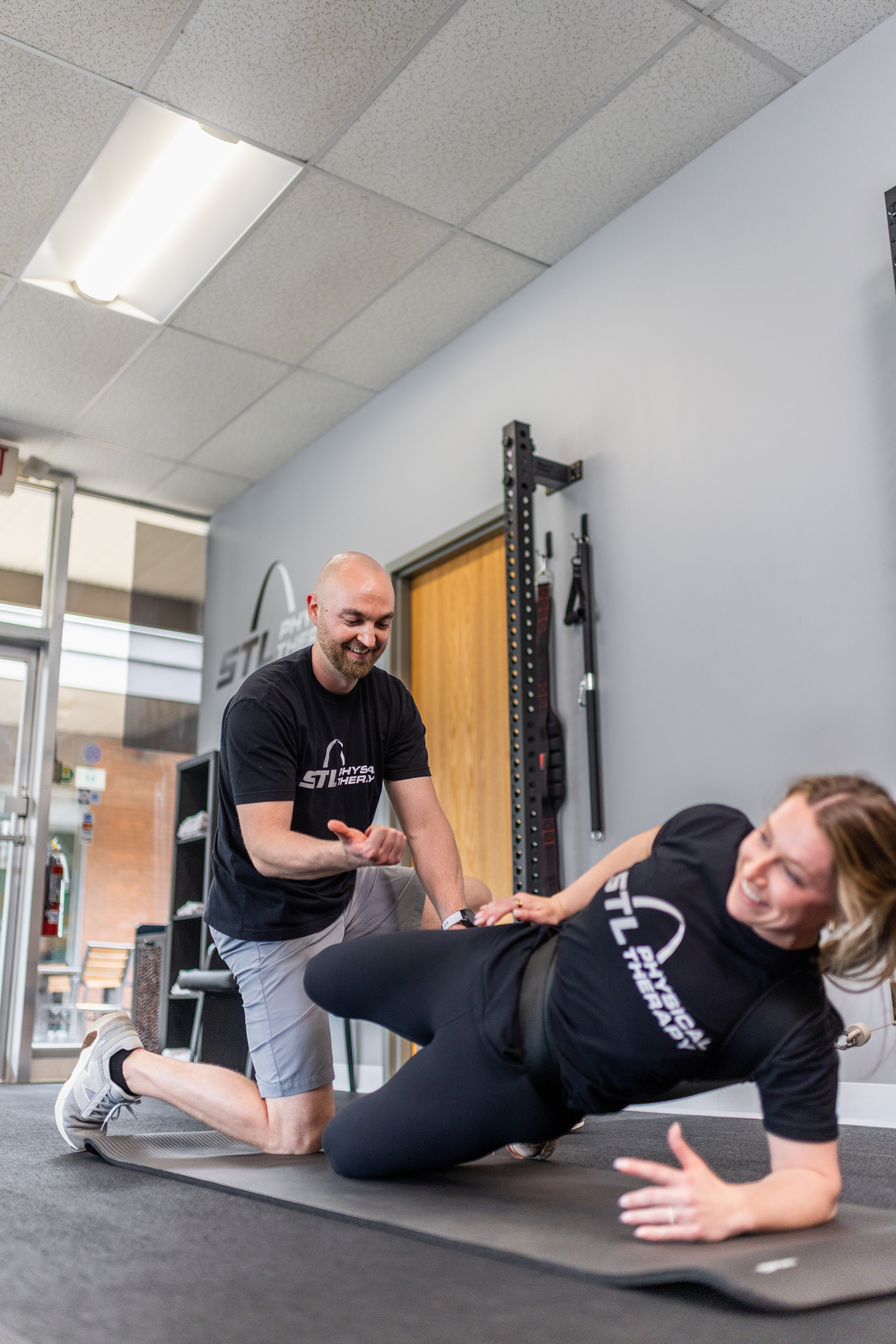
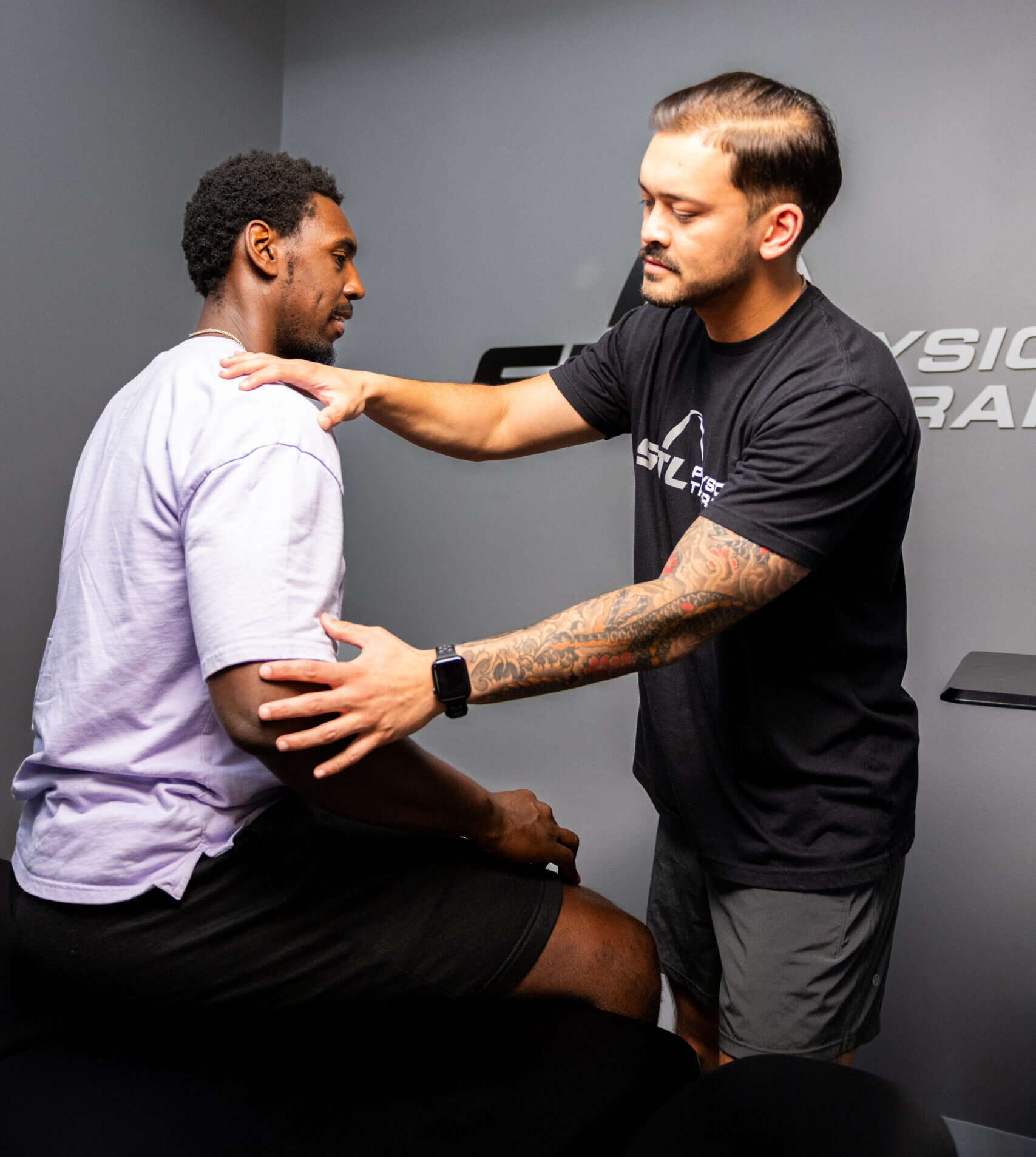
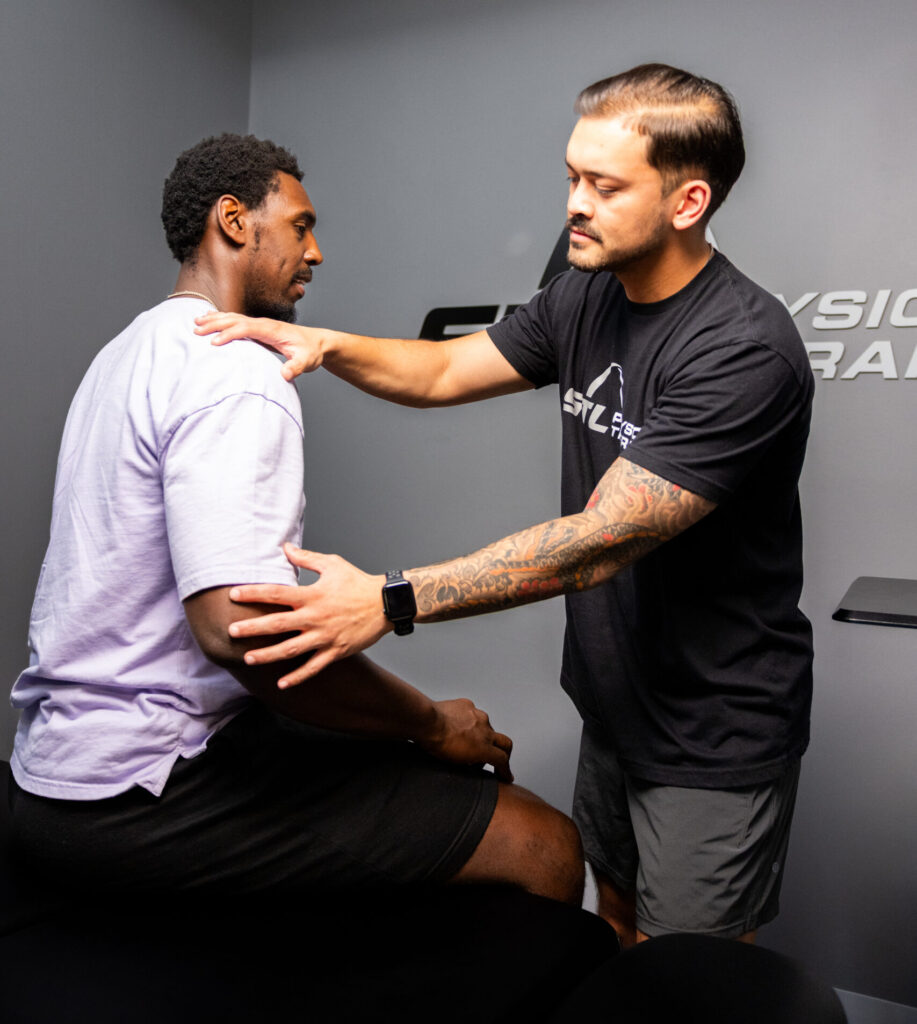
At STL Physical Therapy, we assess how your spine, hips, and pelvis move together. We identify the weak link and build a plan around that.
Our goal is not short-term relief. It is long-term resilience.
How We Treat Sciatica at STL Physical Therapy
Every case is different, but the structure of care remains consistent.
Step 1: Calm the Irritation
If the nerve is highly sensitive, we begin by improving tolerance to movement.
This may include:
- Specific positioning strategies
- Targeted mobility work
- Hands-on soft tissue treatment
- Dry needling when appropriate
When muscle tension contributes to nerve sensitivity, dry needling can reduce stiffness and allow us to progress more efficiently. It is not the entire solution, but it can support the larger plan.
Step 2: Restore Movement
Once symptoms begin to settle, we focus on restoring how your body moves.
This may involve:
- Improving hip mobility
- Rebuilding glute activation
- Teaching better hinge mechanics
- Reducing unnecessary spinal stress
This is where many clients begin to feel more in control of their symptoms.
Step 3: Build Strength and Capacity
Most people have already tried resting, icing, or stretching their feet. Those can help temporarily, but they often don’t solve the underlying capacity issue. A better approach is to reduce the irritation while you build the system back up.
Pain relief is not the finish line.
If strength and load tolerance are not rebuilt, symptoms often return.
We progressively load the spine and hips in a controlled way. That may include:
- Core strengthening
- Posterior chain training
- Modified lifting patterns
- Gradual return to running or training
The goal is to make sure your body can handle real-life demands, not just table-based rehab.
Physical Therapy Exercises for Sciatica
One of the most searched phrases online is physical therapy exercises for sciatica.
There is no universal list that works for everyone.
Some people respond well to extension-based movements. Others benefit from nerve glides. Some need stability work. Others need progressive strength training.
Aggressively stretching the hamstrings is not always helpful. In some cases, it can worsen symptoms.
The right exercise depends on why the nerve is irritated. That is why a proper movement assessment matters.
Can You Lift or Train with Sciatica?

In many cases, yes.
We often modify training instead of eliminating it.
Telling someone to stop lifting or avoid activity may temporarily reduce symptoms, but it does not build durability. With the right adjustments and progressions, most people can continue training while improving.
How Long Does Sciatica Take to Improve?
Recovery depends on the underlying cause and how long symptoms have been present.
Some cases improve within a few weeks. More persistent cases require structured progression over time.
What matters most is having a clear plan rather than guessing week to week.
Physical Therapy for Sciatica in St. Louis
If you are searching for physical therapy for sciatica near you in St. Louis, STL Physical Therapy provides one-on-one care inside a real training environment.
Our approach blends:
- Hands-on physical therapy
- Movement assessment
- Strength-based rehabilitation
- Dry needling when appropriate
- Performance-driven progression
We are not just trying to quiet pain. We are helping you move well, train confidently, and prevent recurring flare-ups.
Ready to Address Sciatic Nerve Pain at the Source?
If you are dealing with radiating leg pain or recurring symptoms, schedule an evaluation and we will build a plan based on how your body actually moves.